

Power: Nov 17-21: Spot price in rangebound with ample photovoltaic power output
|
In the day-ahead market on JEPX (Japan Electric Power Exchange), the 24-hour spot power prices on a weekly average basis for Nov 17-21 delivery fell further in East Japan (50 Hz) but extended gains in West Japan(60Hz). However, both areas showed just a range-bound price move because the impacts of cold weather nationwide in the middle of the week were offset by plenty of outputs from photovoltaic power plants, setting high prices just at Yen 18's even in the evening, peak demand time. Moreover, no trouble was heard at power plants. As a result, the volume of offers outnumbered the volume of bids through the week. In the meantime, price decoupling was often found through the week; on Nov 19 decoupling occurred in nine areas, affecting the market.
The spread of the 24-hour spot average between Tokyo and Kansai, a major market area in East and West Japan, was Yen 1.84 on Nov 17, Yen 1.26 on Nov 18, Yen 0.60 on Nov 19, Yen 1.41 on Nov 20, and Yen 2.73 on Nov 21 in favor of the East.
The fuel market trends in the third week of November were detailed as follows.
DES Northeast Asia spot LNG prices on Nov 20 gained by around 50cts from the end of last week (Nov 14) to mid-$11's per mmBtu for prompt January 2026 delivery. In the wake of the strong natural gas markets in Europe, the DES Northeast Asia spot LNG prices increased. However, buying interests from the end-users in Northeast Asia remained dull, weighing on prices. The Ministry of Economy, Trade and Industry (METI) announced on Nov 19 that Japan's LNG inventories for power generation stood at 2.23 mil mt as of Nov 16, up 270,000 mt from a week before. The figure was above the end of November last year (1.72 mil mt) but below the average for the past five years (2.05 mil mt).
FOB Newcastle thermal coal prices in Australia were at around $111 per ton for November 2025 loading as of Nov 20, up around 40cts from the end of the previous week. Prices followed the strong gas market.
In the crude oil market, WTI crude for January 2026 stood in the low-$58's per barrel at 1PM on Nov 21, while Brent crude for January 2026 was trading in the mid $62's. Prices dropped by about $1.80 from the end of the previous week for WTI and Brent. Easing supply worries about Russian crude oil as well as the expectations for the truce between Ukraine and Russia sent crude prices lower.
The actual highest price during the week was at Yen 18.25 in three East Japan areas on Nov 20; the actual lowest price during the week was at Yen 2.00 in four West Japan areas from Kansai to Kyushu.
By area, the weekly average of the 24-hour spot prices was at Yen 10.91 in Hokkaido, down Yen 0.49 from the previous week; Yen 10.87 in Tohoku, down Yen 0.31; Yen 12.51 in Tokyo, down Yen 0.44; Yen 12.37 in Chubu, down 0.29; Yen 12.18 in Hokuriku, down Yen 0.34; Yen 10.95 in Kansai, up Yen 0.39; Yen 10.92 in Chugoku, up Yen 0.36; Yen 9.67 in Shikoku, up Yen 0.87; and Yen 10.74 in Kyushu, up Yen 0.74.
In the JEPX auction, the volume of offers was 1,095.84 mil kWh on a weekly average basis, up 4.4% from the previous week. Meanwhile, bids on a weekly average basis were up 0.7% to 979.66 mil kWh. The weekly average of trade volumes recorded 760.82 mil kWh, up 4.7%.
Power demand in nine areas of Japan during Nov 17-21 was a combined 11,651.95 mil kWh, up/down 4.0% from 11,205.38 mil kWh during Nov 10-14. The figure was up/down 2.0% from the corresponding period a year earlier, which was 11,425.91 mil kWh during Nov 18-22, 2024, after day-of-week adjustment.
TOCOM (Tokyo Commodity Exchange) during Nov 17-21 was no deal.
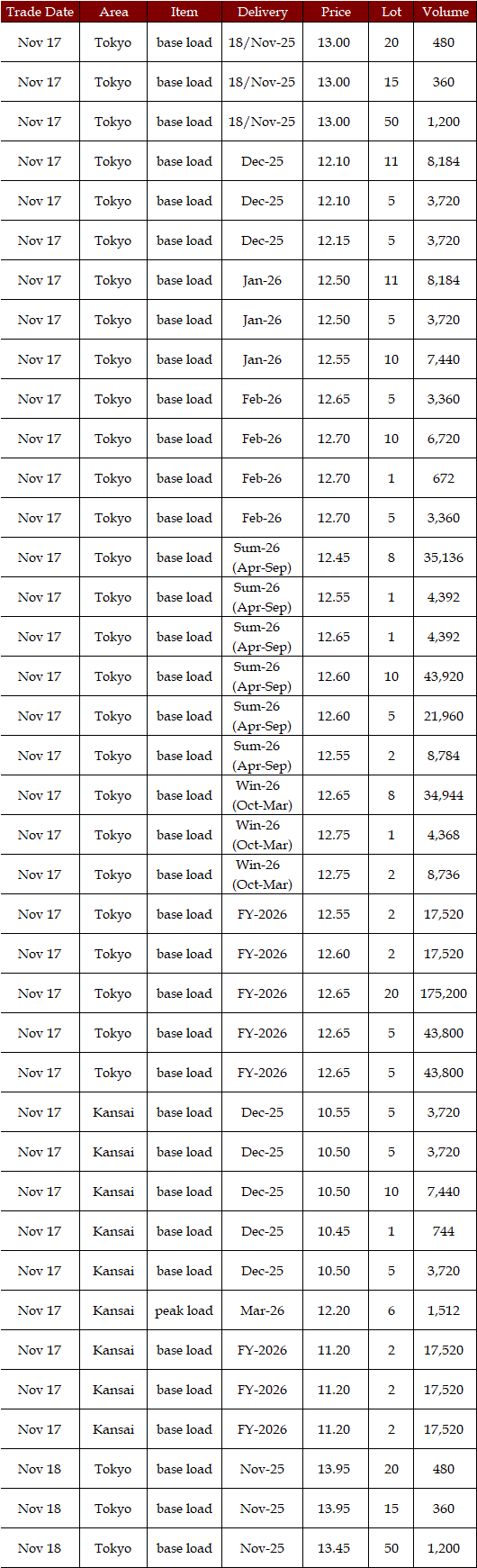
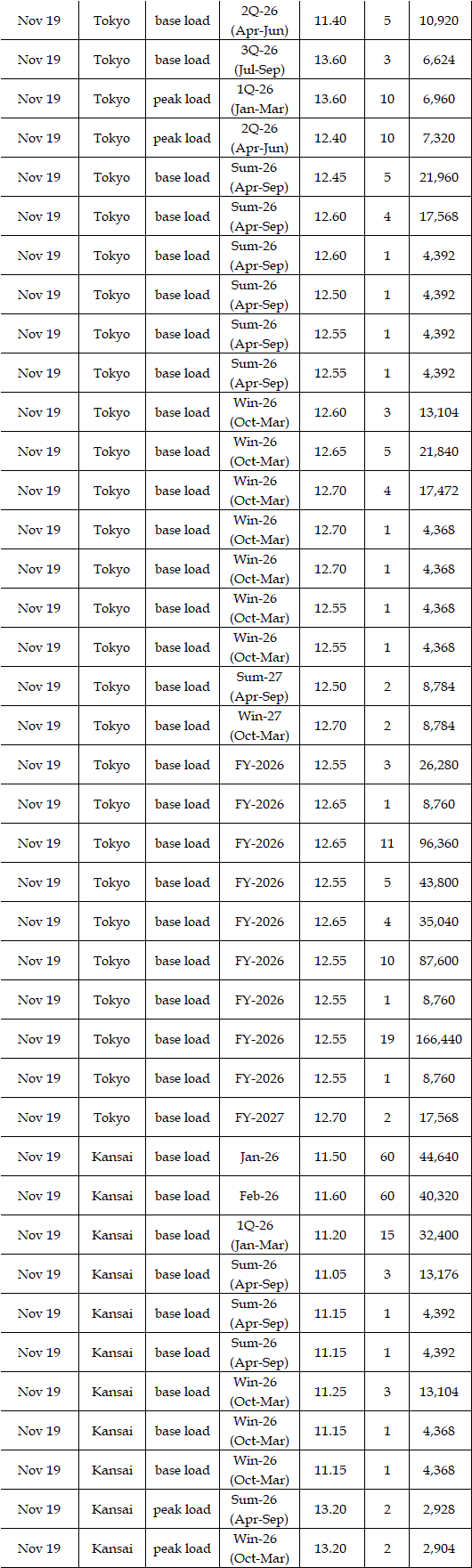
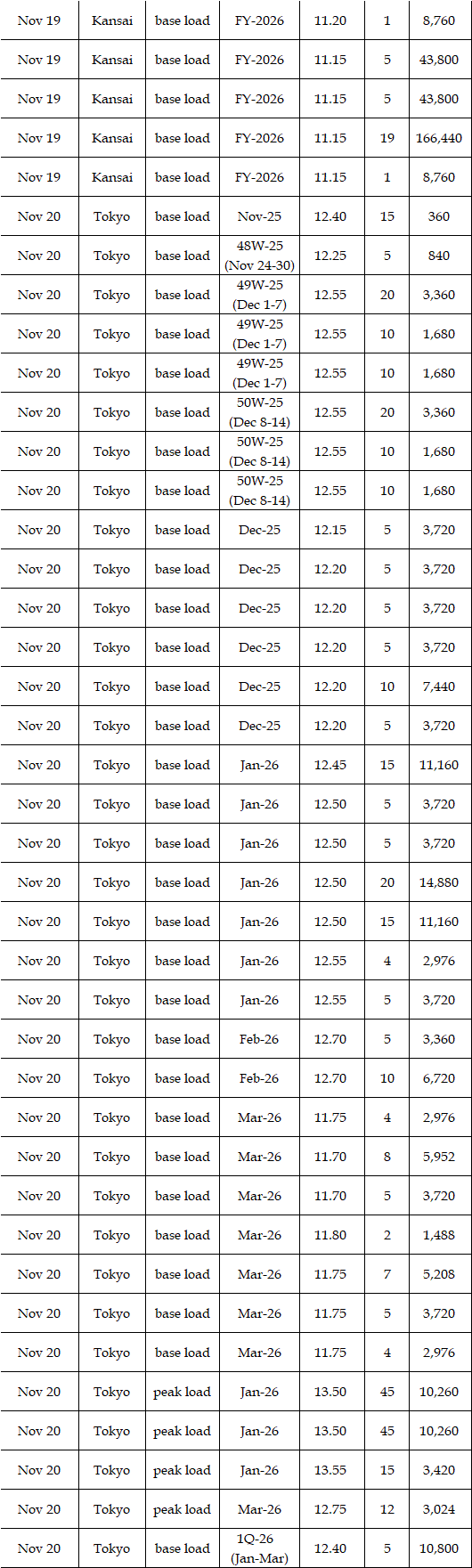
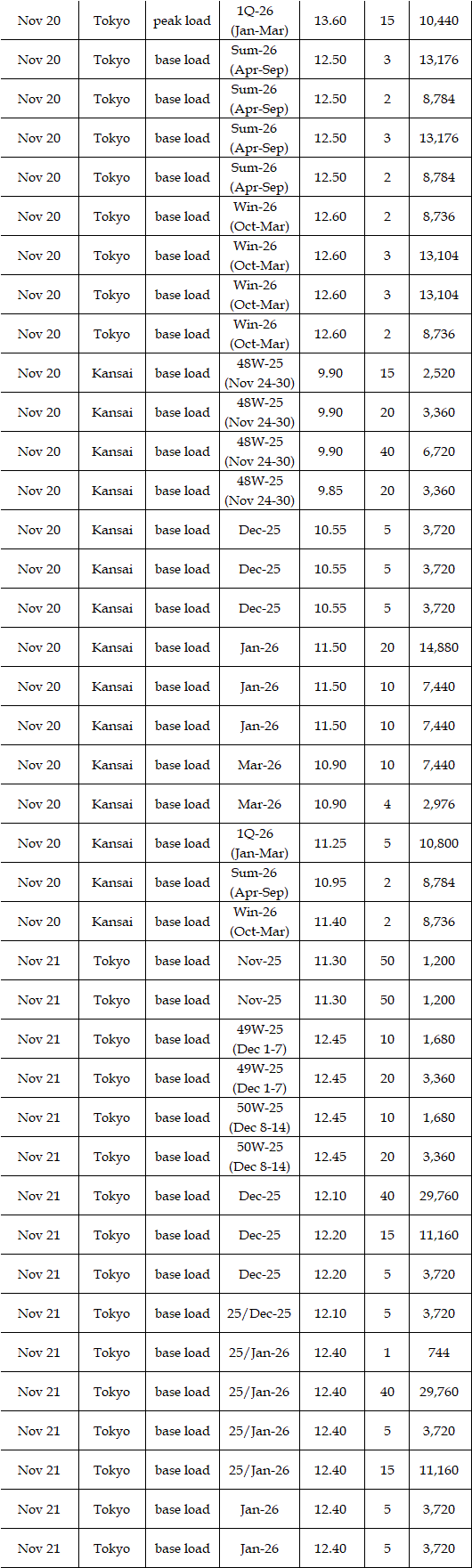
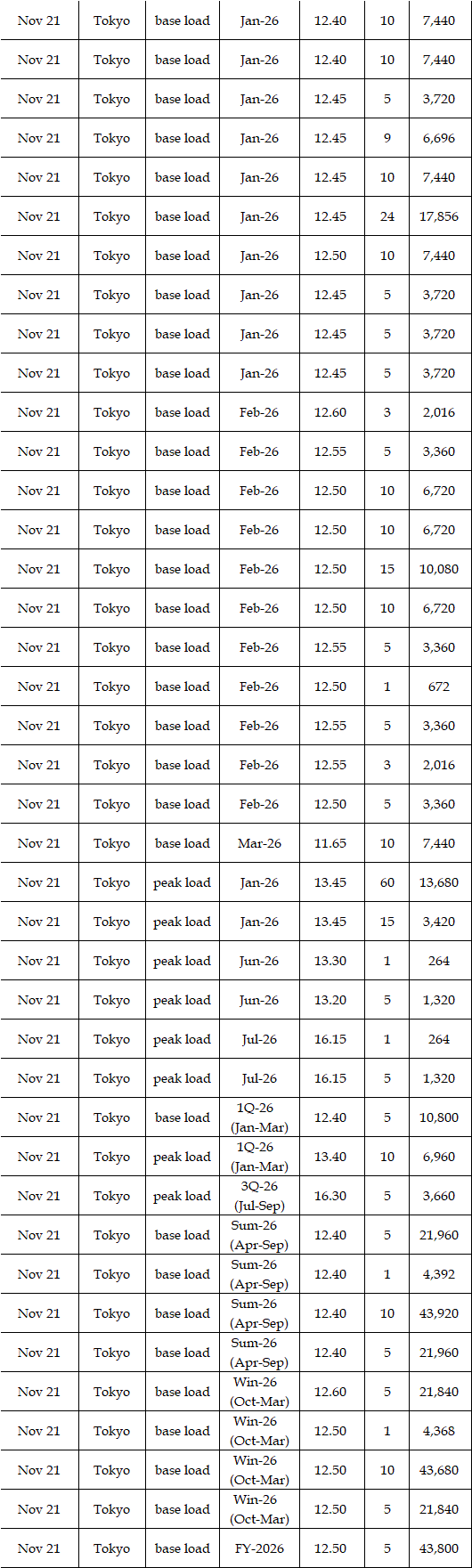
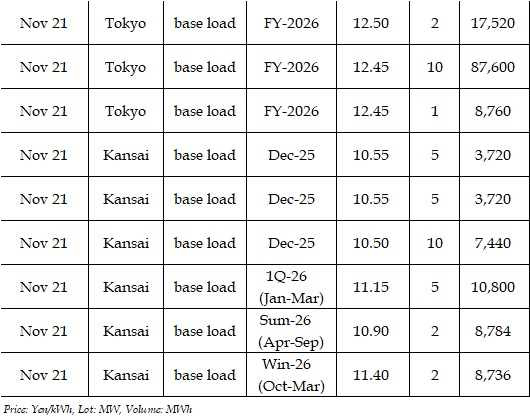
Deals reported on EEX (European Energy Exchange) during Nov 17-21 were as below.
Prices for the final week in November would likely stay at the same level as those for the third week or lower. High temperatures were expected to come; in Tokyo, temperatures would climb to around 20 degrees on Nov 25, and through the week, temperatures would be at around 16-18 degrees in the area westbound from Kanto. As a result, demand for heating would be reduced. Along with sunny weather being forecasted on many days, prices would be capped, especially in the daytime, when outputs from photovoltaic power plants are expected. Asked about the price outlook for the final week in November, a source at a power producer and supplier said, "Prices would hover at the range of mid- to high-Yen 12's for Tokyo and at Yen 1.00-2.00 lower than those in Tokyo for Kansai."
|
||||||||||||||||||||||||||||||
|
|
||||||||||||||||||||||||||||||



 Post
Post Print
Print


