

Power: Dec 1-5: Spot price rebounds; market shifts high-West and low-East
|
In the day-ahead market on JEPX (Japan Electric Power Exchange), the 24-hour spot power prices on a weekly average basis for Dec 1-5 delivery rebounded in East Japan (50 Hz) and in West Japan (60 Hz) from the week before. While high temperatures in the first half of the week prevented prices from rising, even the high prices stayed at just Yen 13.23 in nine areas on Dec 1 the arrival of the winter weather in the second half of the week raised prices. In West Japan, temperatures turning lower in contrast to high temperatures before, such as daily high temperatures just hovering at 10-13 degrees Celsius, hiked prices rapidly, along with a certain number of the thermal power plants under maintenance. This resulted in a high West and low East market on Dec 4-5, although high prices did not reach Yen 20's.
The spread of the 24-hour spot average between Tokyo and Kansai, a major market area in East and West Japan, was Yen 0.95 on Dec 1, Yen 1.44 on Dec 2, and Yen 0.56 on Dec 3 in favor of the East, followed by Yen 0.27 on Dec 4 and Yen 0.21 on Dec 5 in favor of the West.
The fuel market trends in the first week of December were detailed as follows.
DES Northeast Asia spot LNG prices on Dec 4 hovered at the high $10's per mmBtu for prompt January 2026 delivery, the same as the end of the previous week (Nov 28). While the natural gas markets in Europe kept a downward trend, the DES Northeast Asia spot LNG market was supported by buybacks from traders and portfolio players to some extent. The Ministry of Economy, Trade and Industry (METI) announced on Dec 3 that Japan's LNG inventories for power generation stood at 2.07 mil mt as of Nov 30, down 60,000 mt from a week before. The figure was above the end of November last year (1.72 mil mt) and the average for the past five years (2.05 mil mt).
FOB Newcastle thermal coal prices in Australia were at mid-$108's per ton for December 2025 loading as of Dec 4, down around $ 2 from the end of the previous week.
IIn the crude oil market, WTI crude for January 2026 stood in the high-$59's per barrel at 9AM on Dec 5, while Brent crude for February 2026 was trading in the mid $63's. Prices gained by around $1 from the end of the previous week for WTI and Brent due to the geopolitical risk, where the risk of military collision between the US and Venezuela as well as limited progress in truce talks for the Ukraine war.
The actual highest price during the week was at Yen 19.78 in six West Japan areas on Dec 5; the actual lowest price during the week was at Yen 0.02 in Shikoku on Dec 4.
By area, the weekly average of the 24-hour spot prices was at Yen 11.53 in Hokkaido, up Yen 0.09 from the previous week; Yen 11.51 in Tohoku, down Yen 0.07; Yen 12.49 in Tokyo, up Yen 0.46; Yen 12.41 in Chubu, up 0.30; Yen 12.22 in Hokuriku, up Yen 0.76; Yen 12.00 in Kansai, up Yen 2.11; Yen 11.94 in Chugoku, up Yen 2.05; Yen 11.27 in Shikoku, up Yen 1.72; and Yen 11.85 in Kyushu, up Yen 2.20.
In the JEPX auction, the volume of offers was 1,179.05 mil kWh on a weekly average basis, up 2.0% from the previous week. Meanwhile, bids on a weekly average basis were up 7.9% to 1,030.69 mil kWh. The weekly average of trade volumes recorded 786.23 mil kWh, up 6.6%.
Power demand in nine areas of Japan during Dec 1-5 was a combined 12,459.16 mil kWh, up 8.4% from 11,497.28 mil kWh during Nov 24-28. The figure was up 3.9% from the corresponding period a year earlier, which was 11,993.04 mil kWh during Dec 2-6, 2024, after day-of-week adjustment.
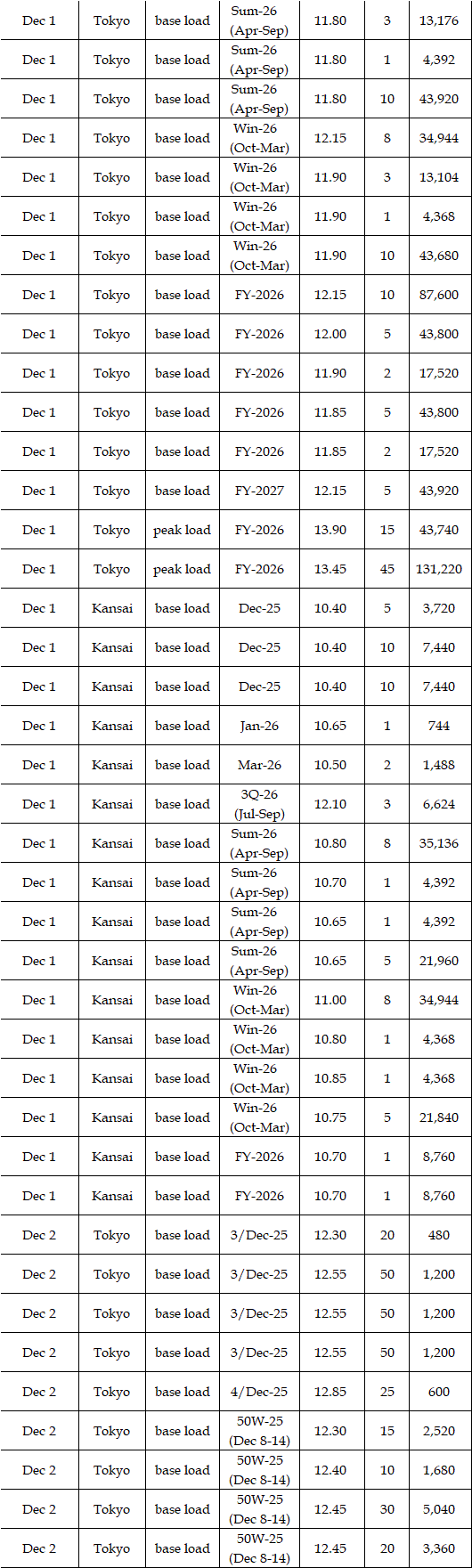
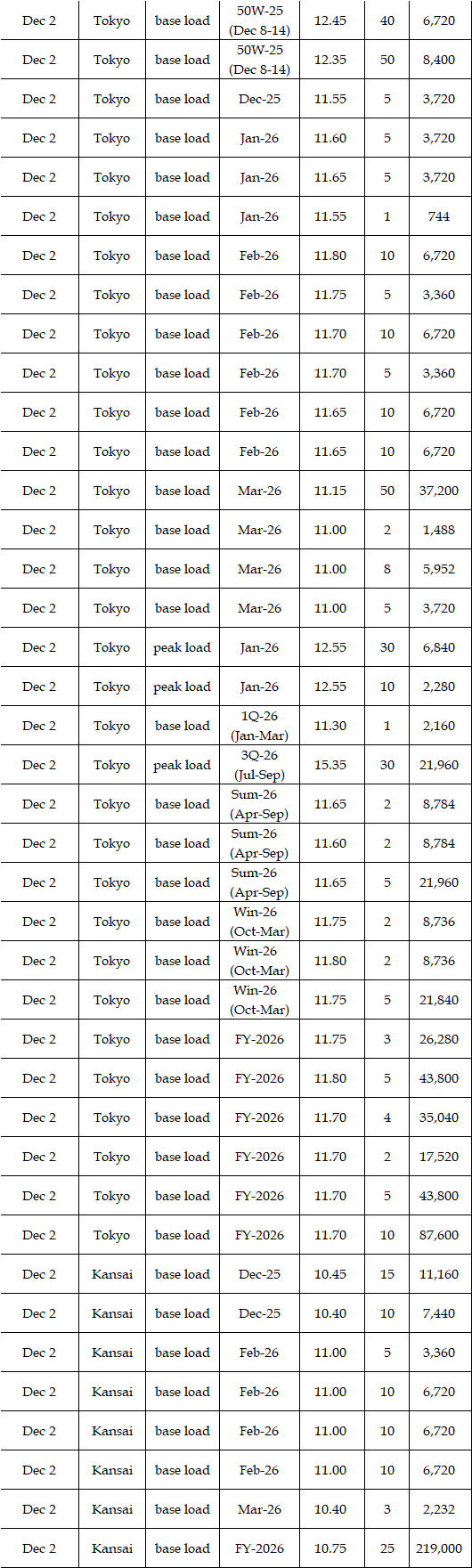
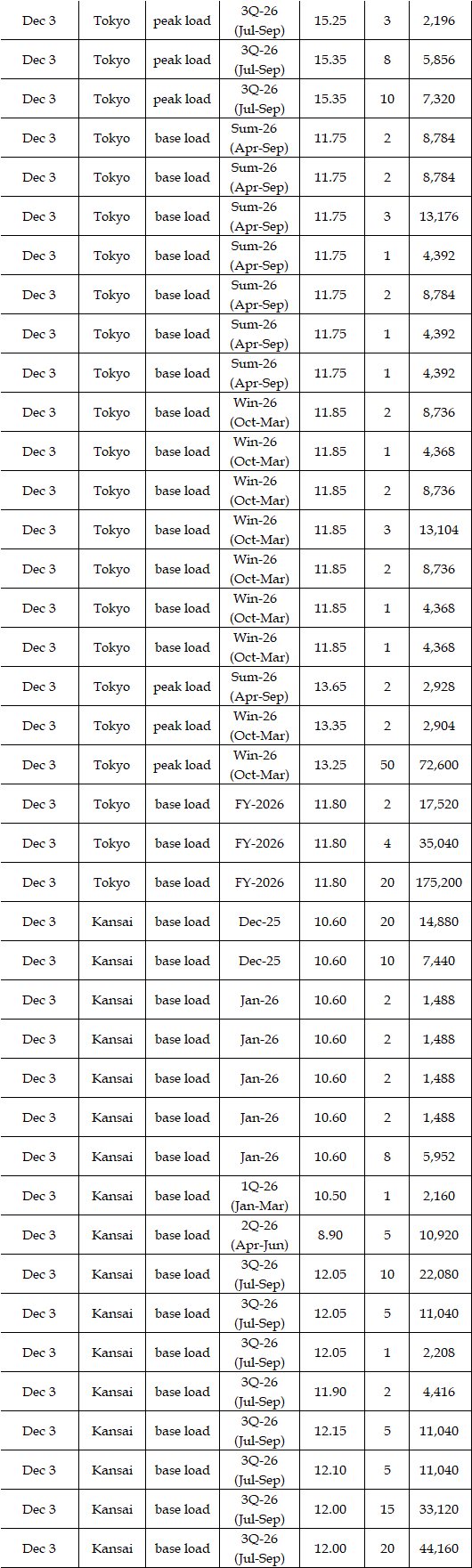
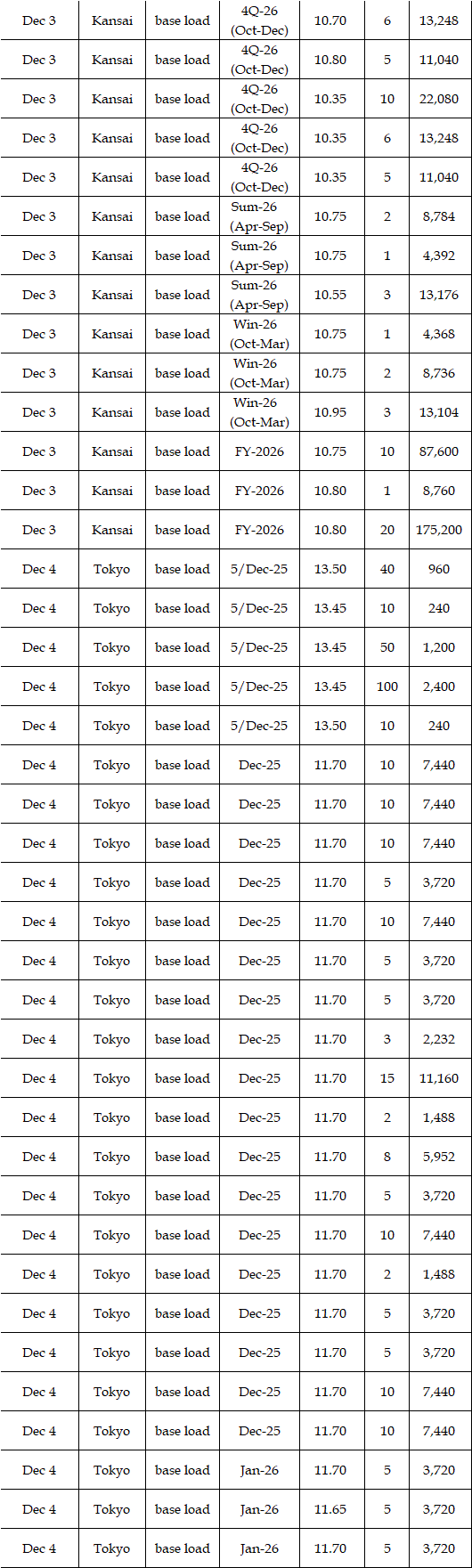
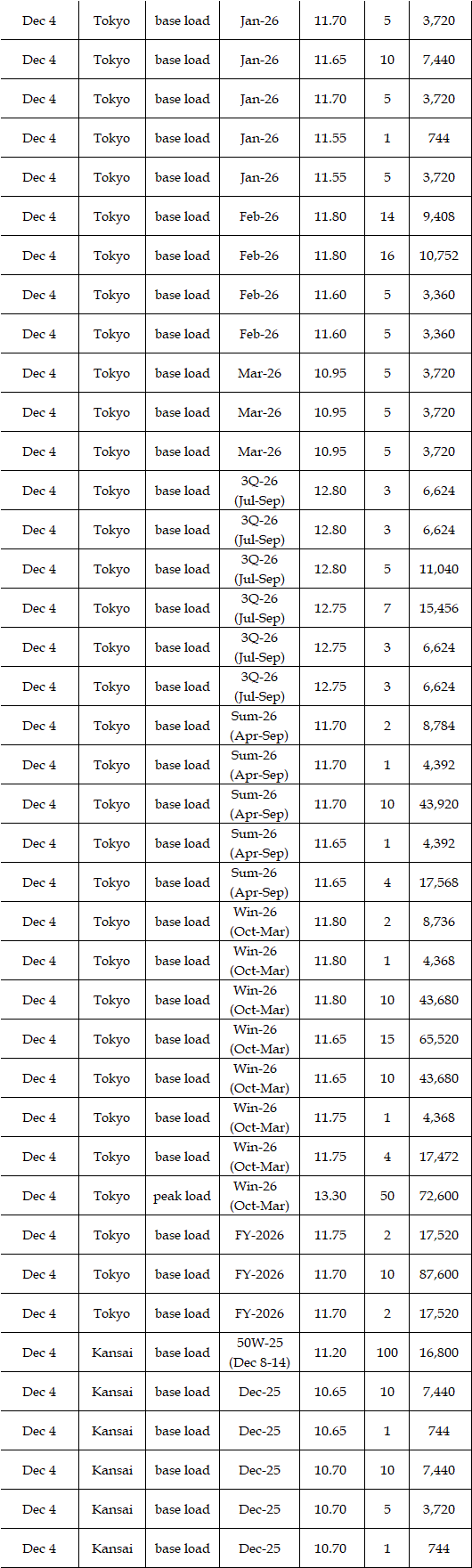
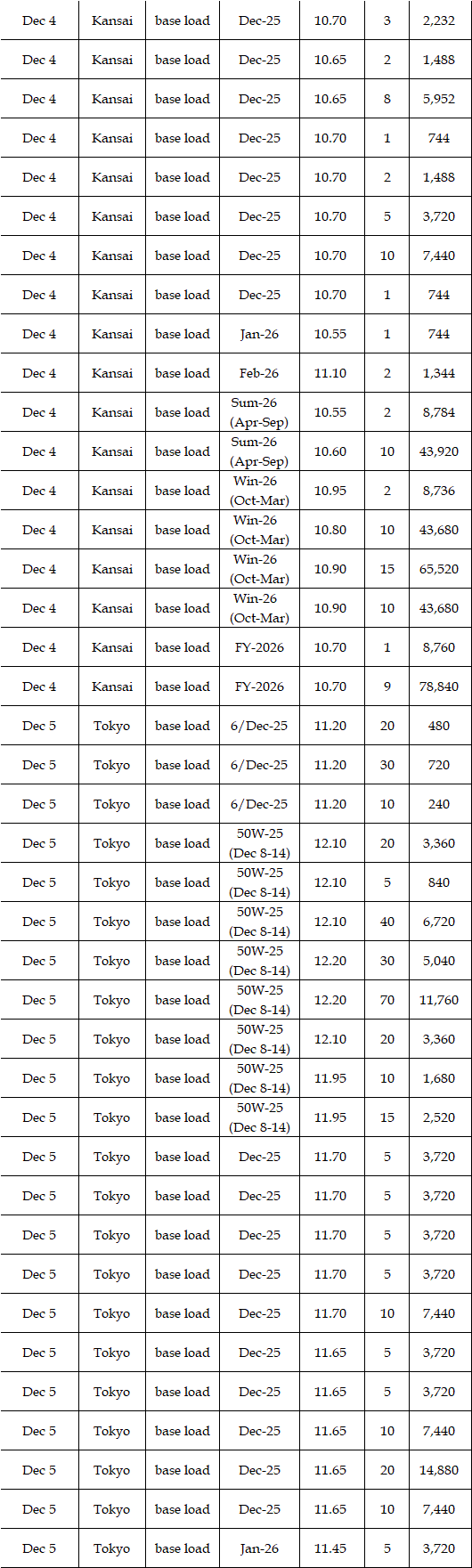
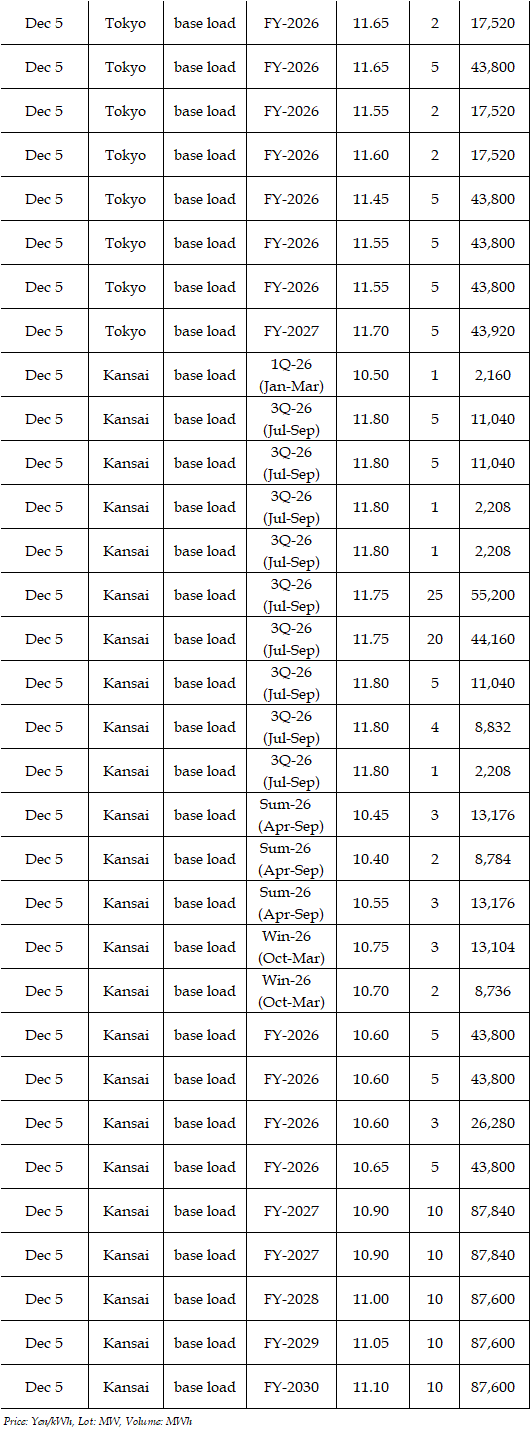
Deals reported on TOCOM (Tokyo Commodity Exchange) during Dec 1-5 were as below.
Deals reported on EEX (European Energy Exchange) during Dec 1-5 were as below.
Prices for the second week in December would be likely to hover at the same level as those in the first week of the month. High temperatures on Dec 8 were expected in the westbound from the Kanto, where 16-18 degrees were forecasted, which would weigh on prices. On Dec 9-10, temperatures would turn lower to 13 degrees in Tokyo, Osaka, and Nagoya; thereafter, they would turn higher again to more than 15 degrees in many places, including 17 degrees in Tokyo and 16 degrees in Osaka on Dec 11, followed by around 15 degrees in and to the west of Kanto on Dec 12 to curb demand for heating. During this period, clear weather was forecasted to increase outputs from photovoltaic power plants, along with more supply capacity from thermal power plants. Asked about the price outlook for the second week of December, "Prices will move in the range from the below-Yen 12 to mid-Yen 12's for Tokyo and stay the same as in Tokyo or slightly lower for Kansai, though it depends on decoupling," a source at a power producer and supplier said.
|
||||||||||||||||||||||||||||||
|
|
||||||||||||||||||||||||||||||





 Post
Post Print
Print


