

Power: Dec 8-12: Spot price mostly levels off except for Hokkaido affected by earthquake
|
In the day-ahead market on JEPX (Japan Electric Power Exchange), the 24-hour spot power prices on a weekly average basis for Dec 8-12 delivery stayed sideways in East Japan (50 Hz) and in West Japan (60 Hz) from the week before. Despite typical seasonally cold weather, plenty of offers were placed; as a result, prices did not change much. Meanwhile, a supply/demand balance in Hokkaido tightened owing to the outage of the Hokkaido-Honshu Line derived from an earthquake off the east coast of Aomori Prefecture late at night on Dec 8; spot prices for delivery on Dec 10 and onwards in Hokkaido have been rising, including on Dec 11, when the mean price reached Yen 20's and the high price reached Yen 50, respectively. As of the morning of Dec 12, of the total three Hokkaido-Honshu lines, only one has been operating.
The spread of the 24-hour spot average between Tokyo and Kansai, a major market area in East and West Japan, was Yen 0.78 on Dec 8, Yen 0.16 on Dec 10, Yen 0.62 on Dec 11, & Yen 0.22 on Dec 12 in favor of the East; and Yen 0.30 on Dec 9 in favor of the West.
The fuel market trends in the second week of December were detailed as follows.
DES Northeast Asia spot LNG prices on Dec 11 hovered at the high $9's per mmBtu for prompt January 2026 delivery, breaking below $10's for the first time since April 2024; compared with the end of the previous week (Dec 5), the prices fell by almost $1.00. In the wake of the fall in the natural gas markets in Europe, in combination with weak buying interests from end-users in Northeast Asia as well as selling pressures from players who carried stocks, prices went down. The Ministry of Economy, Trade and Industry (METI) announced on Dec 10 that Japan's LNG inventories for power generation stood at 2.18 mil mt as of Dec 7, up 110,000 mt from a week before. The figure was above the end of December last year (2.15 mil mt) but below the average for the past five years (2.23 mil mt).
FOB Newcastle thermal coal prices in Australia were at high $108's per ton for December 2025 loading as of Dec 11, down around $ 1.5 from the end of the previous week in response to the softened gas prices.
In the crude oil market, WTI crude for January 2026 stood in the high-$57's per barrel at 10AM on Dec 12, while Brent crude for February 2026 was trading in the mid $61's. Prices dropped by around $2 from the end of the previous week for WTI and Brent due to the talks for a truce between Ukraine and Russia, along with oversupply. The short-term energy outlook released by the US Energy Information Administration (EIA) indicated that US crude production in 2025 would reach 1,361 barrels per day, renewing a historical high.
The actual highest price during the week was at Yen 50.00 in six West Japan areas on Dec 11; the actual lowest price during the week was at Yen 4.70 in Shikoku on Dec 9.
By area, the weekly average of the 24-hour spot prices was at Yen 14.15 in Hokkaido, up Yen 2.62 from the previous week; Yen 11.65 in Tohoku, up Yen 0.14; Yen 12.14 in Tokyo, down Yen 0.35; Yen 12.17 in Chubu, down 0.24; Yen 11.85 in Hokuriku, down Yen 0.37; Yen 11.85 in Kansai, down Yen 0.15; Yen 11.71 in Chugoku, down Yen 0.23; Yen 11.41 in Shikoku, up Yen 0.14; and Yen 11.36 in Kyushu, down Yen 0.44.
In the JEPX auction, the volume of offers was 1,196.86 mil kWh on a weekly average basis, up 1.5% from the previous week. Meanwhile, bids on a weekly average basis were up 0.1% to 1,031.77 mil kWh. The weekly average of trade volumes recorded 800.27 mil kWh, up 1.8%.
Power demand in nine areas of Japan during Dec 8-12 was a combined 12,884.64 mil kWh, up 3.4% from 12,459.16 mil kWh during Dec 1-5. The figure was down 1.8% from the corresponding period a year earlier, which was 13,249.23 mil kWh during Dec 9-13, 2024, after day-of-week adjustment.
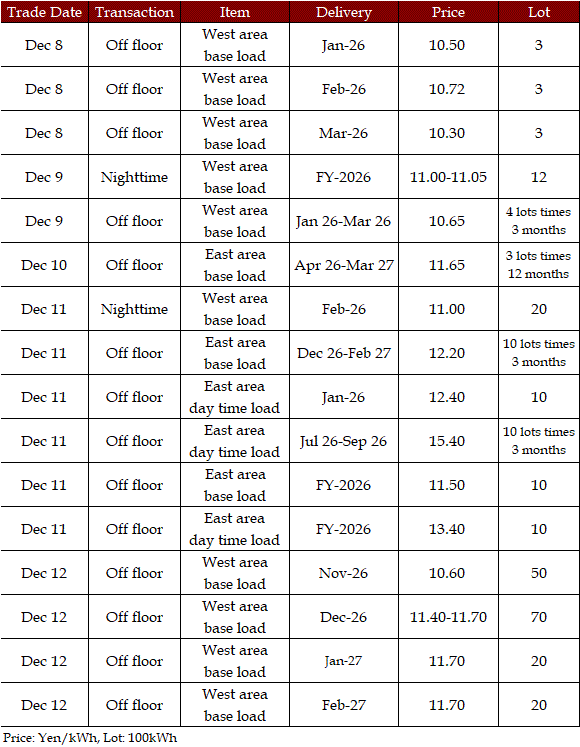
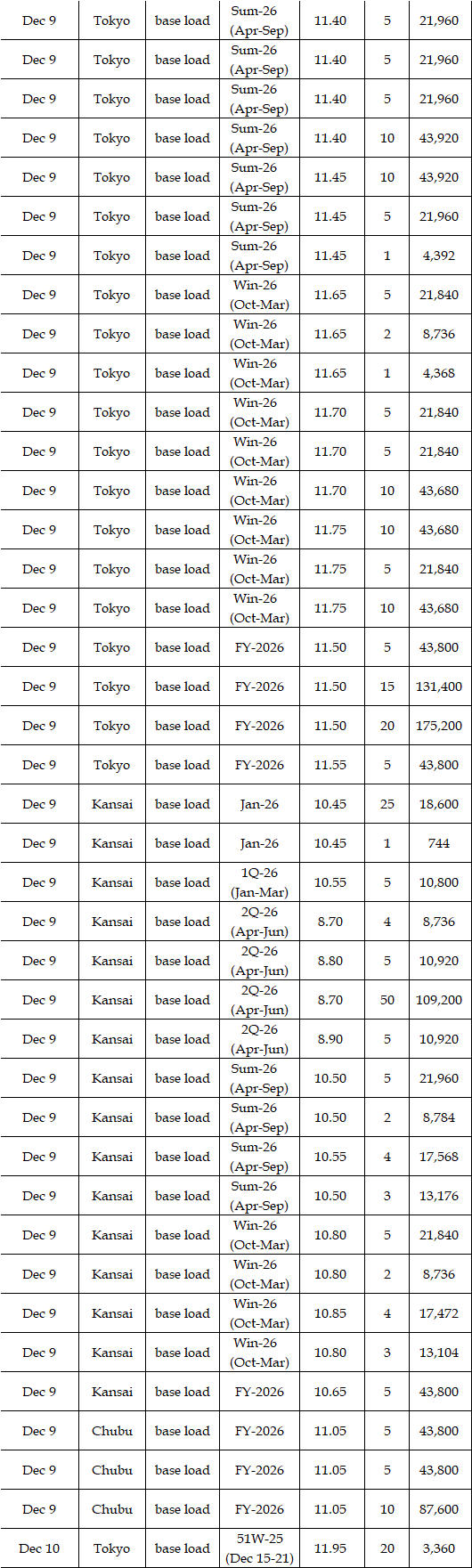
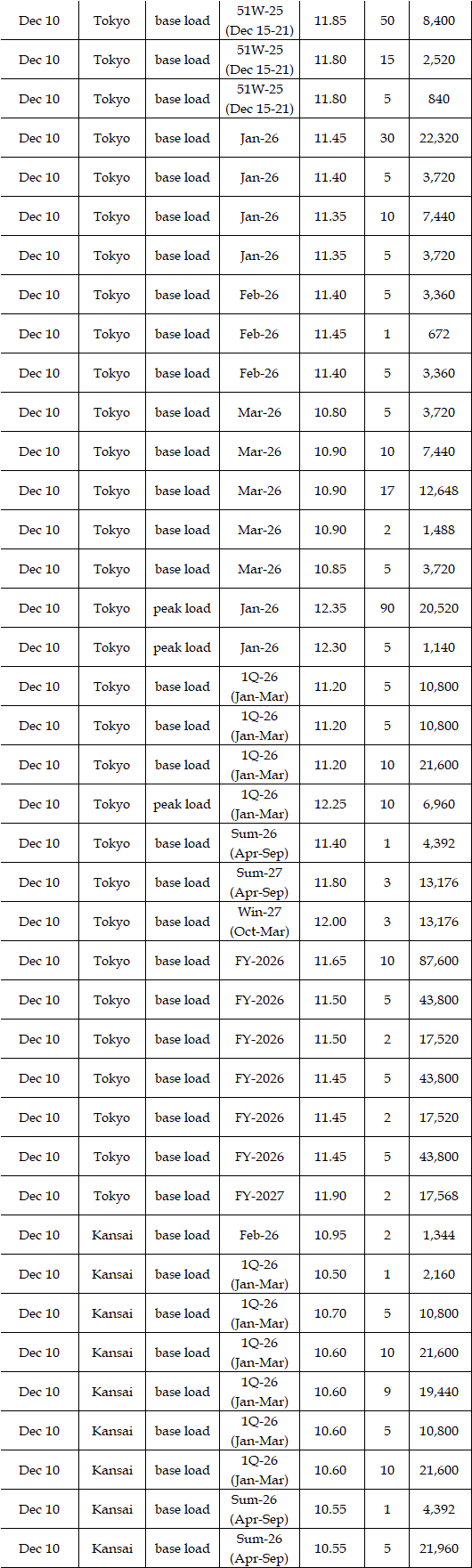
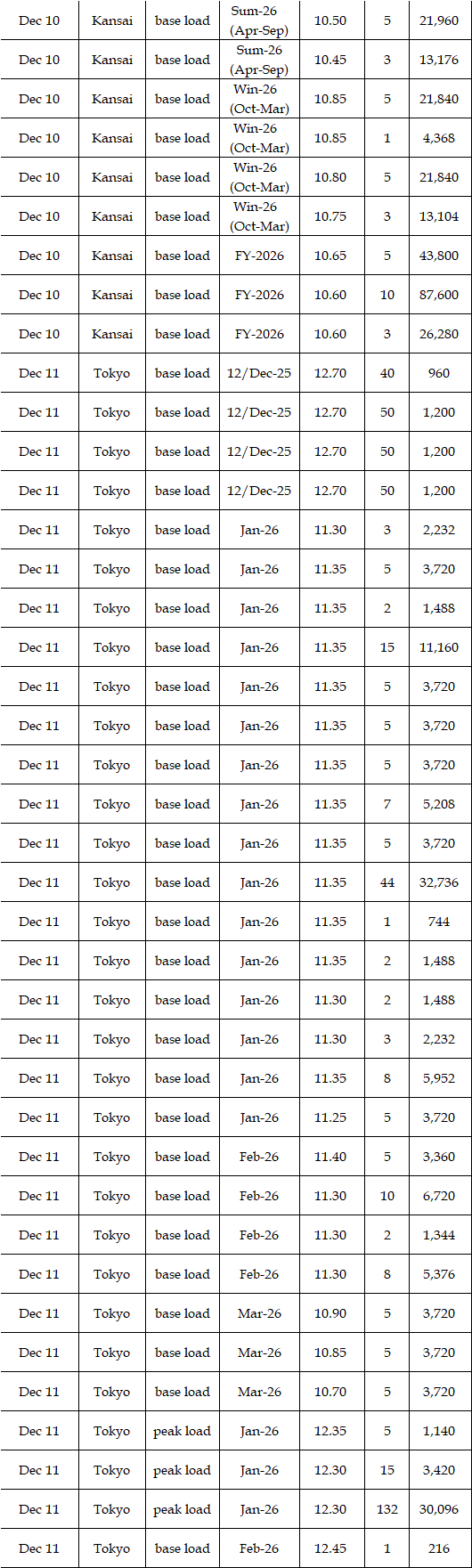
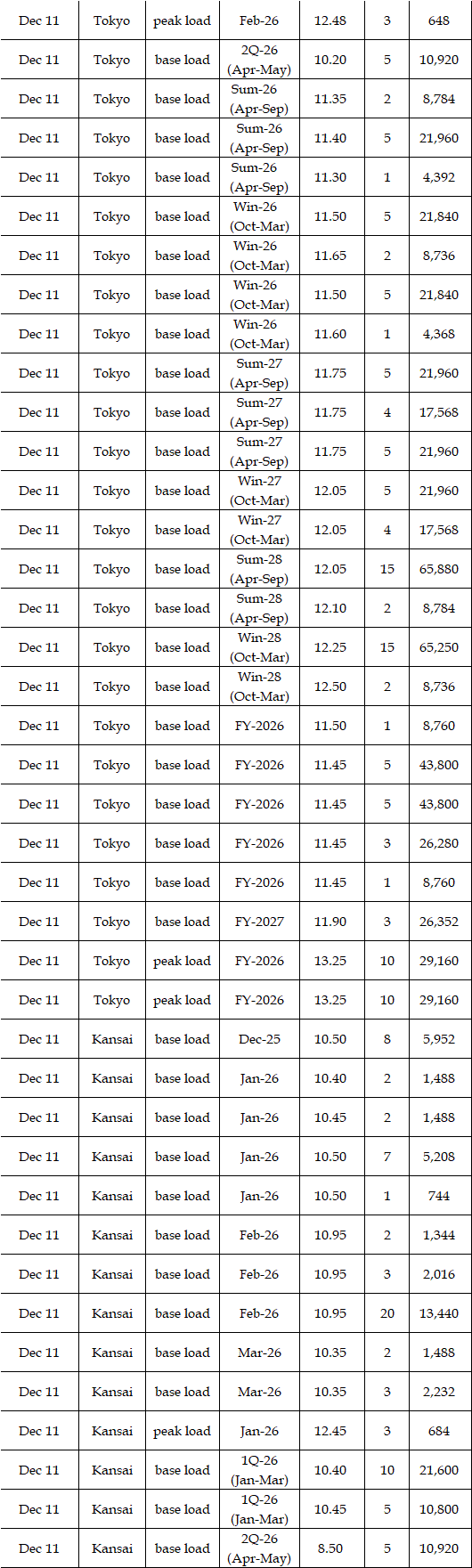
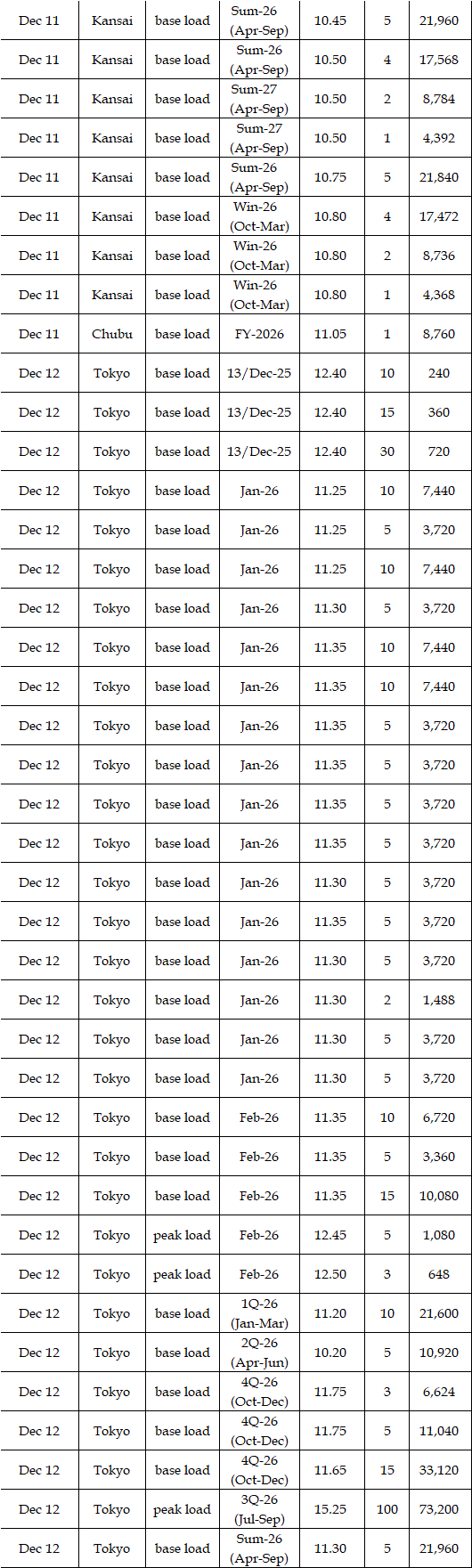
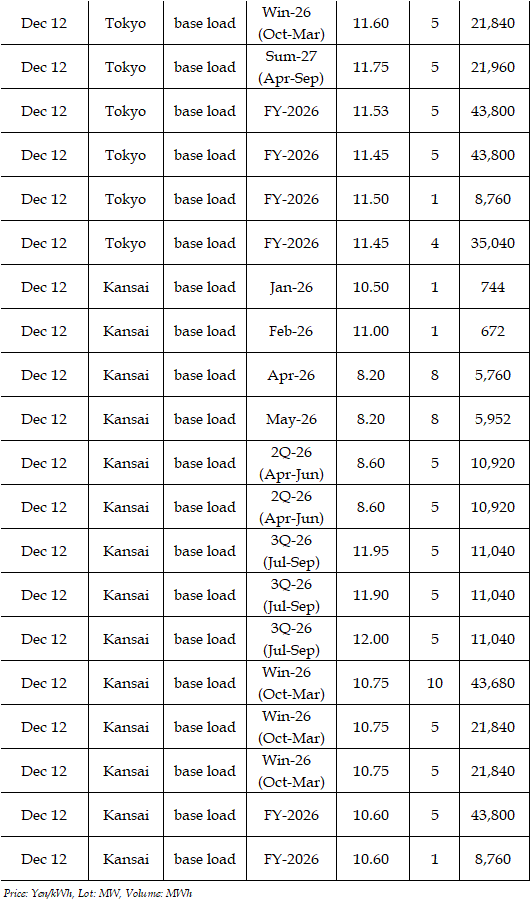
Deals reported on TOCOM (Tokyo Commodity Exchange) during Dec 8-12 were as below.
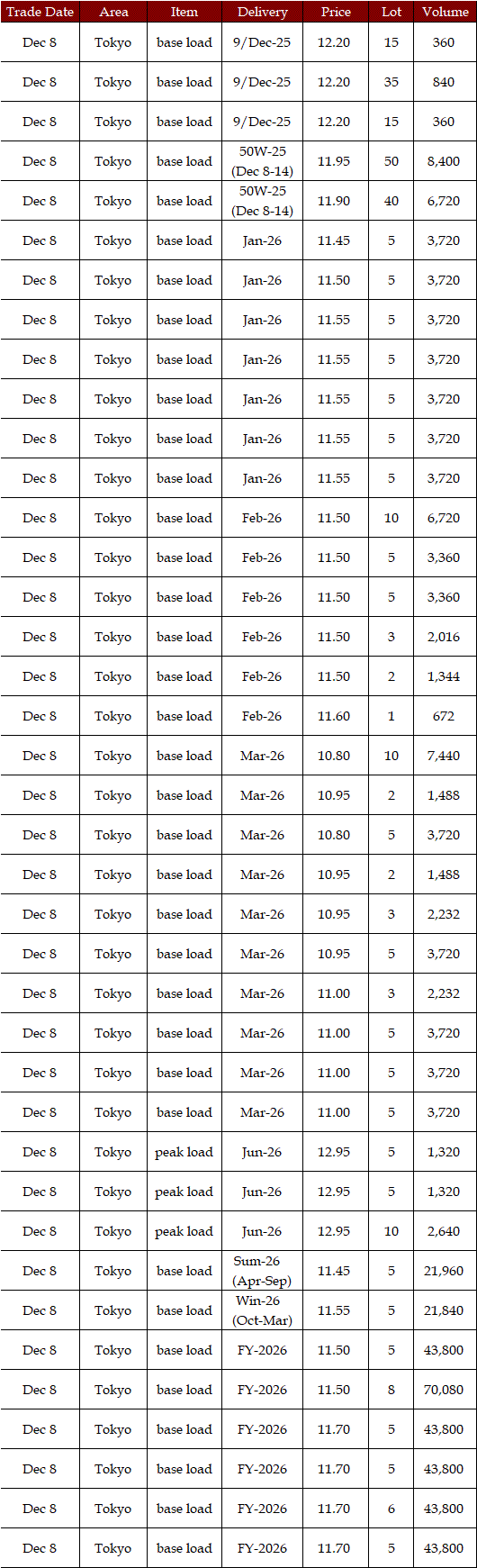
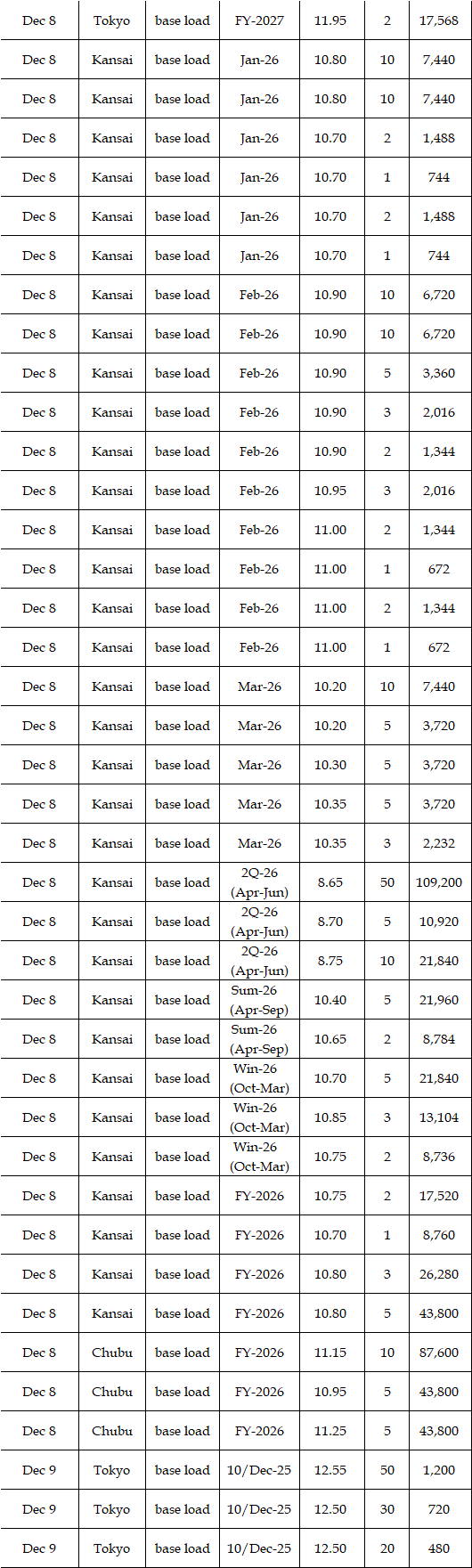
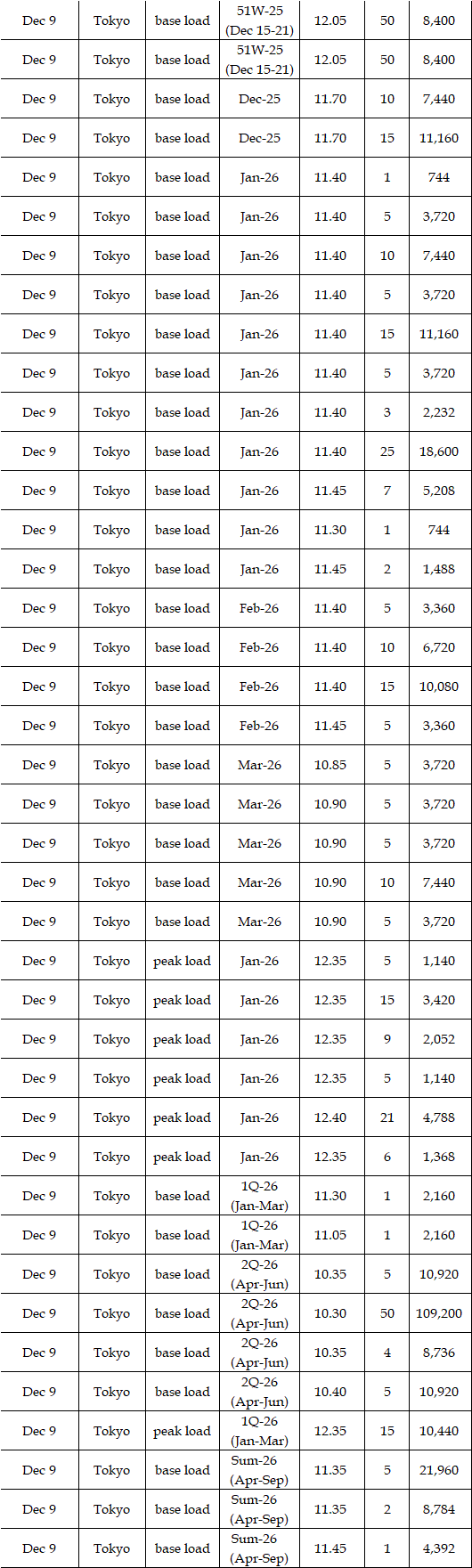
Deals reported on EEX (European Energy Exchange) during Dec 8-12 were as below.
Prices for the third week in December would be likely to hover at the same level as those in the second week of the month. Temperatures were expected to be usual in many areas, and supply/demand balance would be stable. In the middle of the week, rains were forecasted in vast areas, sandwiched by a sunny spell in the first half and second half of the week, which worked to weigh on prices through the outputs from photovoltaic power plants. At the same time, an increase in the return of thermal and hydro power plants from their maintenance would work as a bearish factor. Asked about the price outlook in the third week of Dec, a source at a power producer and supplier said, "Prices will hover at mid-Yen 12's for Tokyo and at Yen 0.5-1.0 lower than those in Tokyo for Kansai; thus, a lull market will last."
|
||||||||||||||||||||||||||||||
|
|
||||||||||||||||||||||||||||||

 Post
Post Print
Print


