

Power: Dec 22-26: Spot price falls further on mild temperature
|
In the day-ahead market on JEPX (Japan Electric Power Exchange), the 24-hour spot power prices on a weekly average basis for Dec 22-26 delivery fell further in East Japan (50 Hz) and in West Japan (60 Hz) from the week before. Despite normal weather in many areas, a supply/demand balance relaxed due to more thermal power plants returning from their maintenances and limited market participants from overseas during the holiday season, lowering prices. In Hokkaido, however, the price rose, unlike other areas, on many days to Yen 30 owing to a tight supply/demand balance derived from colder temperatures and the outage of one of the Hokkaido-Honshu lines.
The spread of the 24-hour spot average between Tokyo and Kansai, a major market area in East and West Japan, was Yen 0.58 on Dec 22, Yen 0.58 on Dec 23, Yen 1.21 on Dec 24, Yen 1.09 on Dec 25, and Yen 0.26 on Dec 26 in favor of the East.
The fuel market trends in the fourth week of December were detailed as follows.
DES Northeast Asia spot LNG prices on Dec 25 hovered at the high-$9's per mmBtu for prompt February 2026 delivery, up roughly 20cts from the end of the previous week (Dec 19). While the natural gas markets in Europe lacked a clear direction, fresh demand from Northeast and Southeast Asia made the market solid. The Ministry of Economy, Trade and Industry (METI) announced on Dec 24 that Japan's LNG inventories for power generation stood at 2.39 mil mt as of Dec 21, up 250,000 mt from a week before. The figure was above the end of December last year (2.15 mil mt) and the average for the past five years (2.23 mil mt).
FOB Newcastle thermal coal prices in Australia were at $109 per ton for January 2026 loading as of Dec 24, up over $3.00 from the end of the previous week. Prices followed the natural gas market.
In the crude oil market, WTI crude for January 2026 stood in the mid-$58's per barrel at 8AM on Dec 26, while Brent crude for February 2026 was trading in the low-$62s. Prices gained by around $2.00 from the end of the previous week for WTI and by $2.00 for Brent. Supply worries about crude oil from Venezuela worked as a bullish sentiment.
The actual highest price during the week was at Yen 30.00 in Hokkaido on Dec 22 and 23; the actual lowest price during the week was at Yen 5.50 in Tohoku on Dec 23.
By area, the weekly average of the 24-hour spot prices was at Yen 12.03 in Hokkaido, up Yen 0.16 from the previous week; Yen 10.15 in Tohoku, down Yen 0.75; Yen 10.51 in Tokyo, down Yen 0.84; Yen 10.07 in Chubu, down Yen 0.63; Yen 9.77 in Hokuriku and Kansai, down Yen 0.17; Yen 9.76 in Chugoku, down Yen 0.12; Yen 9.69 in Shikoku, down Yen 0.06; and Yen 9.64 in Kyushu, down Yen 0.22.
In the JEPX auction, the volume of offers was 1,241.42 mil kWh on a weekly average basis, up 1.3% from the previous week. Meanwhile, bids on a weekly average basis were down 0.8% to 1,019.09 mil kWh. The weekly average of trade volumes recorded 772.29 mil kWh, down 2.4%.
Power demand in nine areas of Japan during Dec 22-26 was a combined 12,805.24 mil kWh, down 2.5% from 13,136.29 mil kWh during Dec 15-19. The figure was down 4.2% from the corresponding period a year earlier, which was 13,372.70 mil kWh during Dec 23-27, 2024, after day-of-week adjustment.
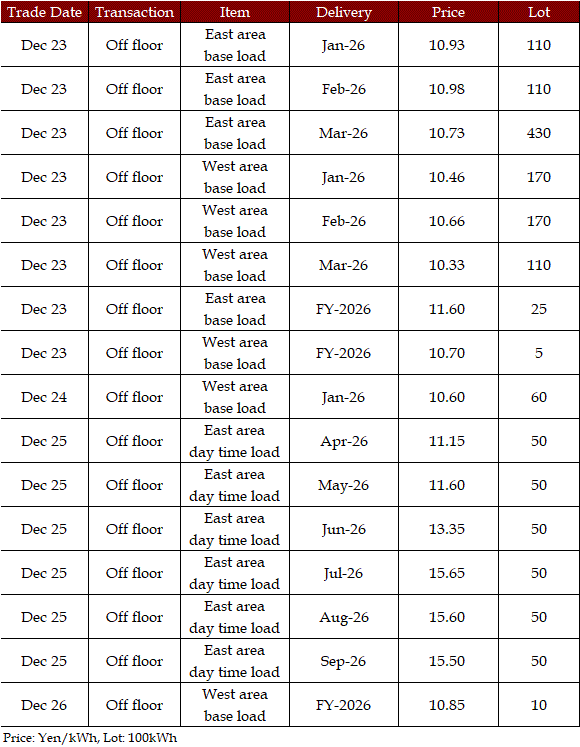
Deals reported on TOCOM (Tokyo Commodity Exchange) during Dec 22-26 were as below.
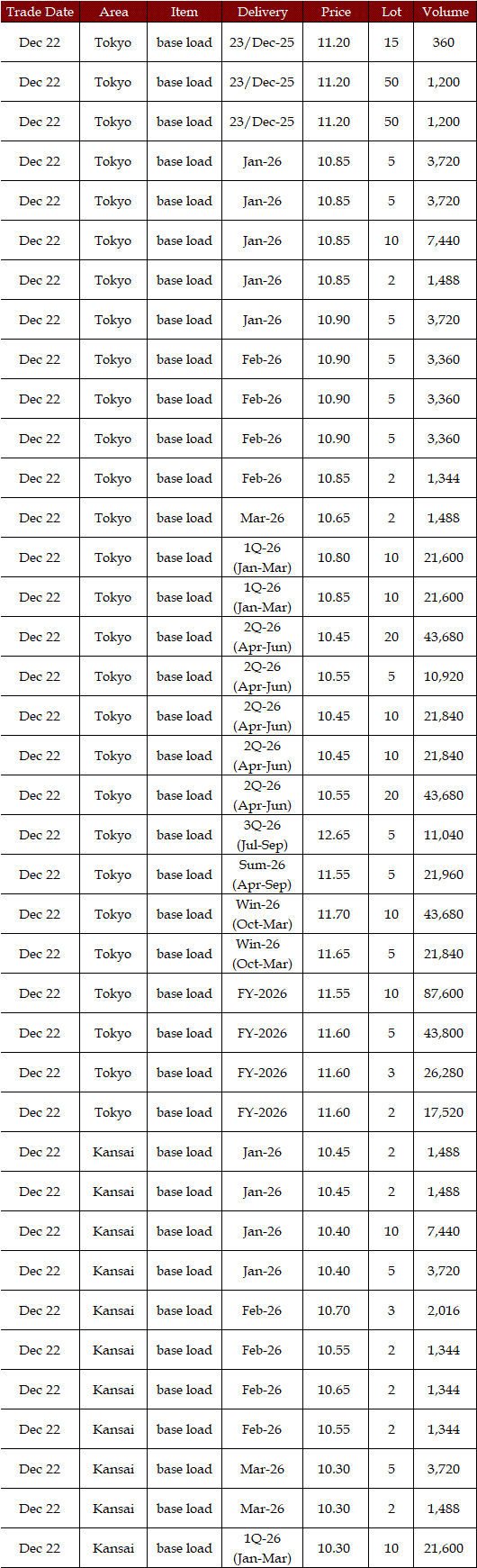
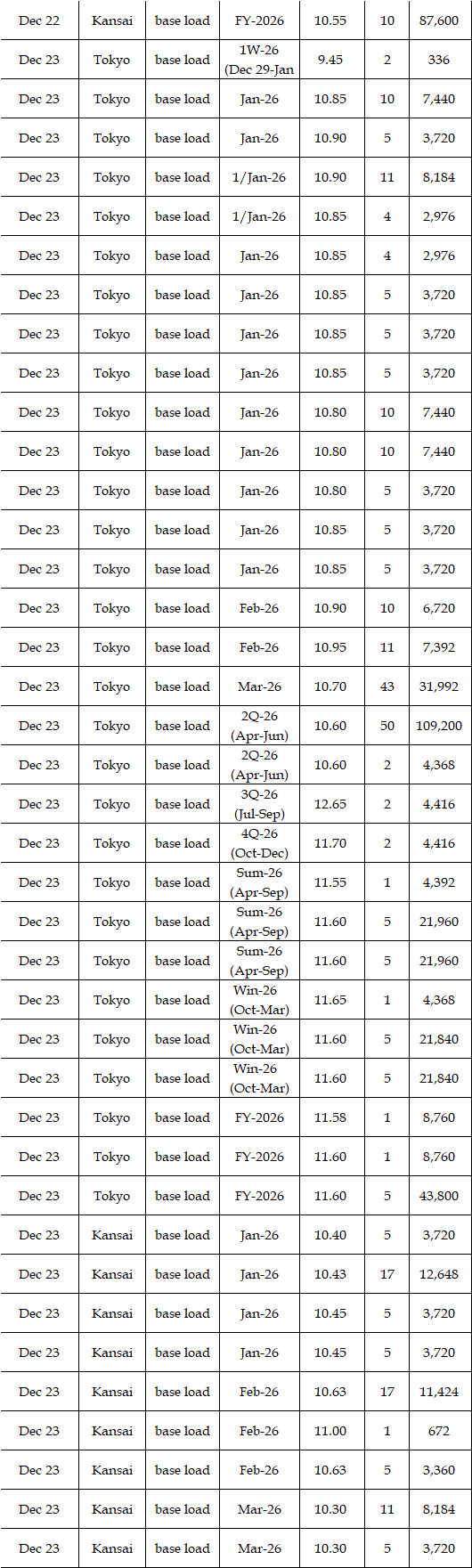
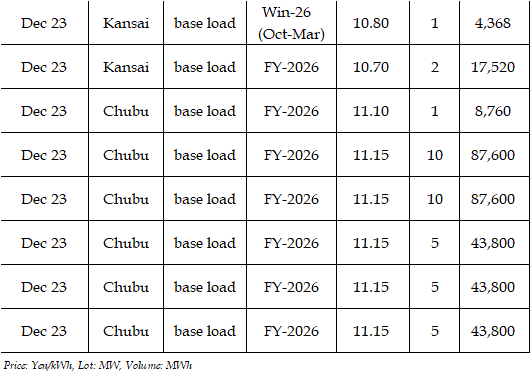
Deals reported on EEX (European Energy Exchange) during Dec 22-26 were as below. EEX was closed from December 24th to 26th due to Christmas and Boxer Day
Prices for the final week in December would fall further. Dec 26 is the final business day of the year for many companies, which indicates low demand from offices and plants to lower prices. For the weather outlook, mild temperatures were expected until the middle of next week, followed by colder ones in January with a possible upward pressure on prices to some degree. However, a dull demand during the New Year holiday, as mentioned before, would put a lid on prices. Asked about the price outlook from the final week of December to early January, a source at a power producer and supplier said, "Base load prices will hover at Yen 9's for Tokyo and Yen 8's for Kansai. Yen over-10's will be unlikely for both."
|
||||||||||||||||||||||||||||||
|
|
||||||||||||||||||||||||||||||

 Post
Post Print
Print


