

Power: Jan 5-9: Spot price moves dull despite cold spell
|
In the day-ahead market on JEPX (Japan Electric Power Exchange), the 24-hour spot power prices on a weekly average basis for Jan 5-9 delivery rose sharply in East Japan (50 Hz) and in West Japan (60 Hz) from the week before (Dec 29-Jan 2). With the end of the New Year holiday season, power demand from companies and manufacturing plants has returned to normal, hiking prices. A typical seasonal cold weather in many areas played a part as well; the maximum power demand on Jan 7 reached 48.63 mil kW in Tokyo and 22.58 mil kW in Kansai, the largest volume this season for both areas. However, despite cold temperatures, prices did not rise much--the 24-hour average price is just Yen 12.89 for Tokyo and Yen 9.69 for Kansai even on Jan 7, mentioned before. The modest price level might be associated with the stable supply capacity of thermal power plants, which allowed them to offer plenty of lots through the week and cap prices.
The spread of the 24-hour spot average between Tokyo and Kansai, a major market area in East and West Japan, was Yen 1.59 on Jan 5, Yen 0.93 on Jan 6, Yen 3.20 on Jan 7, Yen 1.48 on Jan 8, and Yen 0.81 on Jan 9 in favor of the East.
The fuel market trends in the second week of January were detailed as follows.
DES Northeast Asia spot LNG prices on Jan 8 hovered at the mid-$9's per mmBtu for prompt February 2026 delivery, down roughly 15cts from Dec 25. While the natural gas markets in Europe lacked a clear direction, a loose supply/demand balance in the DES Northeast Asia market has lingered, weighing on prices. The Ministry of Economy, Trade and Industry (METI) announced on Jan 6 that Japan's LNG inventories for power generation stood at 2.30 mil mt as of Jan 4, down 130,000 mt from a week before. The figure was above the end of December last year (2.15 mil mt) and the average for the past five years (2.23 mil mt).
FOB Newcastle thermal coal prices in Australia were at mid-$107's per ton for January 2026 loading as of Jan 8, up around $1.00 from the end of the previous week (Jan 2).
In the crude oil market, WTI crude for February 2026 stood in the mid-$58's per barrel at 7AM on Jan 9, while Brent crude for March 2026 was trading in the high-$62s. Prices gained by around $1.00 from the end of the previous week for WTI and by $2.00 for Brent. Supply worries about crude oil from Venezuela, which worked as a bullish sentiment in the first half of the week, were offset by the outlook of the US's policy to boost exports of Venezuelan crude.
The actual highest price during the week was at Yen 35.98 in Hokkaido on Jan 6; the actual lowest price during the week was at Yen 0.01 in Shikoku on Jan 6 and 8.
By area, the weekly average of the 24-hour spot prices was at Yen 13.80 in Hokkaido, up Yen 4.46 from the previous week; Yen 11.51 in Tohoku, up Yen 2.36; Yen 12.02 in Tokyo, up Yen 2.52; Yen 11.79 in Chubu, up Yen 3.31; Yen 10.74 in Hokuriku, up Yen 2.65; Yen 10.42 in Kansai, up Yen 2.33; Yen 10.38 in Chugoku, up Yen 2.30; Yen 7.16 in Shikoku, down Yen 0.79; and Yen 10.31 in Kyushu, up Yen 2.28.
In the JEPX auction, the volume of offers was 1,201.86 mil kWh on a weekly average basis, down 11.9% from the previous week. Meanwhile, bids on a weekly average basis were up 17.8% to 1,090.04 mil kWh. The weekly average of trade volumes recorded 828.75 mil kWh, up 10.6%.
Power demand in nine areas of Japan during Jan 5-9 was a combined 14,043.21 mil kWh, up 34.3% from 10,457.65 mil kWh during Dec 29-Jan 2. The figure was down 1.8% from the corresponding period a year earlier, which was 14,302.81 mil kWh during Jan 6-10, 2025, after day-of-week adjustment.
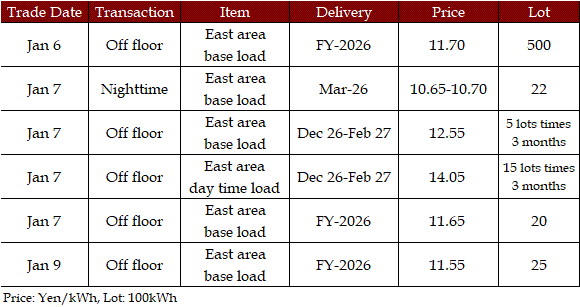
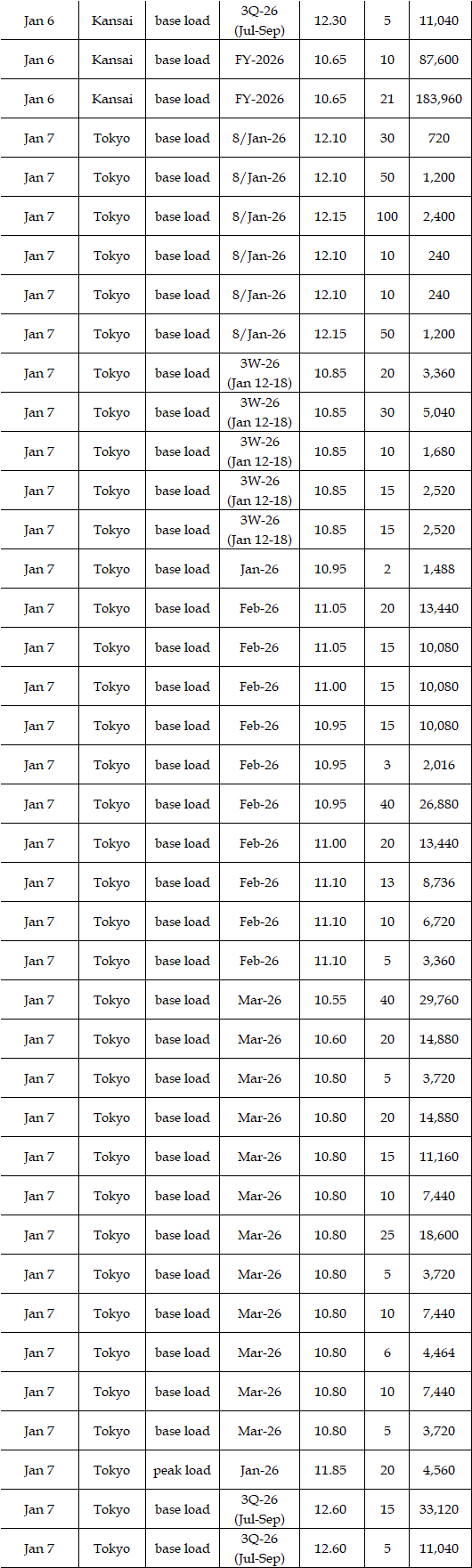
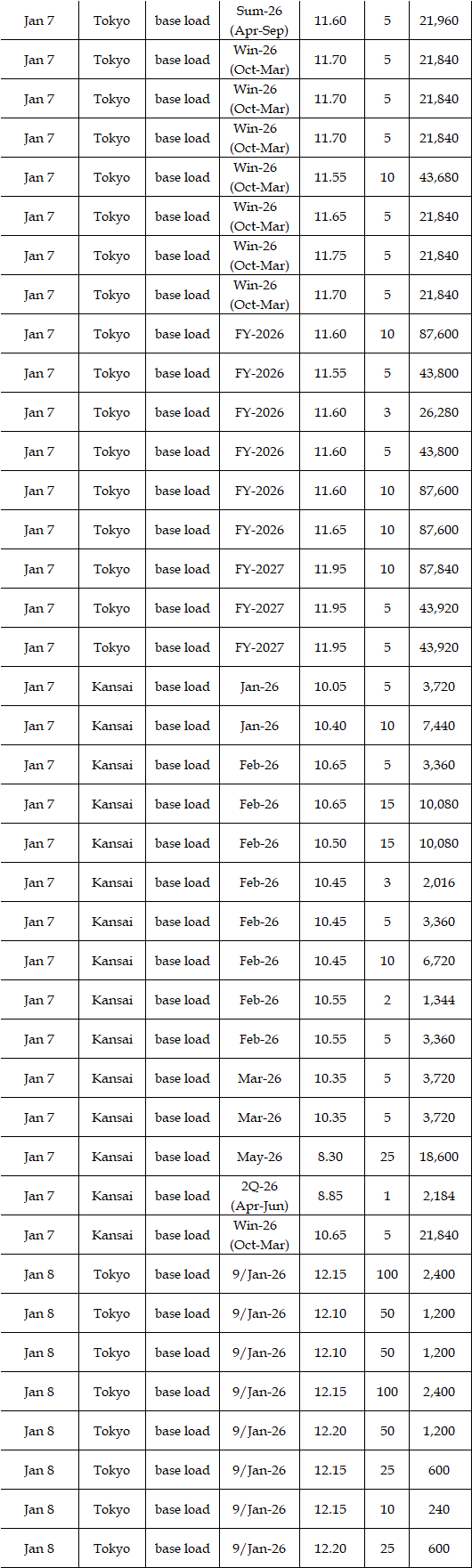
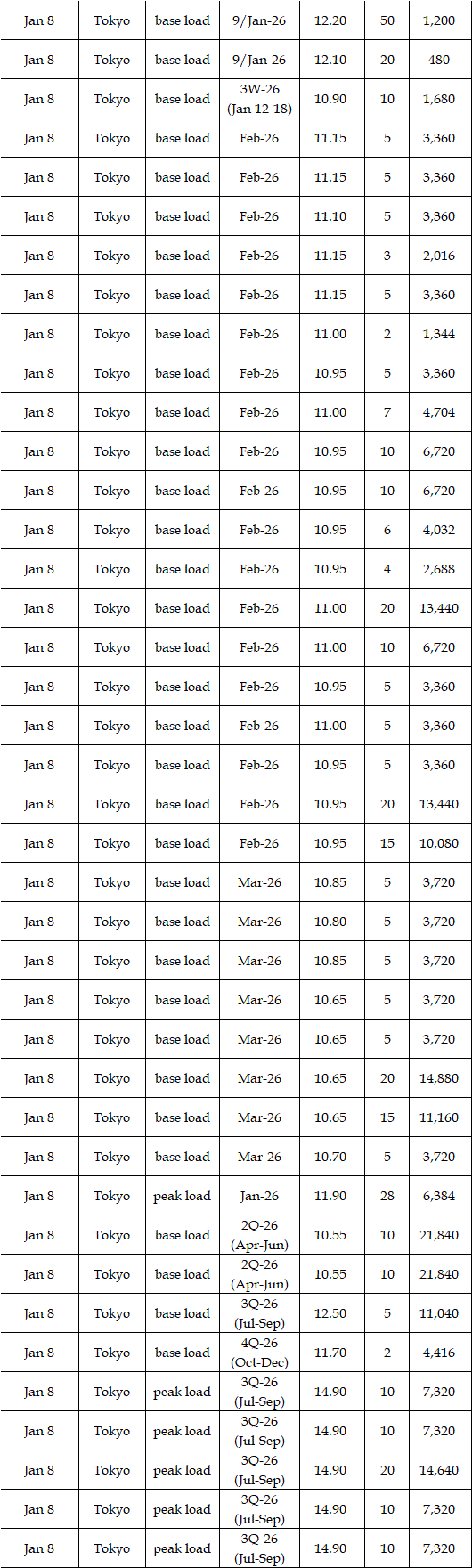
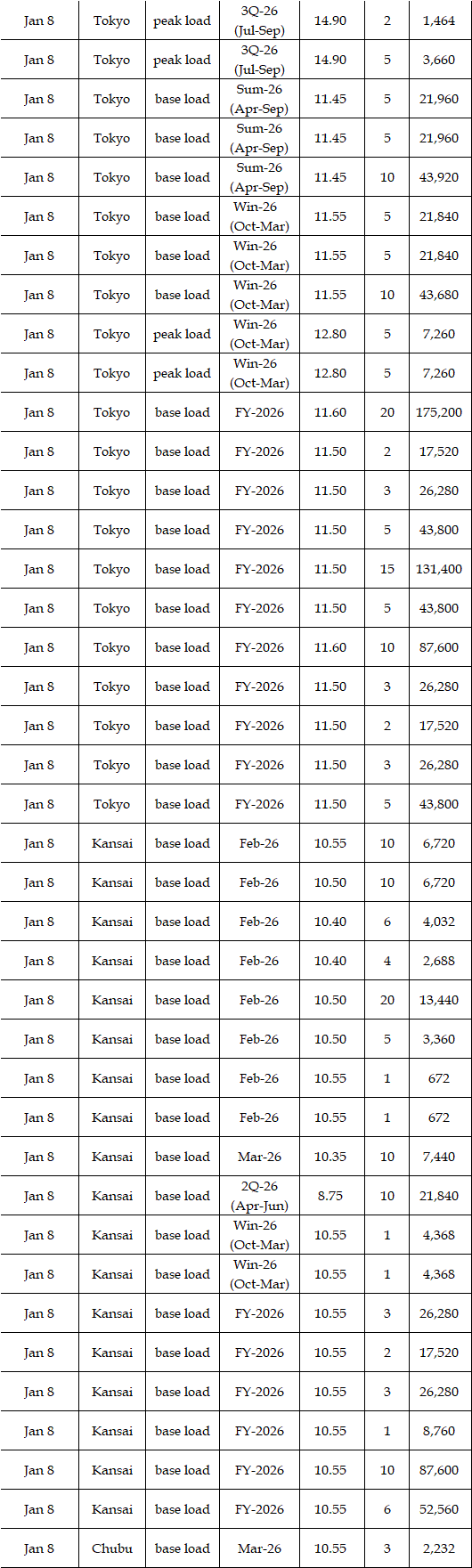
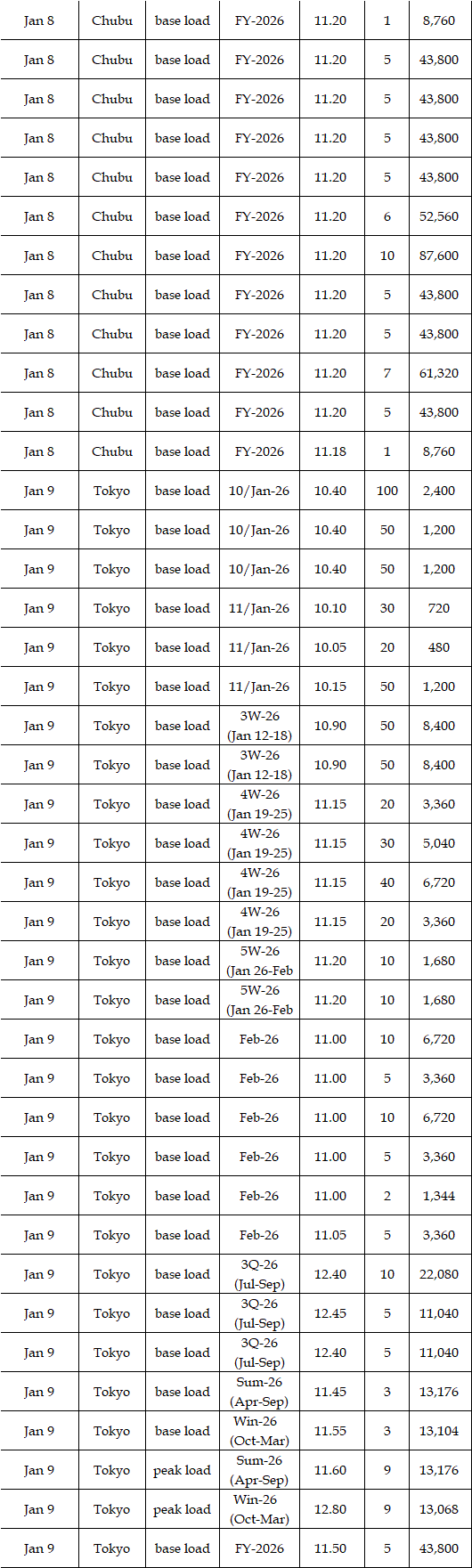
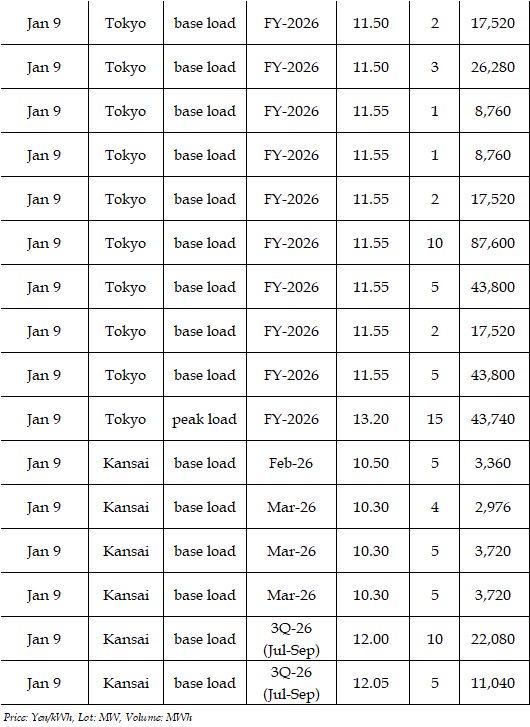
Deals reported on TOCOM (Tokyo Commodity Exchange) during Jan 5-9 were as below.
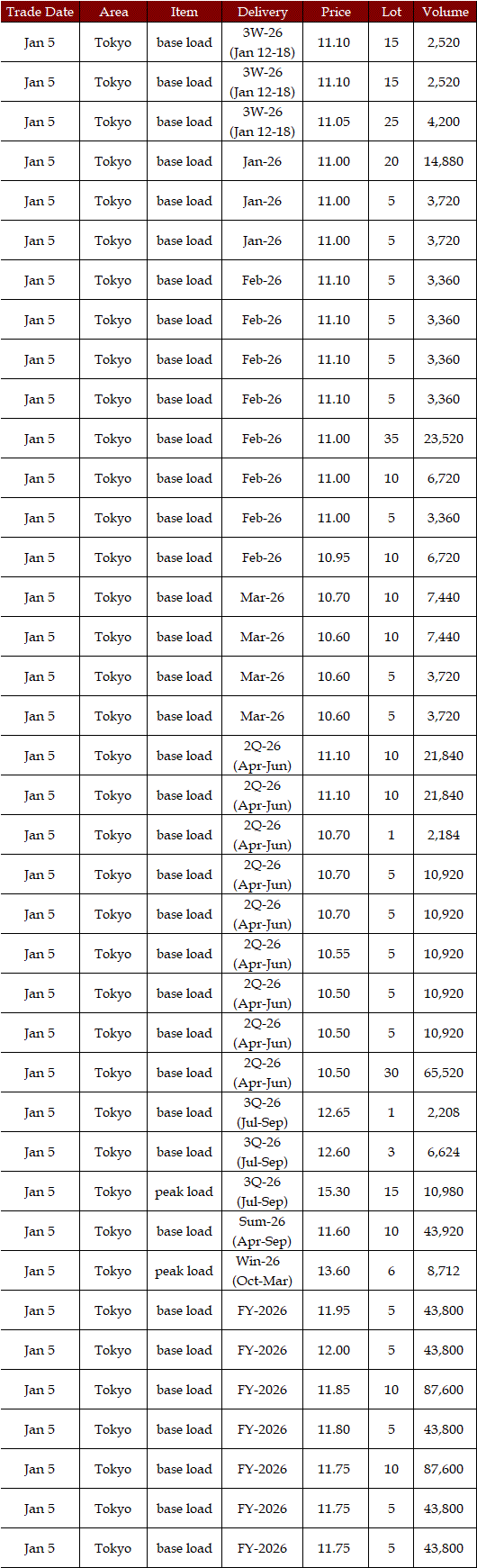
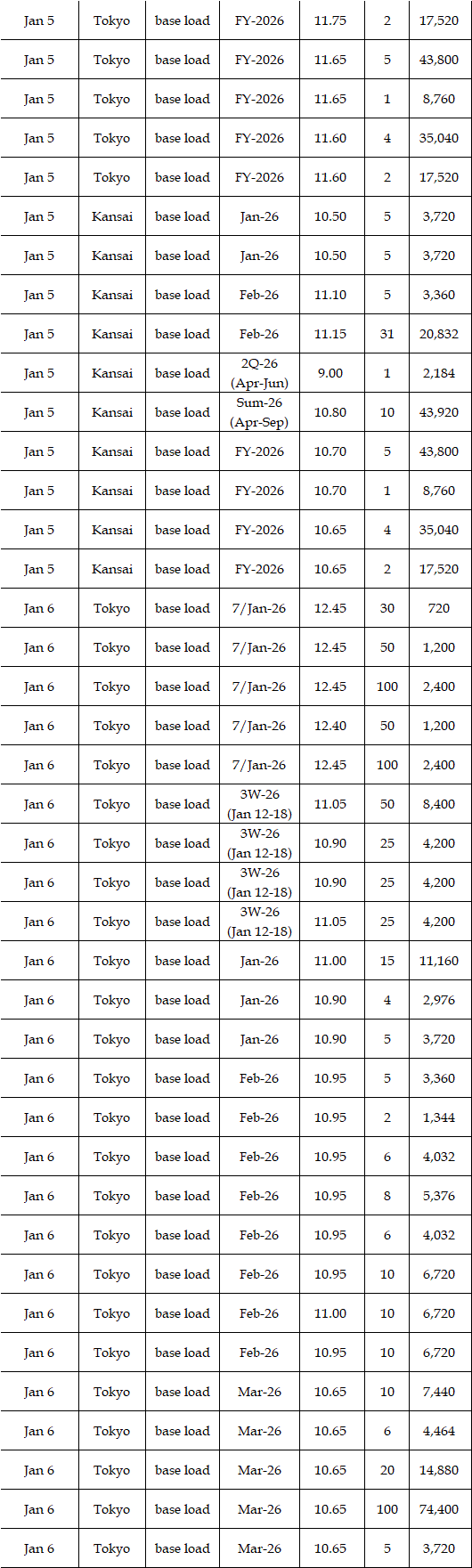
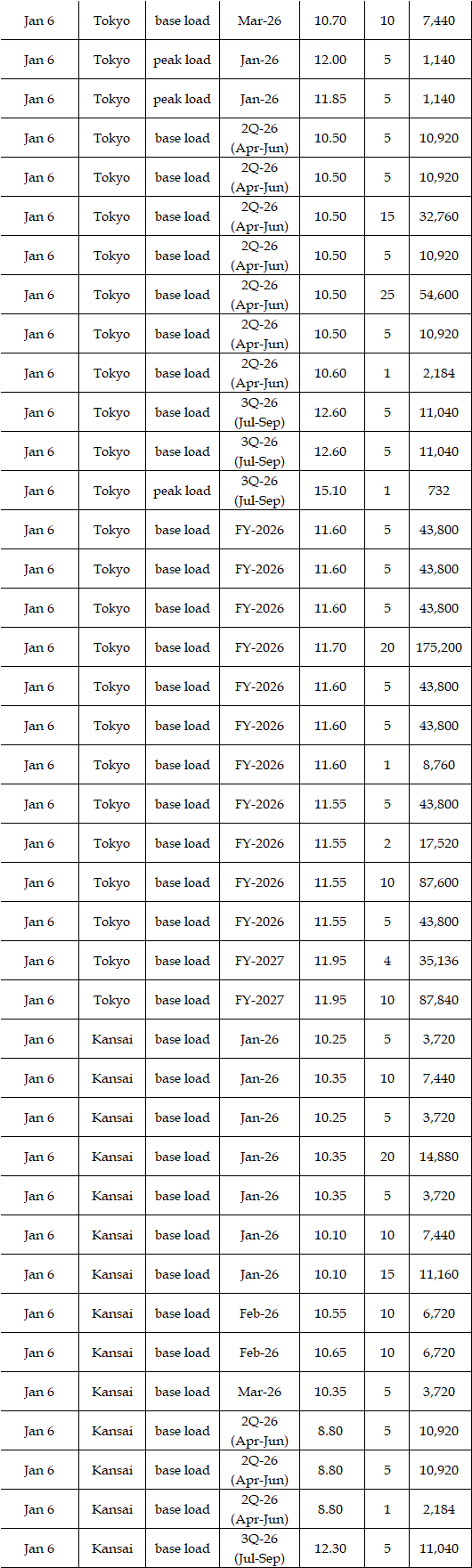
Deals reported on EEX (European Energy Exchange) during Jan 5-9 were as below.
Prices for the third week in January would move in a small range. In contrast to the severe cold weather being expected on Jan 12, the final day of the three-day holiday, temperatures would turn upward on Jan 13 and onwards. In some areas westbound from the Kanto, temperatures could climb to around 15 degrees, which would reduce demand for heating. Indeed, the one-month weather forecast (Jan 10-Feb 9) released by the Japan Meteorological Agency on Jan 8 implied high temperatures in and to the west of the Kanto area, weighing spot prices. Asked about the price forecast for the third week of January, a source at a power producer and supplier said, "Base load price would hover at Yen 11's in Kanto and at around Yen 10's in Kansai. Higher temperatures compared with the week starting Jan 5 will put a lid on prices."
|
||||||||||||||||||||||||||||||
|
|
||||||||||||||||||||||||||||||

 Post
Post Print
Print


