|
In the day-ahead market on JEPX (Japan Electric Power Exchange), the 24-hour spot power prices on a weekly average basis for Jan 12-16 delivery dropped in East Japan (50 Hz) and in West Japan (60 Hz) from the week before. High temperatures weakened demand for heating and then lowered prices. Along with ample outputs from photovoltaic power mainly in the area on the Pacific Sea coast side, prices in West Japan fell to Yen 0.01. Overall, prices were weighed down, owing to plenty of offers under the smooth operations from thermal power plants.
The spread of the 24-hour spot average between Tokyo and Kansai, a major market area in East and West Japan, was Yen 2.39 on Jan 12, Yen 2.58 on Jan 13, Yen 1.04 on Jan 14, Yen 2.54 on Jan 15, and Yen 2.62 on Jan 16 in favor of the East.
The fuel market trends in the third week of January were detailed as follows.
DES Northeast Asia spot LNG prices on Jan 15 hovered at the high-$9's per mmBtu for prompt February 2026 delivery, up roughly 25cts from Jan 9. In Europe, low temperatures lifted the natural market, sending the DES Northeast Asia LNG market higher. However, a slack supply/demand balance in the DES Northeast Asia kept prices from surging. The Ministry of Economy, Trade and Industry (METI) announced on Jan 13 that Japan's LNG inventories for power generation stood at 2.28 mil mt as of Jan 11, down 10,000 mt from a week before. The figure was below the end of January last year (2.41 mil mt) but above the average for the past five years (2.05 mil mt).
FOB Newcastle thermal coal prices in Australia were at mid-$108's per ton for January 2026 loading as of Jan 15, up over $1.00 from the end of the previous week.
In the crude oil market, WTI crude for February 2026 stood in the low-$59's per barrel at 8AM on Jan 16, while Brent crude for March 2026 was trading in the high-$63s. Prices gained by around 50cts from the end of the previous week for WTI and Brent. The geopolitical risk in the Middle East, such as the tension in Iran, raised the crude markets.
The actual highest price during the week was at Yen 22.35 in Chubu on Jan 14; the actual lowest price during the week was at Yen 0.01 in Shikoku on Jan 13-14 as well as in five areas (Hokuriku, Kansai, Chugoku, Shikoku, and Kyushu) on Jan 16.
By area, the weekly average of the 24-hour spot prices was at Yen 11.70 in Hokkaido, down Yen 2.10 from the previous week; Yen 11.39 in Tohoku, down Yen 0.12; Yen 11.76 in Tokyo, down Yen 0.26; Yen 11.59 in Chubu, down Yen 0.20; Yen 9.64 in Hokuriku, down Yen 1.10; Yen 9.53 in Kansai, down Yen 0.89; Yen 9.47 in Chugoku, down Yen 0.91; Yen 7.57 in Shikoku, up Yen 0.41; and Yen 9.35 in Kyushu, down Yen 0.96.
In the JEPX auction, the volume of offers was 1,251.21 mil kWh on a weekly average basis, up 4.1% from the previous week. Meanwhile, bids on a weekly average basis were down 2.9% to 1,067.15 mil kWh. The weekly average of trade volumes recorded 821.06 mil kWh, down 0.9%.
Power demand in nine areas of Japan during Jan 12-16 was a combined 13,732.11 mil kWh, down 2.2% from 14,043.21 mil kWh during Jan 5-9. The figure was down 0.9% from the corresponding period a year earlier, which was 14,132.51 mil kWh during Jan 13-17, 2025, after day-of-week adjustment.
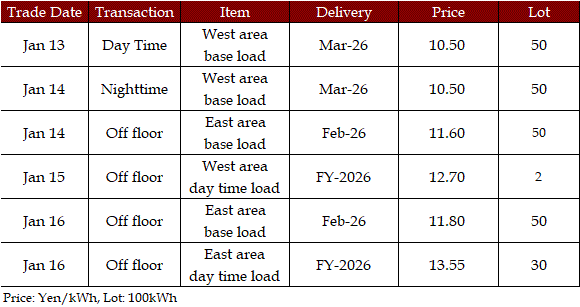
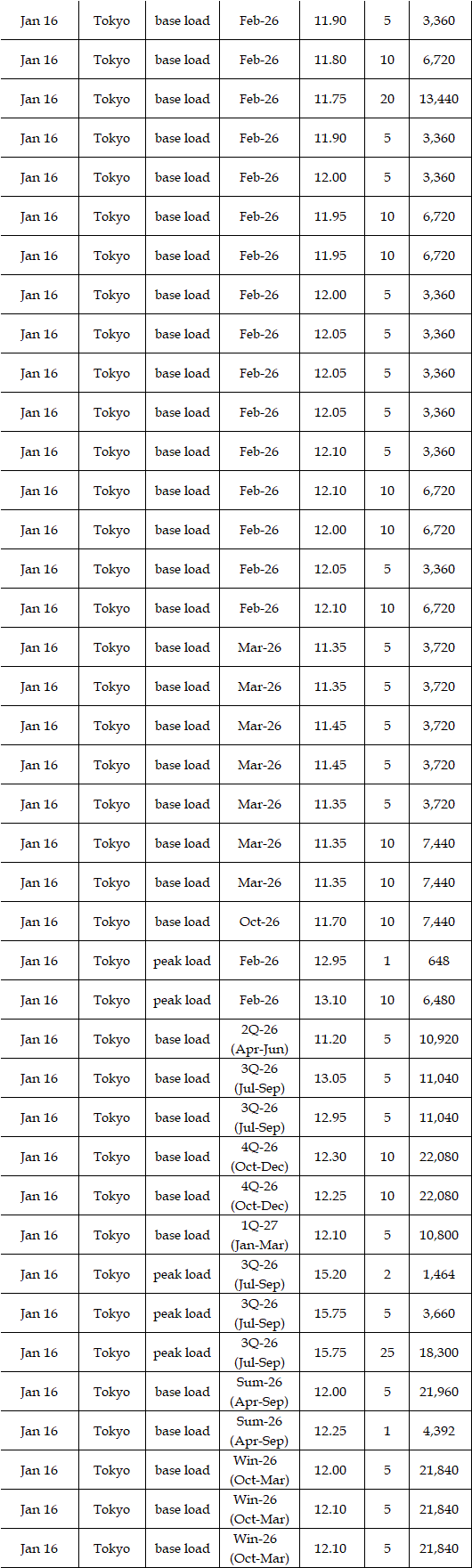
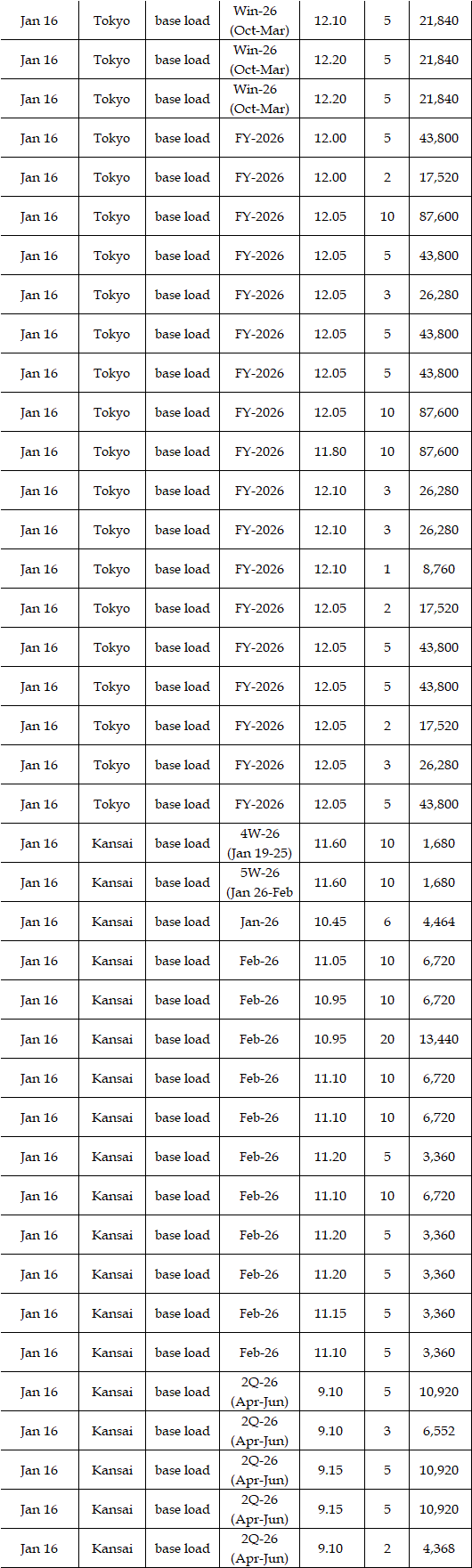
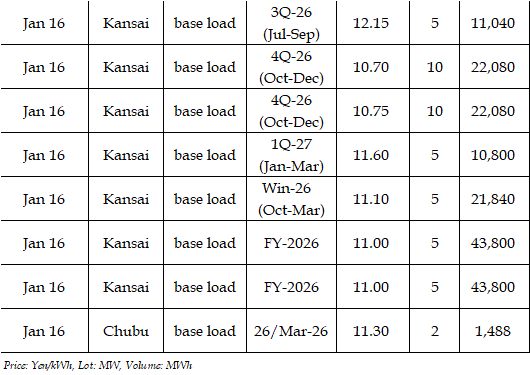
Deals reported on TOCOM (Tokyo Commodity Exchange) during Jan 12-16 were as below.
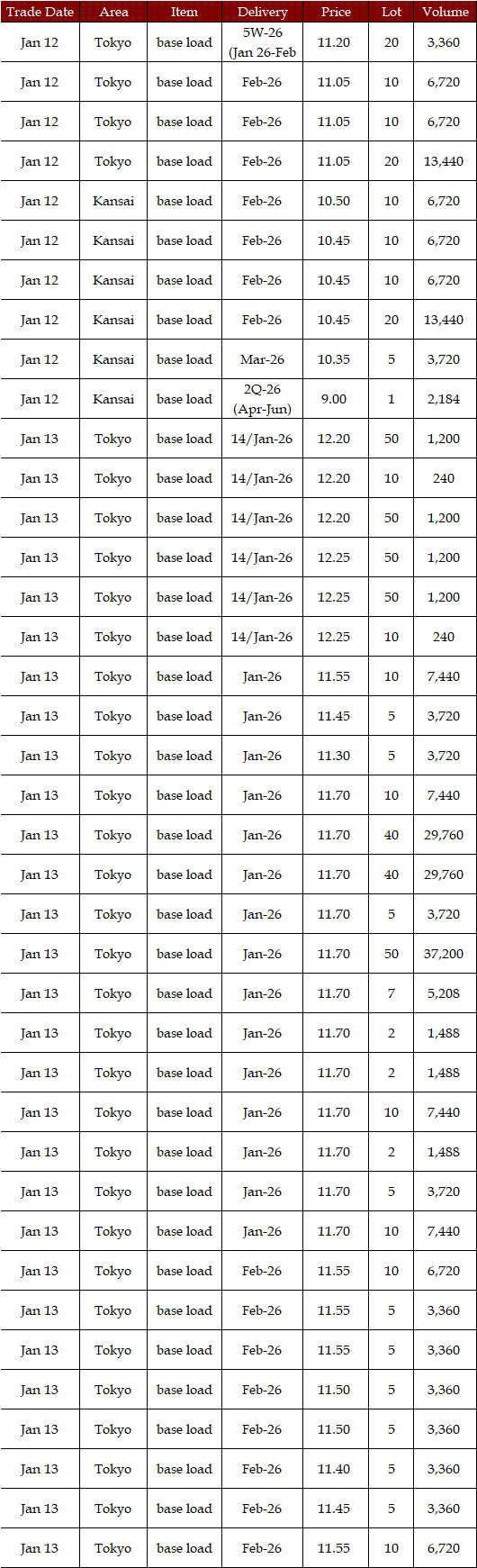
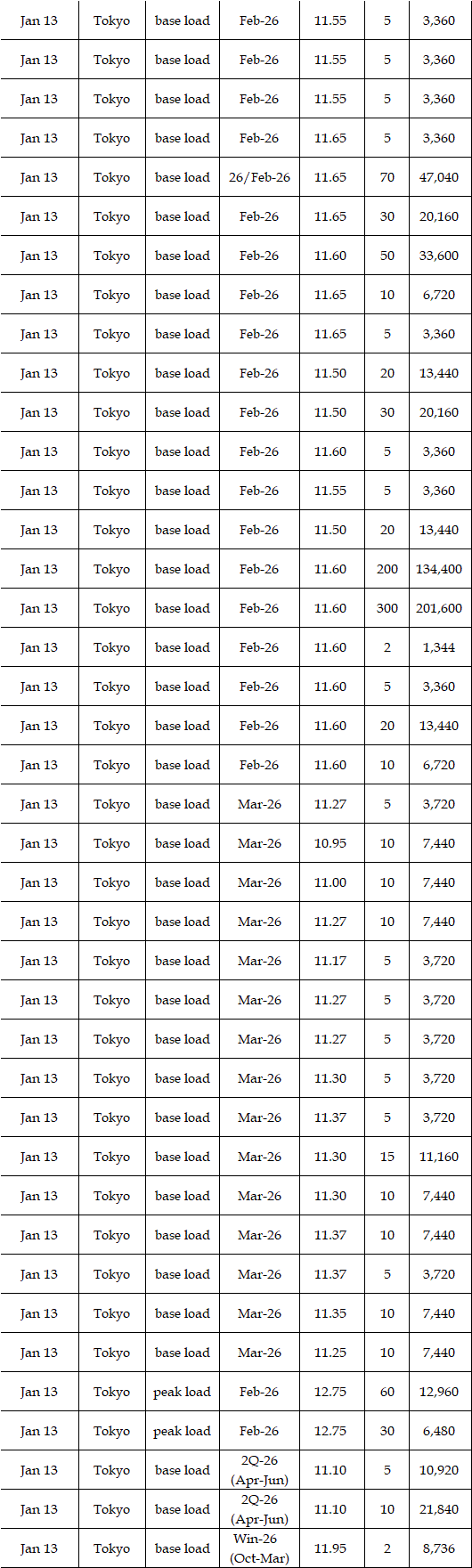
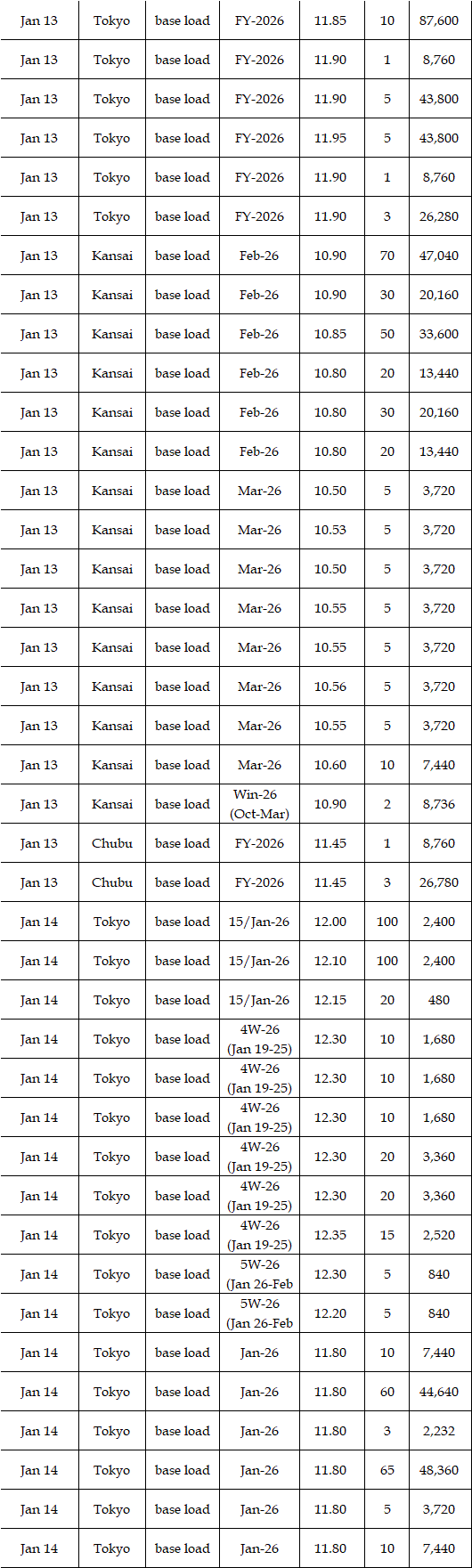
Deals reported on EEX (European Energy Exchange) during Jan 12-16 were as below.
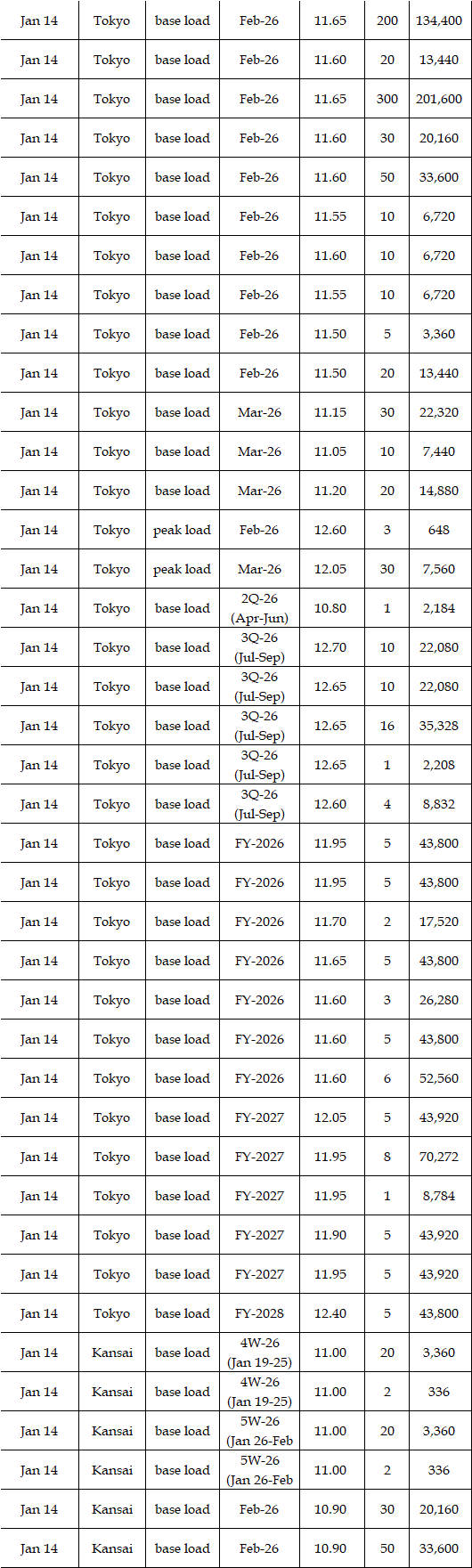
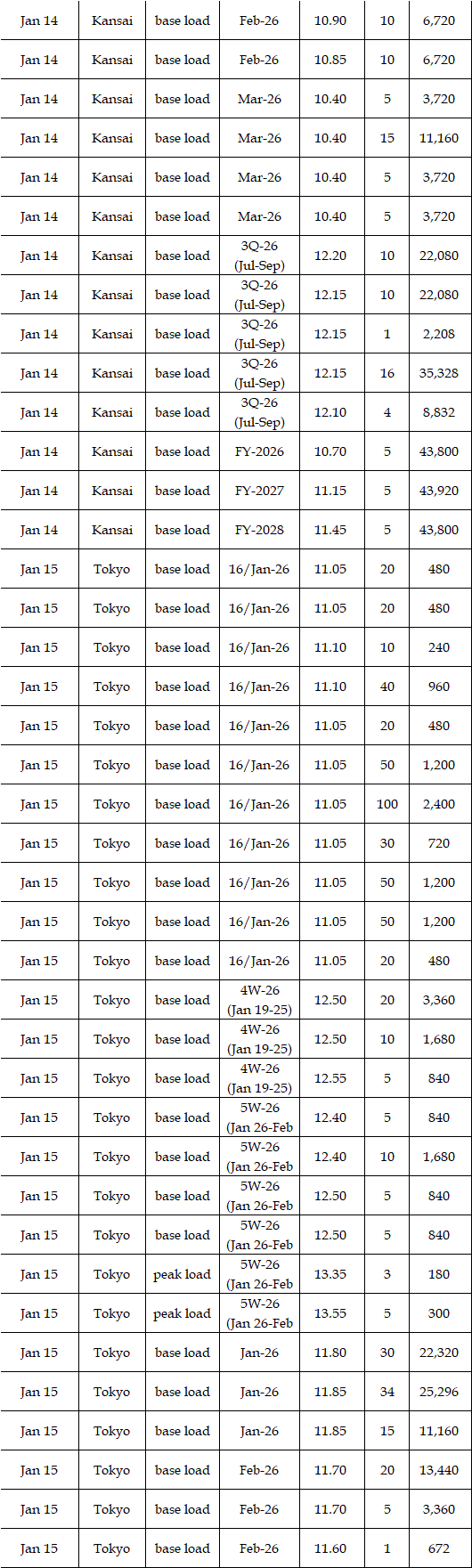
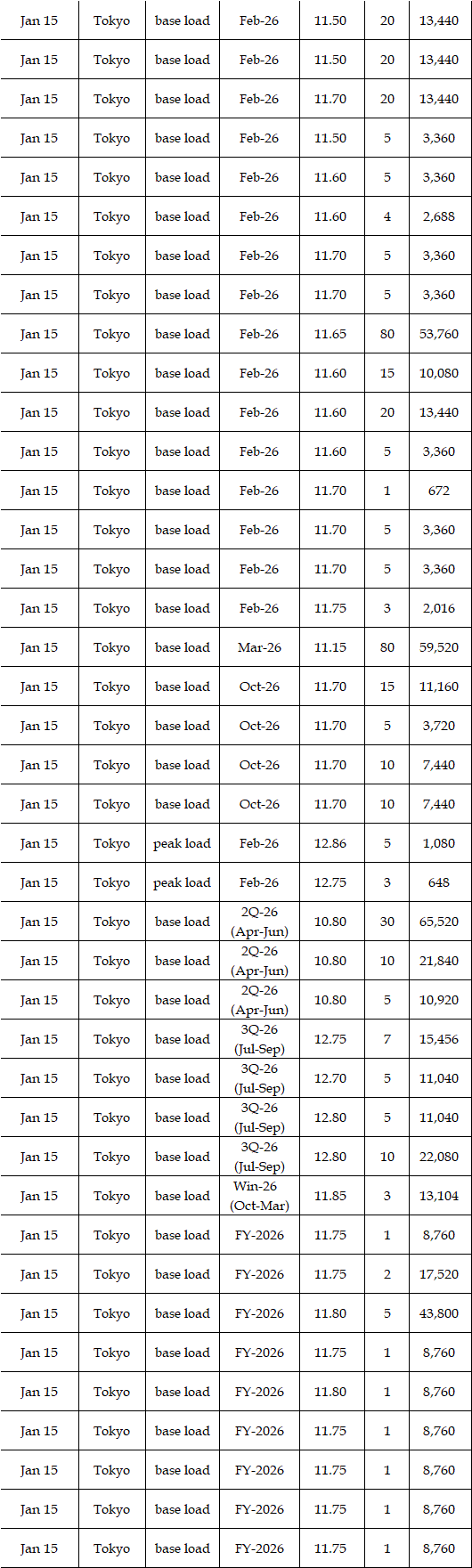
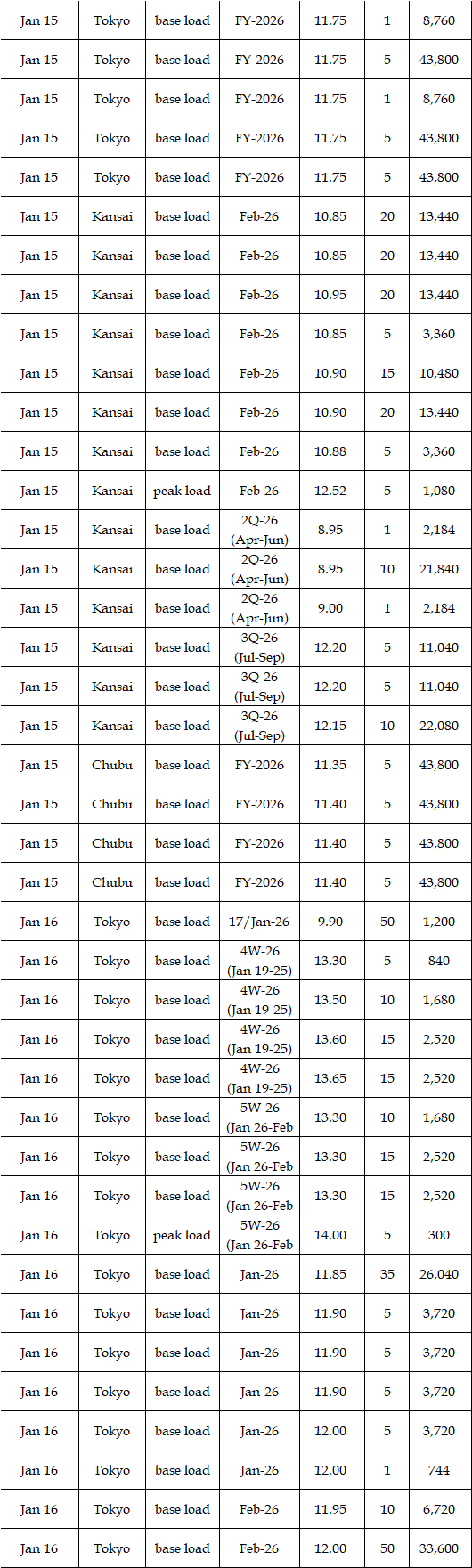
Prices for the fourth week in January might be boosted from the third of week. Lower temperatures than the previous week were expected, which would increase demand for heating and then lift prices. The maintenance at the 825MW No. 2 unit (BWR: Boiling Water Reactor) at Tohoku Electric Power Co's Onagawa nuclear power station, located in Onagawa Town in Miyagi Prefecture, from Jan 14 would also work as a bullish factor. One thing difficult to estimate is the impact of the reactivation of the 1356 MW No. 6 unit (ABWR = Advanced Boiling Water Reactor) at Tokyo Electric Power Co's Kashiwazaki-Kariwa nuclear power station, located in Kashiwazaki City in Niigata Prefecture, on Jan 20. After the reactivation, the unit was scheduled to resume power generation within a couple of days, which might work as a bearish factor. Asked about the outlook for the fourth week of Jan, a source at a power producer and supplier said. "I guess base load will hover at Yen 12-13's in Tokyo and at Yen 10-11's in Kansai. Lower temperatures will lift prices up; however, following before, prices will not soar unless there are troubles with power plants."
|
JEPX: System Price (Day Ahead 24 hours)
|
|
Weekday Price
|
12-Jan
|
13-Jan
|
14-Jan
|
15-Jan
|
16-Jan
|
|
24-Hour Ave
|
10.56
|
10.61
|
11.55
|
11.43
|
9.74
|
|
Volume (MWh)
|
803,333
|
818,265
|
847,275
|
826,439
|
810,038
|
|
(unit: yen per kWh) (date: delivery day)
|
|
|

|
 - Fair & Reliable -
 Post
Post Print
Print


