|
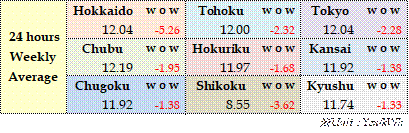
In the day-ahead market on JEPX (Japan Electric Power Exchange), the 24-hour spot power prices on a weekly average basis for Feb 2-6 delivery tumbled by 17.5% from the week before in East Japan (50 Hz) and by 12.5% in West Japan (60 Hz). Higher temperatures than a week before, March-like weather, curbed demand for heating, pushing prices down through an increase in offers and weak buying interest. Plenty of photovoltaic power outputs under clear weather conditions also played a part in lowering prices. On Feb 6, when temperatures hovered at over 15 degrees Celsius in and to the west of the Kanto area, the volume of offers exceeded 1,400 mil kWh, an unusually large size on weekdays, sending the average 24-hour prices lower to Yen 10's in eight areas except for Shikoku and Yen 7.76 in Shikoku.
No. 1 and No. 2 Hokkaido-Honshu Lines (600 MW in total) recovered by Jan 31 from the damage by the earthquake off the east coast of Aomori Prefecture at the end of last year, with a maximum seismic intensity of 6 upper. As a result, the market isolation between Hokkaido and Tohoku has become less to remove the situation of a higher price trend in Hokkaido compared with other areas.
The spread of the 24-hour spot average between Tokyo and Kansai, a major market area in East and West Japan, was Yen 0.33 on Feb 2, Yen 0.73 on Feb 5, and Yen 0.48 on Feb 6 in favor of the East; and Yen 0.42 on Feb 3 and Yen 0.48 on Feb 4 in favor of the West.
The fuel market trends in the first week of February were detailed as follows.
DES Northeast Asia spot LNG prices on Feb 5 hovered in the mid-$10's per mmBtu for prompt March 2026 delivery, down around $1.20 from Jan 30. The natural gas market in Europe plummeted, sending LNG markets in Northeast Asia lower. A buying interest in the region remaining weak also worked as a bearish factor. The Ministry of Economy, Trade, and Industry (METI) announced on Feb 4 that Japan's LNG inventories for power generation stood at 2.08 mil mt as of Feb 1, down 170,000 mt from a week before. The figure was below the end of January last year (2.41 mil mt) but above the average for the past five years (2.05 mil mt).
FOB Newcastle thermal coal prices in Australia were at around $116's per ton for February 2026 loading as of Feb 5, down around $1.50 from the end of the previous week.
In the crude oil market, WTI crude for March 2026 stood in the high-$63's per barrel at 11AM on Feb 6, while Brent crude for April 2026 was trading in the high-$67's. Prices fell by around $1.5 from the end of the previous week for WTI and Brent. Crude futures plummeted in the early week, owing to the easing tension in the Iran situation, followed by a slight recovery in the second half of the week due to the uncertainty in the situation, such as US strikes against Iranian drones.
The actual highest price during the week was at Yen 17.76 in eight areas except for Shikoku on Feb 3; the actual lowest price during the week was at Yen 0.01 in Shikoku on Feb 2 and 3.
The weekly average of the 24-hour spot prices by area, the weekly average volume of offers, bids, and trades are shown in the table below. Prices slumped from the previous week in all nine areas. The volume of offers increased rapidly, but the volume of bids decreased; the transaction volume was almost the same as the previous week.

Power demand in nine areas of Japan during Feb 2-6 was a combined 14,052.44 mil kWh, down 5.9% from 14,934.64 mil kWh during Jan 26-30. The figure was down 5.8% from the corresponding period a year earlier, which was 14,914.19 mil kWh during Feb 3-7, 2025, after day-of-week adjustment.
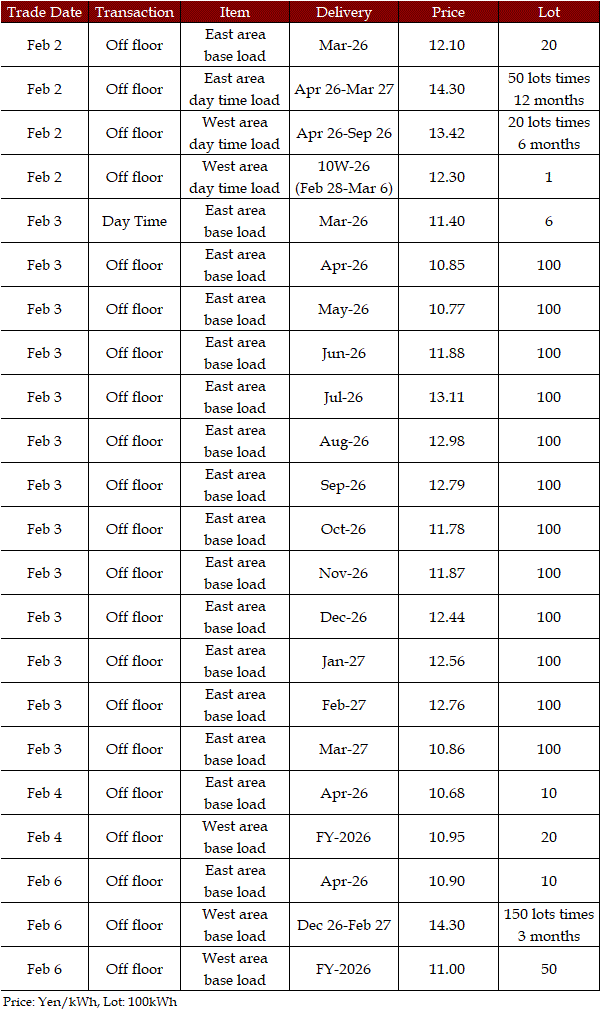
Deals reported on TOCOM (Tokyo Commodity Exchange) during Feb 2-6 were as below.
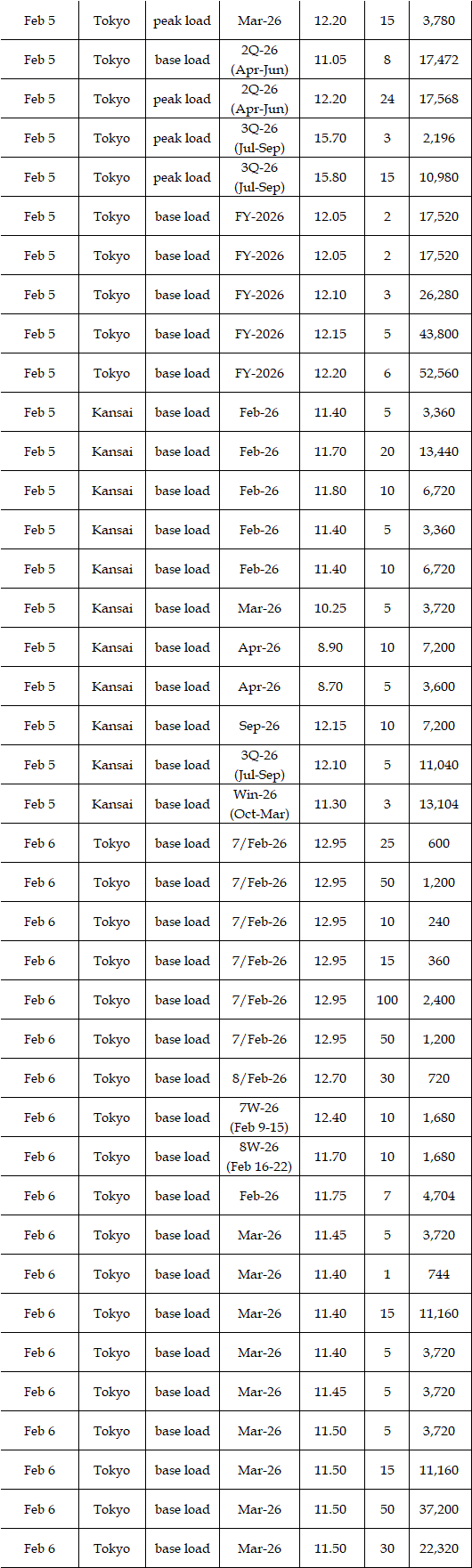
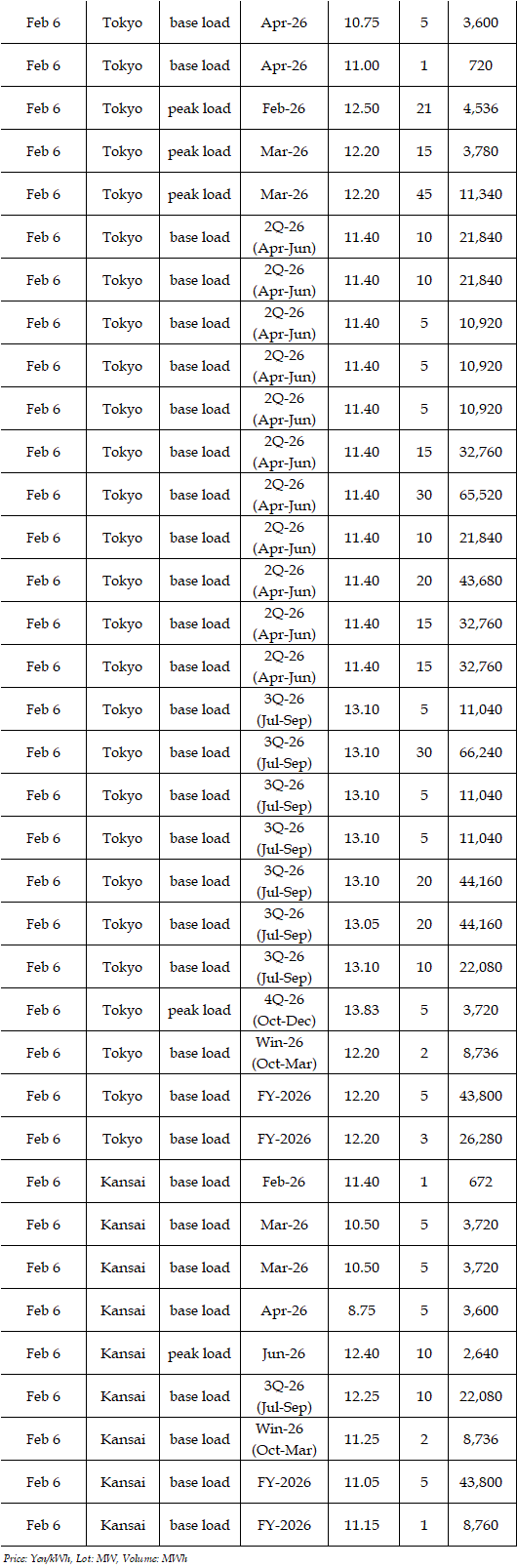
Deals reported on EEX (European Energy Exchange) during Feb 2-6 were as below.
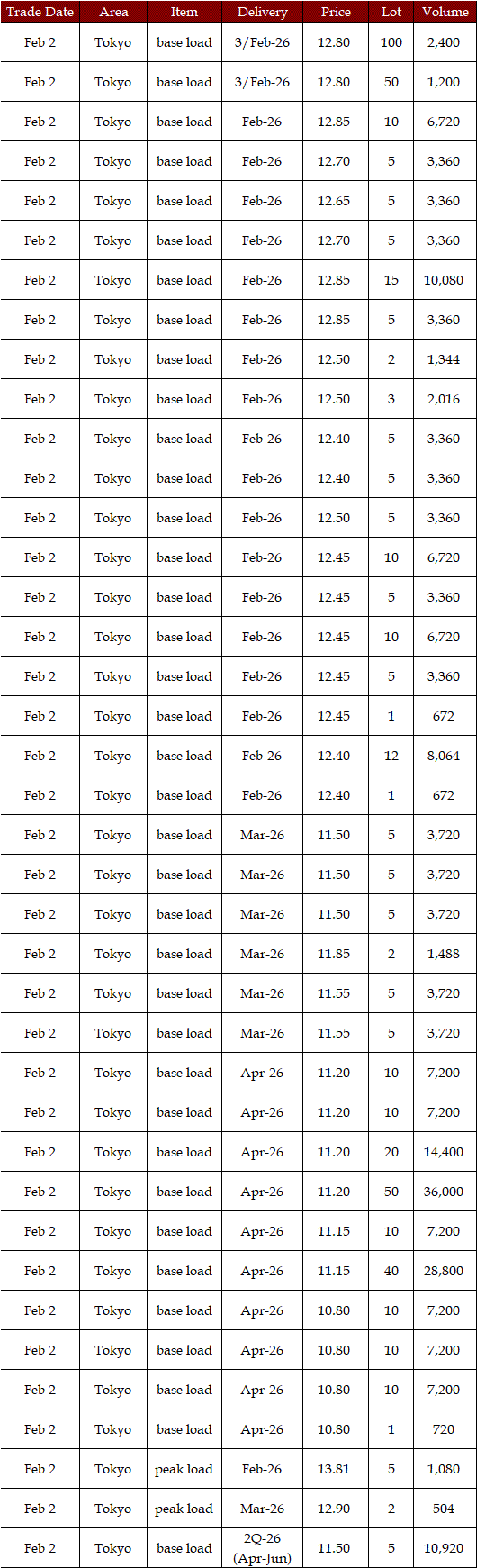
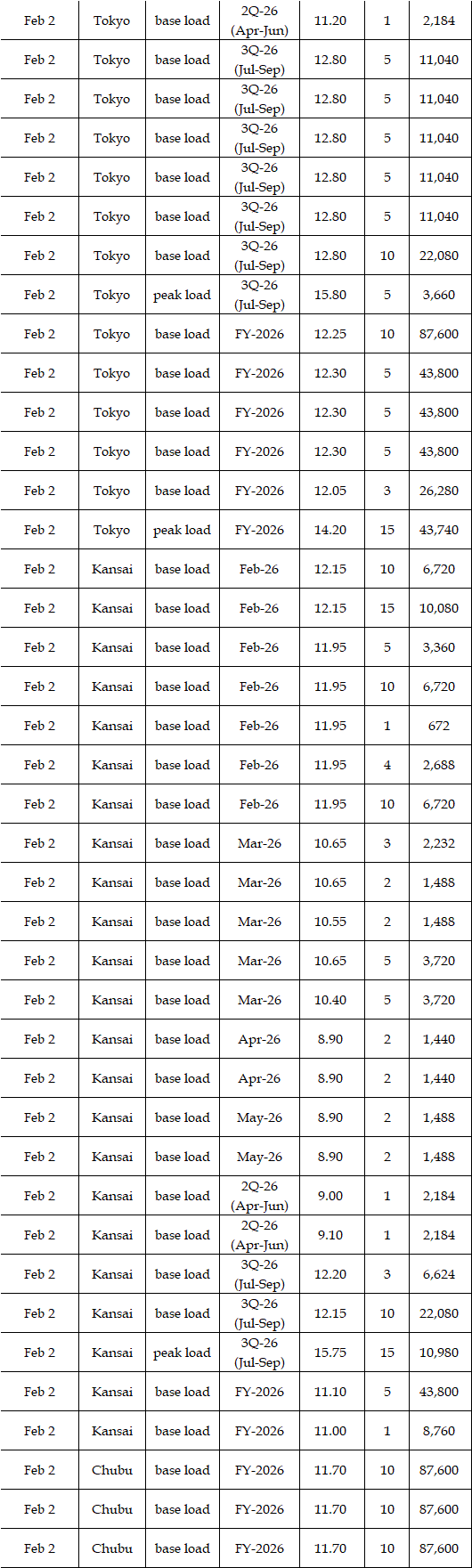
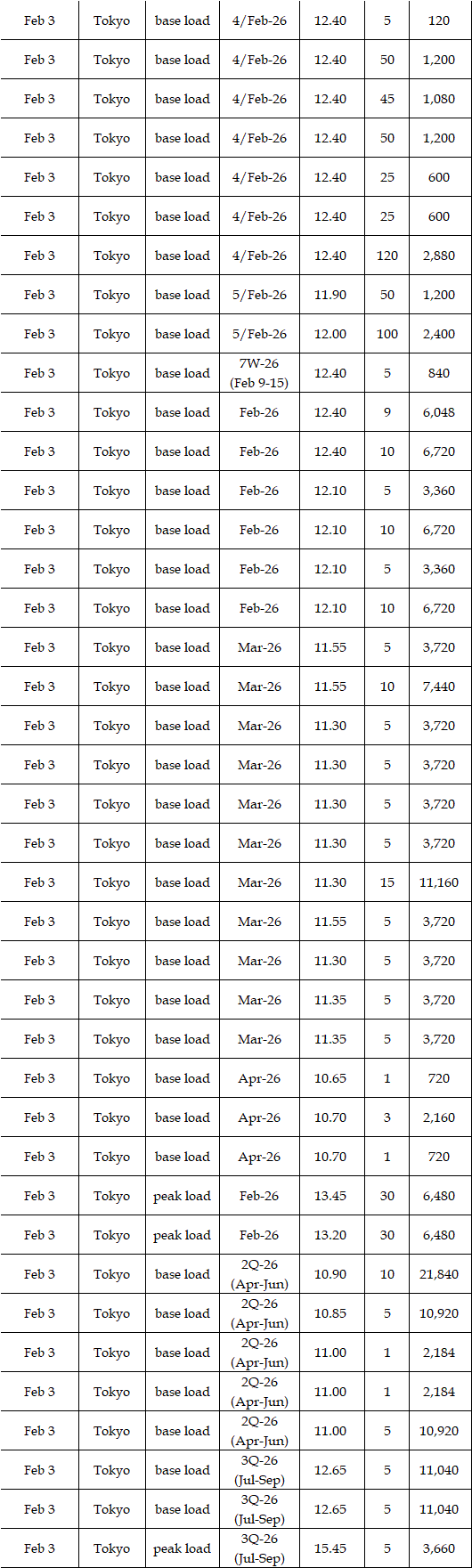
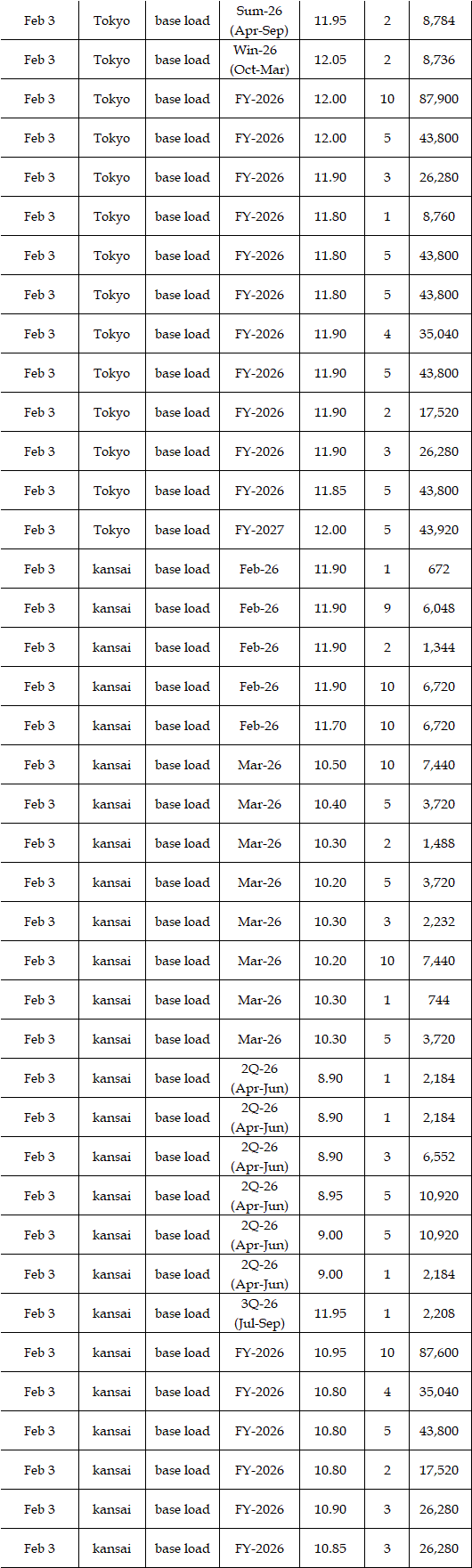
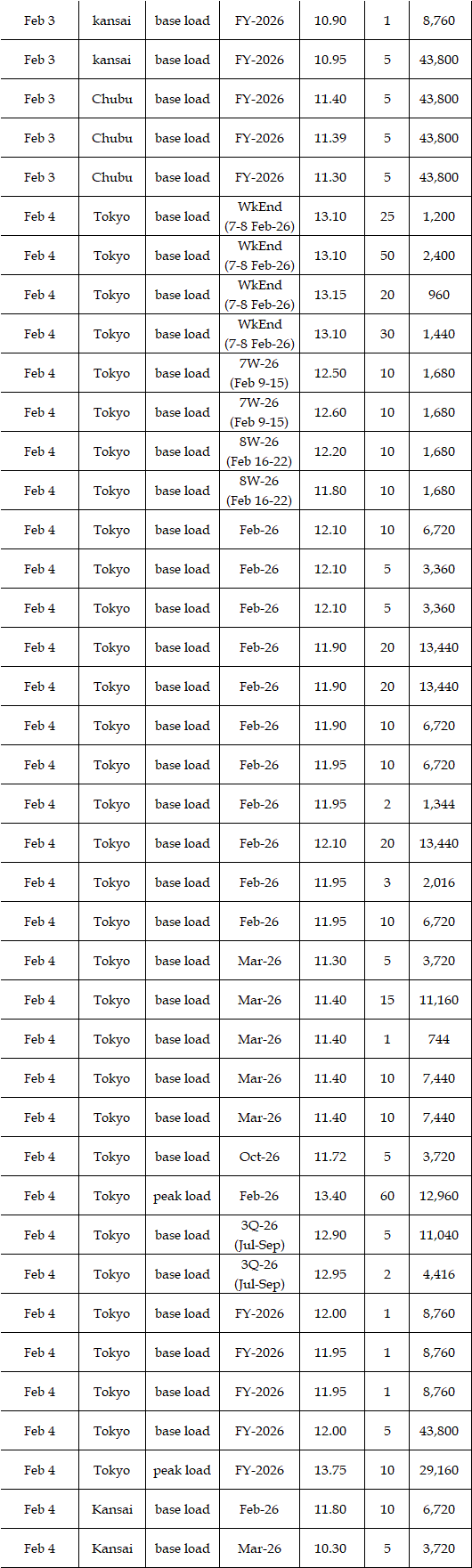
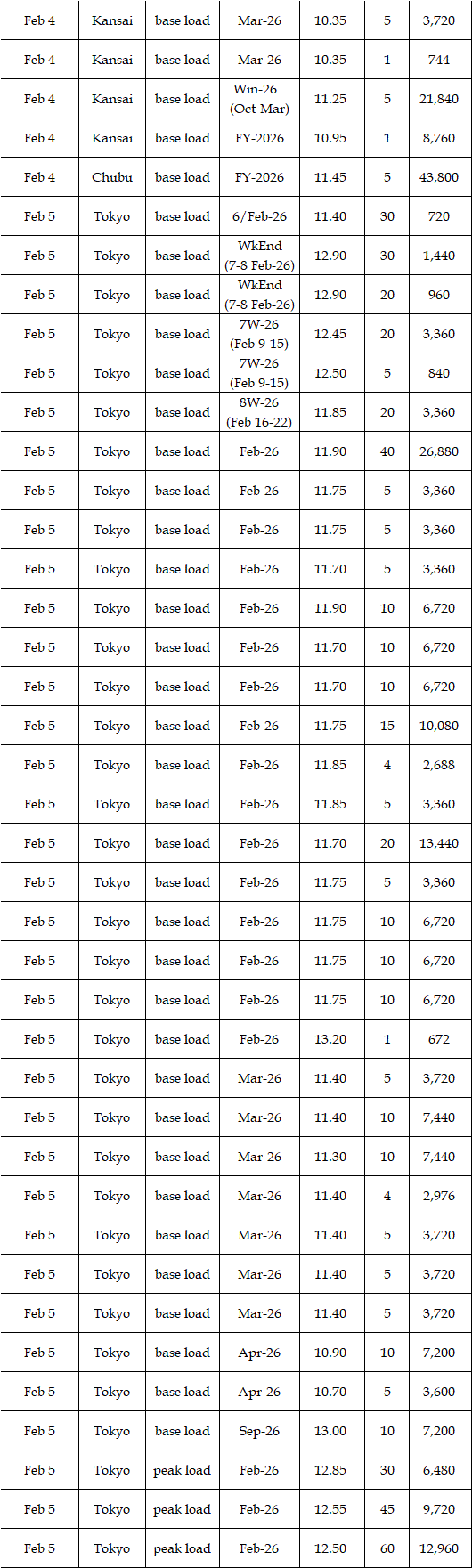
Prices for the second week in February were expected to be almost the same as those for the first week. In the second week, temperatures would be lower compared with the first week, when spring-like weather continued in the early week but would turn higher from the middle of the week, which would weigh on prices through a supply/demand balance being relaxed. Asked about the price outlook for the second week in February, a source at a power producer and supplier said, "Prices will depend on weather. Base load prices will go up at Yen 13's in Tokyo in the first part of the week but will be followed by below Yen 12 on Feb 11, a national holiday, and then Yen 12's in the latter half of the week. The prices in Kansai will hover at Yen 0.5-1.0 lower than those in Tokyo."
|
JEPX: System Price (Day Ahead 24 hours)
|
|
Weekday Price
|
2-Feb
|
3-Feb
|
4-Feb
|
5-Feb
|
6-Feb
|
|
24-Hour Ave
|
12.50
|
12.71
|
11.87
|
11.43
|
10.15
|
|
Volume (MWh)
|
880,688
|
906,123
|
884,279
|
844,375
|
856,283
|
|
(unit: yen per kWh) (date: delivery day)
|
|
|

|
 - Fair & Reliable -
 Post
Post Print
Print


