|
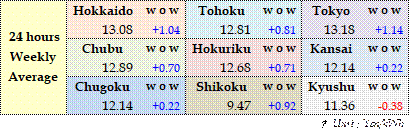
In the day-ahead market on JEPX (Japan Electric Power Exchange), the 24-hour spot power prices on a weekly average basis for Feb 9-13 delivery rebounded from the week before for East Japan (50 Hz) and West Japan (60 Hz). Lower temperatures than a week before increased demand for heating, affecting prices. In East Japan, under colder weather, the maximum demand on Feb 9 recorded 52.60 mil kW in Tokyo, exceeding 50.00 mil kW for the first time this winter season, lifting power usage amounts to over 1,000 mil kWh, the first time since Sep 3 last year. In the latter half of the week, however, the coming back of high temperatures in wide regions softened prices. In Hokkaido, the unplanned outage at the 250 MW No. 1 unit at Hokkaido Electric Power Co (HEPCO)'s Tomakomai oil-fired power plant raised spot prices to Yen 30's for delivery on Feb 13; thus, the uniquely high prices in Hokkaido stood out.
The spread of the 24-hour spot average between Tokyo and Kansai, a major market area in East and West Japan, was Yen 0.33 on Feb 9, Yen 2.95 on Feb 11, Yen 0.82 on Feb 12, and Yen 1.71 on Feb 13 in favor of Tokyo; and Yen 0.63 on Feb 10 in favor of Kansai.
The fuel market trends in the second week of February were detailed as follows.
DES Northeast Asia spot LNG prices on Feb 12 hovered in the mid-$10's per mmBtu for prompt March 2026 delivery, almost unchanged from Feb 6. Prices followed the natural gas market in Europe. The Ministry of Economy, Trade, and Industry (METI) announced on Feb 12 that Japan's LNG inventories for power generation stood at 1.89 mil mt as of Feb 8, down 190,000 mt from a week before. The figure was below the end of February last year (2.03 mil mt) and the average for the past five years (2.14 mil mt).
FOB Newcastle thermal coal prices in Australia were at around mis-$114's per ton for February 2026 loading as of Feb 12, down around $1 from the end of the previous week.
In the crude oil market, WTI crude for March 2026 stood at around $63's per barrel at 7AM on Feb 13, while Brent crude for April 2026 was trading in the high-$67's. Prices fell by around $0.5 from the end of the previous week for WTI and Brent. The escalated situation in Iran hiked crude futures prices in the first half of the week; however, that was offset enough by the relaxed supply/demand balance being sensed by the monthly report released by the International Energy Agency on Feb 12 as well as the weak US stock market in the latter half of the week.
The actual highest price during the week was at Yen 35.68 in Hokkaido on Feb 13; the actual lowest price during the week was at Yen 0.01 in Kyushu on Feb 12 and 13.
The weekly average of the 24-hour spot prices by area, the weekly average volume of offers, bids, and trades are shown in the table below. Prices gained from the previous week in eight areas except for Kyushu. The volume of offers and bids, along with traded volume, decreased from a week earlier.

Power demand in nine areas of Japan during Feb 9-13 was a combined 14,317.66 mil kWh, up 1.9% from 14,052.44 mil kWh during Feb 2-6. The figure was up/down 1.1% from the corresponding period a year earlier, which was 14,168.79 mil kWh during Feb 10-14, 2025, after day-of-week adjustment.
Deals reported on TOCOM (Tokyo Commodity Exchange) during Feb 9-13 were as below.
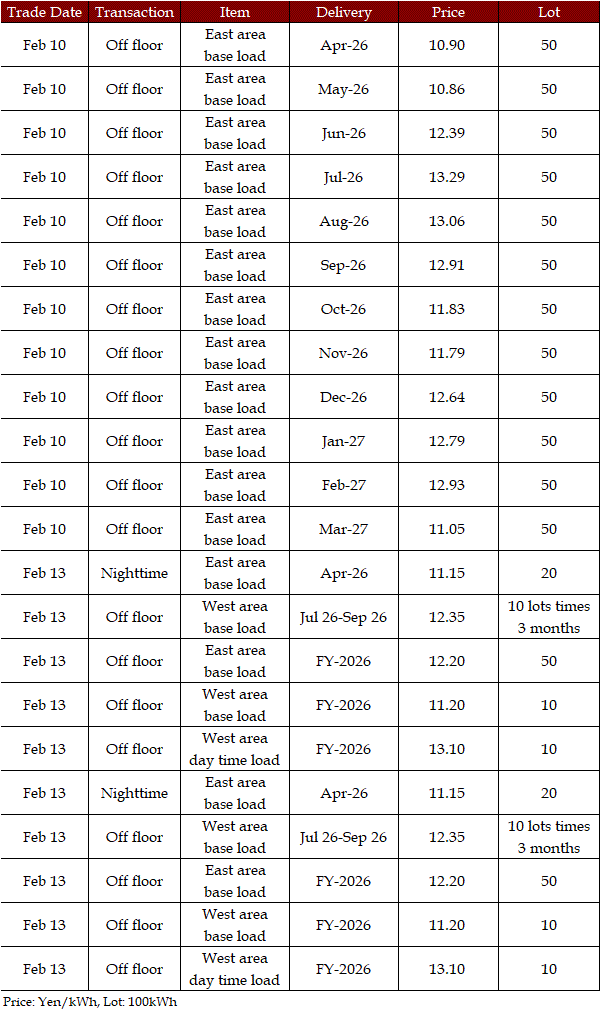
Deals reported on EEX (European Energy Exchange) during Feb 9-13 were as below.
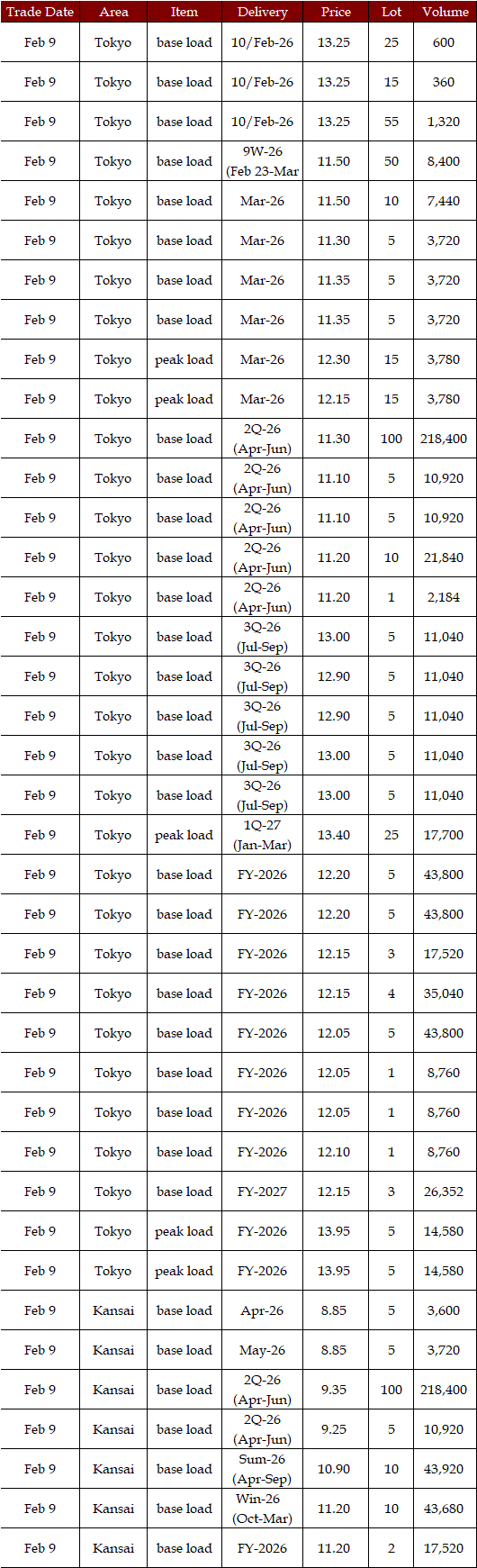
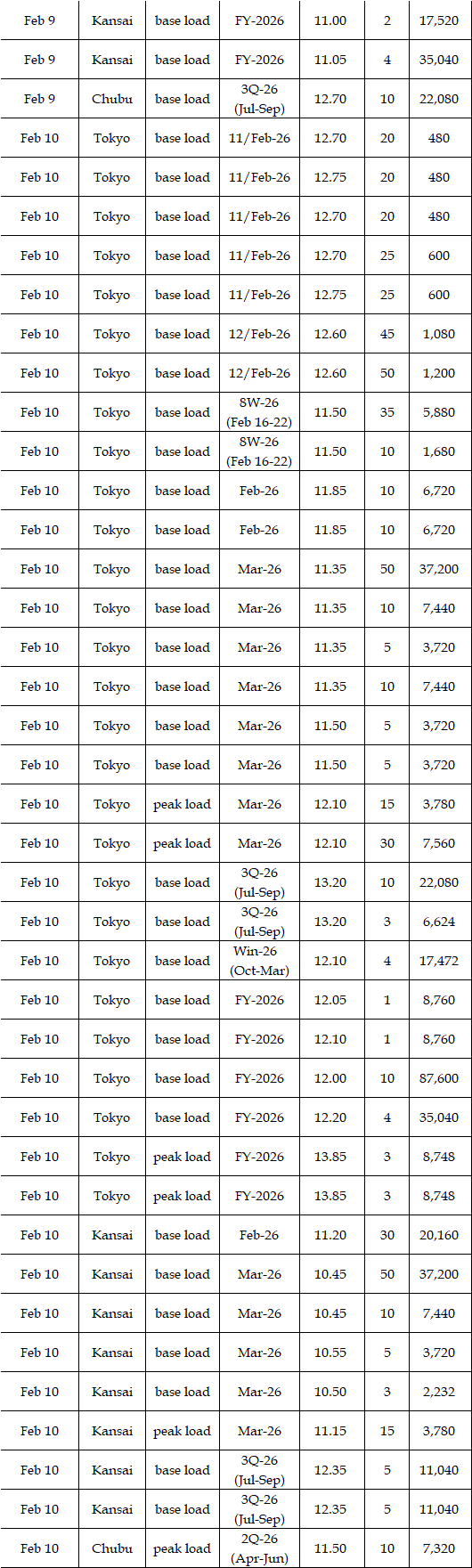
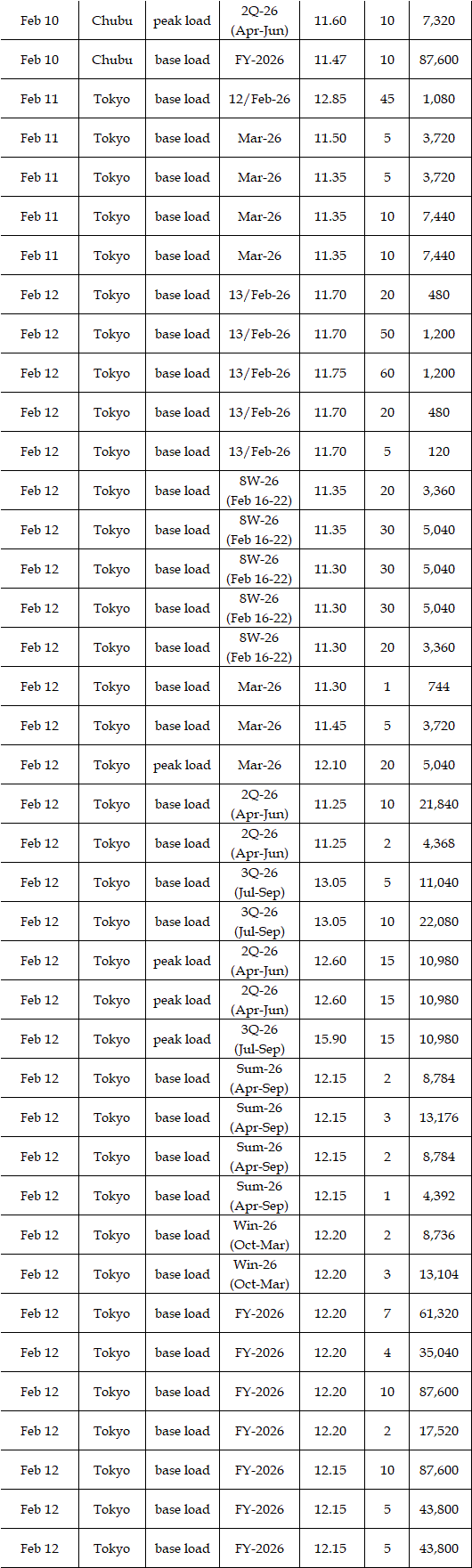
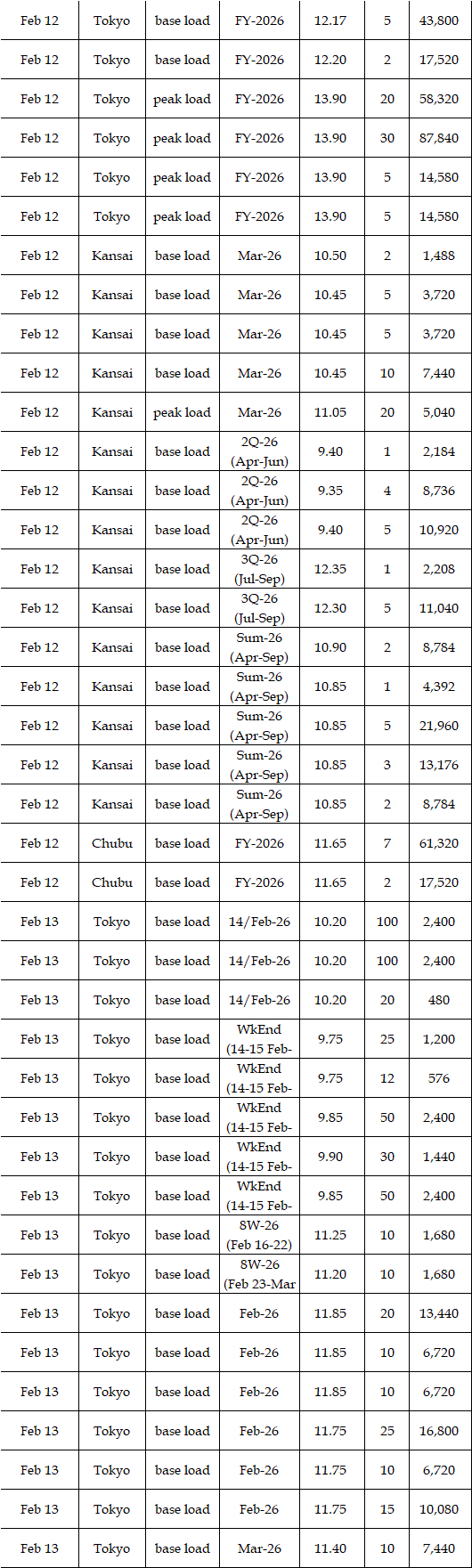
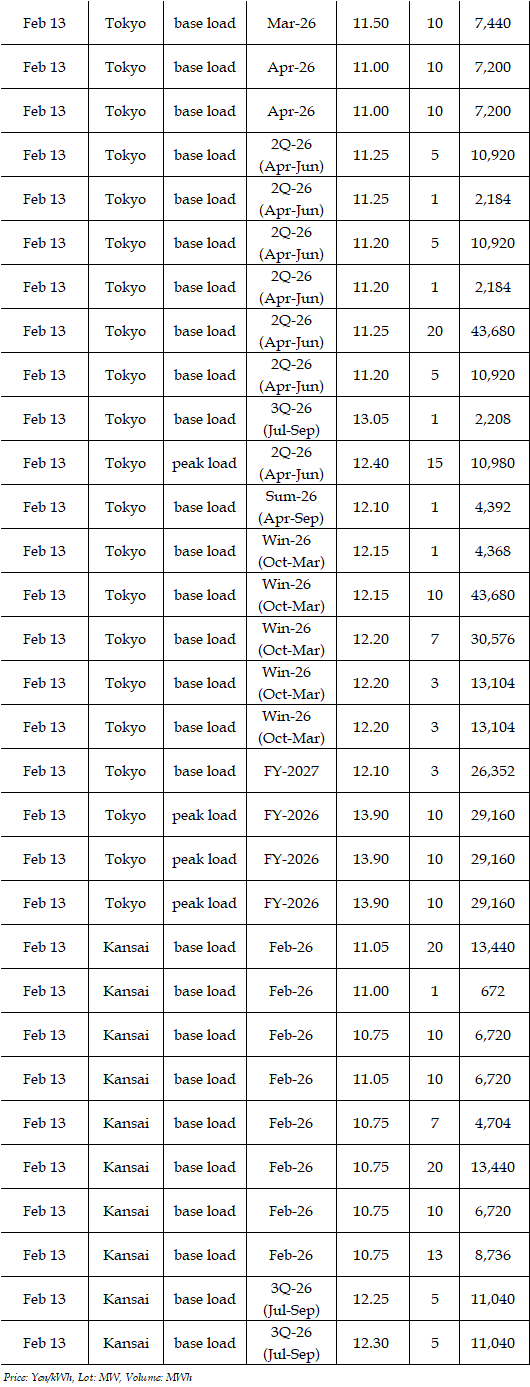
Deals reported on TOCOM (Tokyo Commodity Exchange) during Feb 9-13 were as below.
Deals reported on EEX (European Energy Exchange) during Feb 9-13 were as below.
Prices for the third week in February were expected to be below those in the second week. The outlook of higher temperatures than those in the second week as well as the plenty of output from photovoltaic power plants under a sunny spell would weigh on prices. Asked about the price outlook for the third week in February, a source at a power producer and supplier said, "The base load prices through the week will move in a tight range at Yen 12's for Tokyo, and hover Yen 1-2 lower than those in Tokyo for Kansai, where high temperatures and strong solar power outputs put a lid on prices."
|
JEPX: System Price (Day Ahead 24 hours)
|
|
Weekday Price
|
9-Feb
|
10-Feb
|
11-Feb
|
12-Feb
|
13-Feb
|
|
24-Hour Ave
|
13.65
|
13.83
|
11.85
|
11.18
|
11.08
|
|
Volume (MWh)
|
884,254
|
862,675
|
772,344
|
862,108
|
861,236
|
|
(unit: yen per kWh) (date: delivery day)
|
|
|

|
 - Fair & Reliable -
 Post
Post Print
Print


