|
In the day-ahead market on JEPX (Japan Electric Power Exchange), the 24-hour spot power prices on a weekly average basis for Feb 23-27 delivery fell further from the week before for East Japan (50 Hz) and West Japan (60 Hz). The emperor's birthday holiday on Feb 23 as well as comfortable weather curbed heating demand, sending prices lower. In the second half of the week, while the output volume from photovoltaic power plants reduced due to rai in wide areas, a decrease in demand offset it, weighing on prices. Through the week, the peak demand in Tokyo areas did not exceed 40,000 MW, down more than 10% from the week before.
The spread of the 24-hour spot average between Tokyo and Kansai, a major market area in East and West Japan, was Yen 0.90 on Feb 23, Yen 0.80 on Feb 24, Yen 1.14 on Feb 25, Yen 2.59 on Feb 26, and Yen 1.30 in Feb 27 in favor of Tokyo.
The fuel market trends in the final week of February were detailed as follows.
DES Northeast Asia spot LNG prices on Feb 26 hovered in the mid-$10's per mmBtu for prompt March 2026 delivery, down about $0.3 from Feb 20. Prices followed the weak natural gas market in Europe, where high-temperature forecasts, along with strong outputs from wind power, reduced demand for gas. The Ministry of Economy, Trade, and Industry (METI) announced on Feb 25 that Japan's LNG inventories for power generation stood at 2.00 mil mt as of Feb 22, unchanged from a week before. The figure was below the end of February last year (2.03 mil mt) and the average for the past five years (2.14 mil mt).
FOB Newcastle thermal coal prices in Australia were at around the mid-$117's per ton for March 2026 loading as of Feb 26, down around $3 from the end of the previous week. Prices followed natural gas markets.
In the crude oil market, WTI crude for April 2026 stood at low- $65's per barrel at 9AM on Feb 27, while Brent crude for April 2026 was trading in the high-$70's. Prices dropped by around $1 from the end of the previous week for WTI and Brent. While the market took a wait-and-see mode for the nuclear talks between the US and Iran, the US weekly crude inventory data presented a more-than-expected increase, lowering prices.
The actual highest price during the week was at Yen 15.43 in Hokkaido on Feb 25; the actual lowest price during the week was at Yen 0.01 on Feb 23, the emperor's birthday holiday, recorded in all nine areas and as the system price.
The weekly average of the 24-hour spot prices by area and the weekly average volume of offers, bids, and trades are shown in the table below. A spell of mild weather curbed demand for heating, lowering prices in all nine areas. The volume of offers increased further from last week, but that of bids, along with traded volume, decreased.
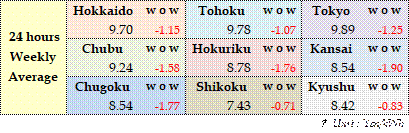

Power demand in nine areas of Japan during Feb 23-27 was 11,624.67 mil kWh, down 12.7% from 13,317.79 mil kWh during Feb 16-20. The figure was down 11.2% from the corresponding period a year earlier, which was 13,094.53 mil kWh during Feb 24-28, 2025, after day-of-week adjustment.
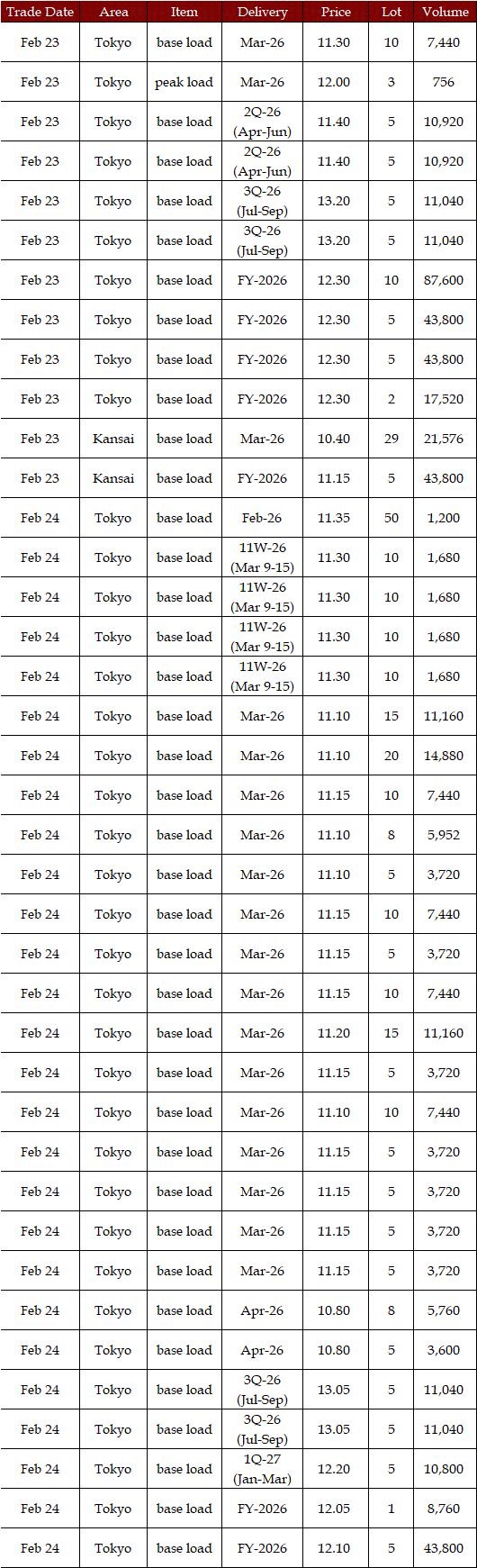
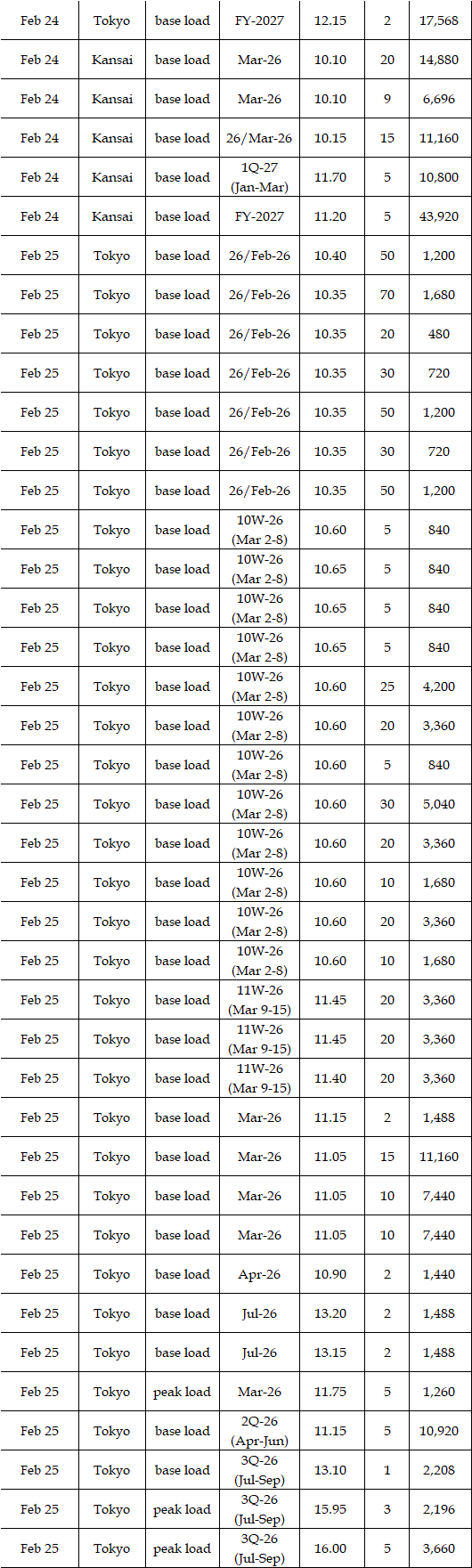
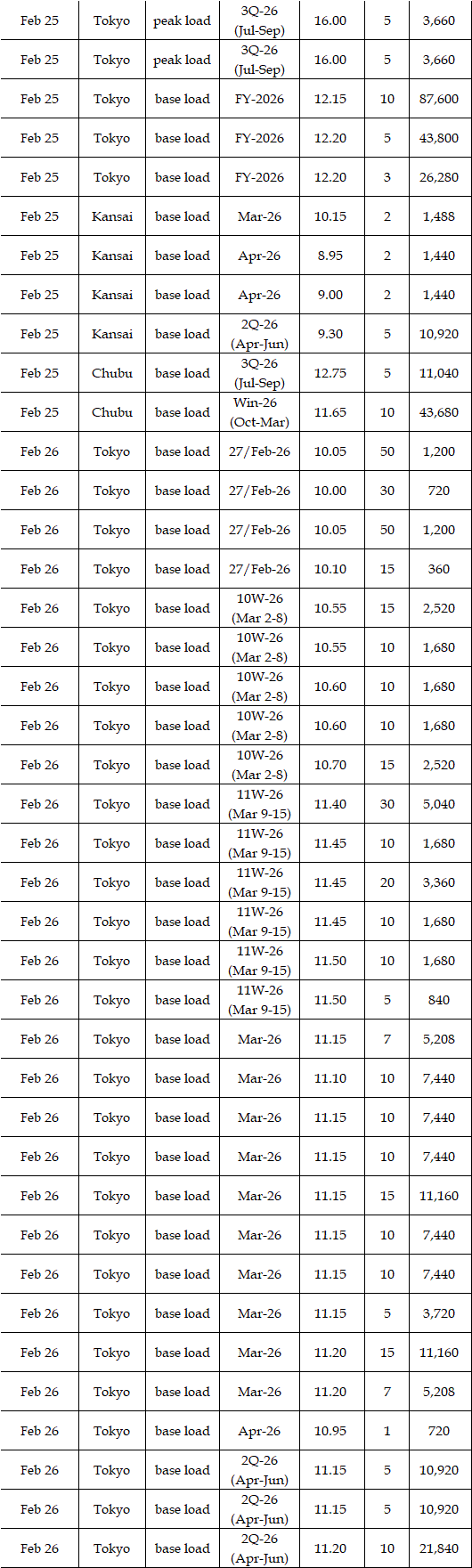
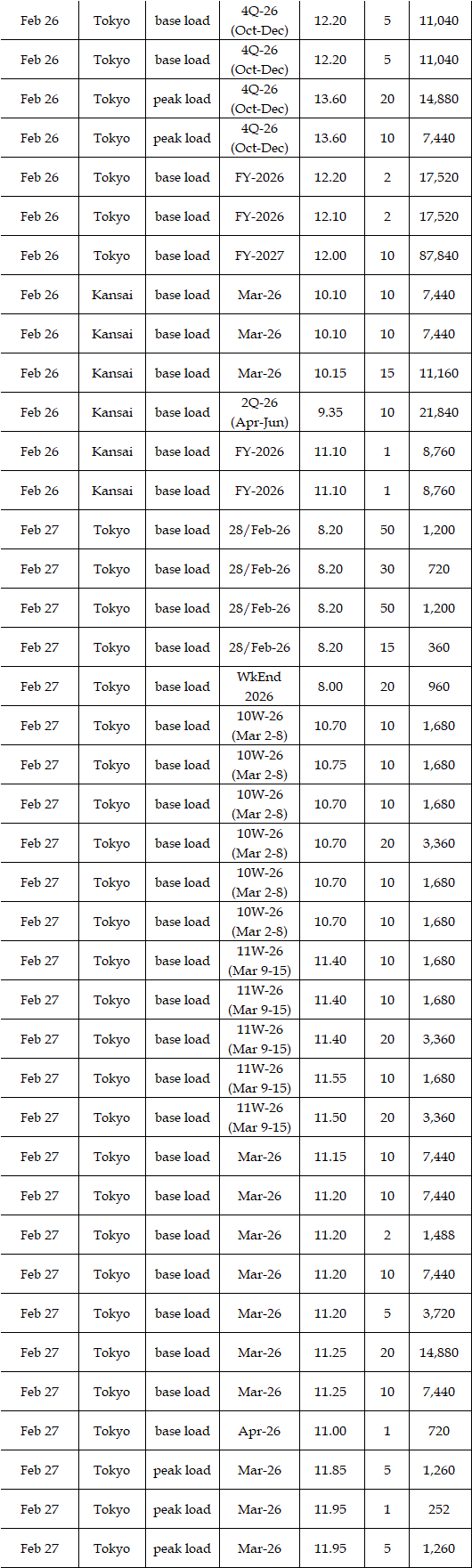
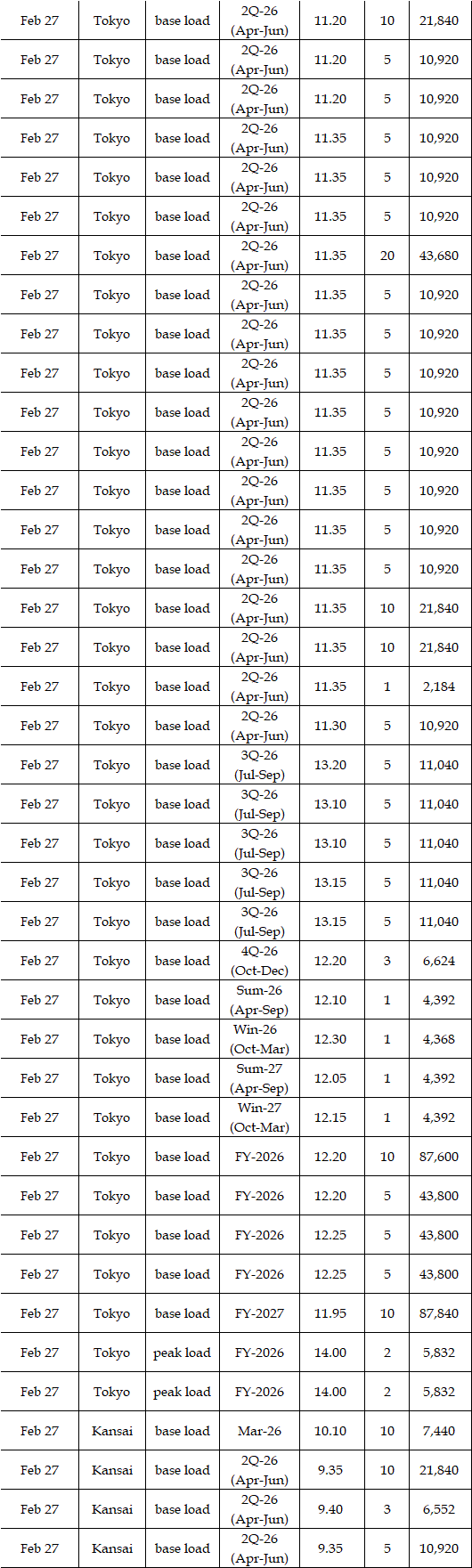
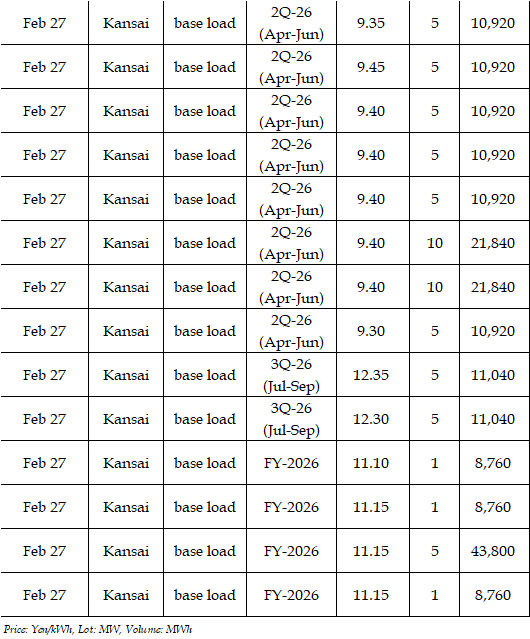
Deals reported on TOCOM (Tokyo Commodity Exchange) during Feb 23-27 were as below.
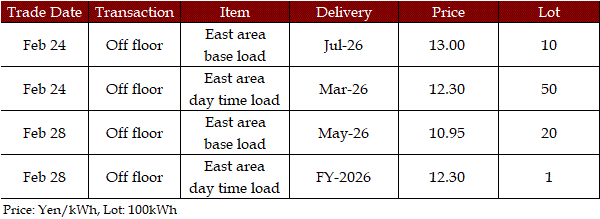
Deals reported on EEX (European Energy Exchange) during Feb 23-27 were as below.
Prices for the first week in March were expected not to change much from the final week in February. However, possible unexpected high prices remain depending on weather conditions, owing to low temperature and cloudy weather forecasts for East Japan on Mar 3-4. In March, more thermal power plants halt operation due to maintenance, reducing spare capacity, and this may also pose an upside risk in prices. Asked about the outlook for the first week of March, a source at a power producer and supplier said, "Baseload prices will hover at Yen 10's in Tokyo; however, given more outages of thermal power plants, they can rise further by Yen 1-2, hinging on weather. In Kansai, they will be traded at Yen 1-1.5 lower than those in Tokyo."
|
JEPX: System Price (Day Ahead 24 hours)
|
|
Weekday Price
|
23-Feb
|
24-Feb
|
25-Feb
|
26-Feb
|
27-Feb
|
|
24-Hour Ave
|
7.17
|
9.60
|
10.53
|
9.28
|
9.48
|
|
Volume (MWh)
|
807,859
|
792,964
|
767,971
|
810,677
|
767,169
|
|
(unit: yen per kWh) (date: delivery day)
|
|
|

|
 - Fair & Reliable -
 Post
Post Print
Print


