|
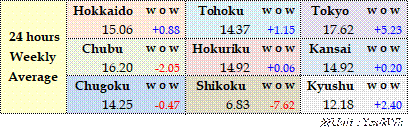
In the day-ahead market on JEPX (Japan Electric Power Exchange), the 24-hour spot power prices on a weekly average basis for Mar 23-27 delivery edged higher compared with the week before for East Japan (50 Hz) and West Japan (60 Hz). Sometimes chilly weather during the week boosted demand, influencing prices. The mixed weather conditions between rain and sunny spells made the output from photovoltaic power plants inconsistent, swinging prices. Indeed, reflecting higher marginal costs in power generation under high fuel, spot prices showed a larger gap between days with a high thermal power plant dependence ratio and days with a low ratio. Along with the maintenance at more thermal power plants, the price trend might linger in April and onwards.
The spread of the 24-hour spot average between Tokyo and Kansai, a major market area in East and West Japan, was Yen 3.57 on Mar 23, Yen 0.83 on Mar 24, Yen 1.65 on Mar 25, Yen 2.15 on Mar 26, and Yen 5.43 in Mar 27 in favor of Tokyo.
The fuel market trends in the fourth week of March were detailed as follows.
DES Northeast Asia spot LNG prices on Mar 26 hovered at low $19's per mmBtu for May 2026 delivery, down by around $1.5 from the end of last week (Mar 19). The headlines on the Middle East situations, including comments from US President Donald Trump, roiled the prices. The Ministry of Economy, Trade, and Industry (METI) announced on Mar 25 that Japan's LNG inventories for power generation stood at 2.39 mil mt as of Mar 22, up by 110,000 mt from a week before. The figure was above the end of March last year (2.12 mil mt) and the average for the past five years (2.00 mil mt).
FOB Newcastle thermal coal prices in Australia were at mid-$138's per ton for April 2026 loading as of Mar 26, down by around $7 from the end of the previous week.
In the crude oil market, WTI crude for May 2026 stood at high $93's per barrel at 11AM on Mar 27, while Brent crude for May 2026 was trading in the low-$101's. Prices dipped by around $2.5 from the end of the previous week for WTI and by around $7.5 for Brent. The extension of the US strike against Iranian power stations as well as the ceasefire talk plan pushed prices down. However, how effective the plan was is still in doubt, dimming the market outlook.
The actual highest price during the week was at Yen 24.60 in four areas from Tokyo through Kansai on Mar 26; the actual lowest price during the week was at Yen 0.01 in Shikoku & Kyushu on Mar 23, in Hokkaido & Tohoku on Mar 24, in Shikoku & Kyushu on Mar 26, and in three areas from Chugoku through Kyushu on Mar 27.
The weekly average of the 24-hour spot prices by area and the weekly average volume of offers, bids, and trades are shown in the table below.

Power demand in nine areas of Japan during Mar 23-29 was 11,263.38 mil kWh, down 3.2% from 11,636.44 mil kWh during Mar 16-20. The figure was up 7.1% from the corresponding period a year earlier, which was 10,519.36 mil kWh during Mar 24-28, 2025, after day-of-week adjustment.
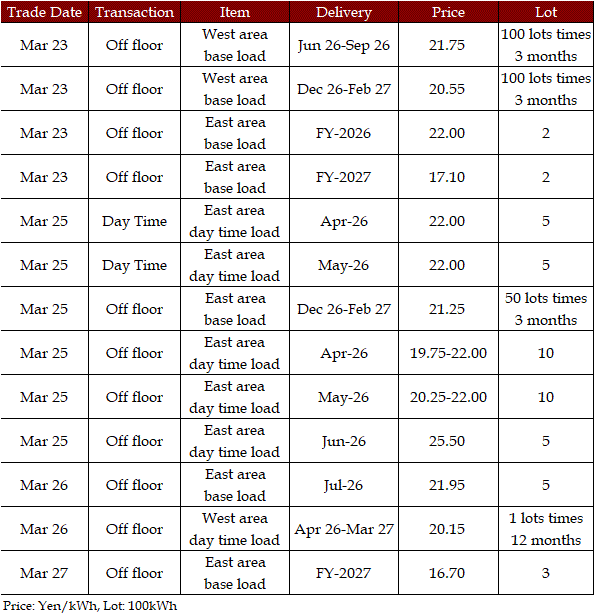
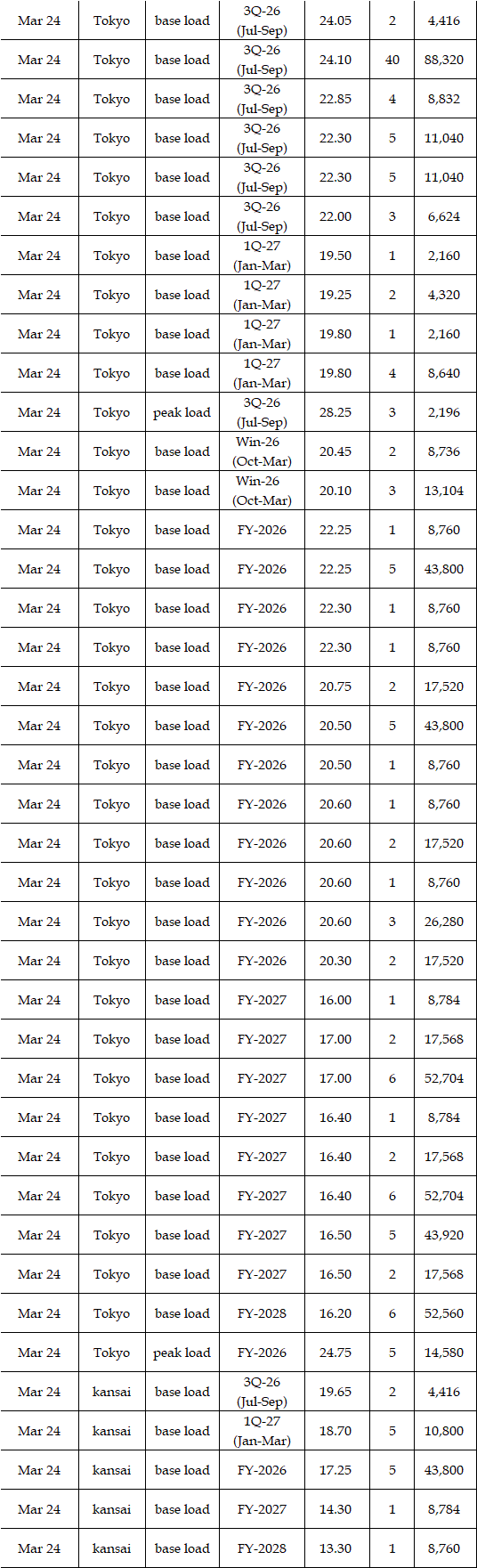
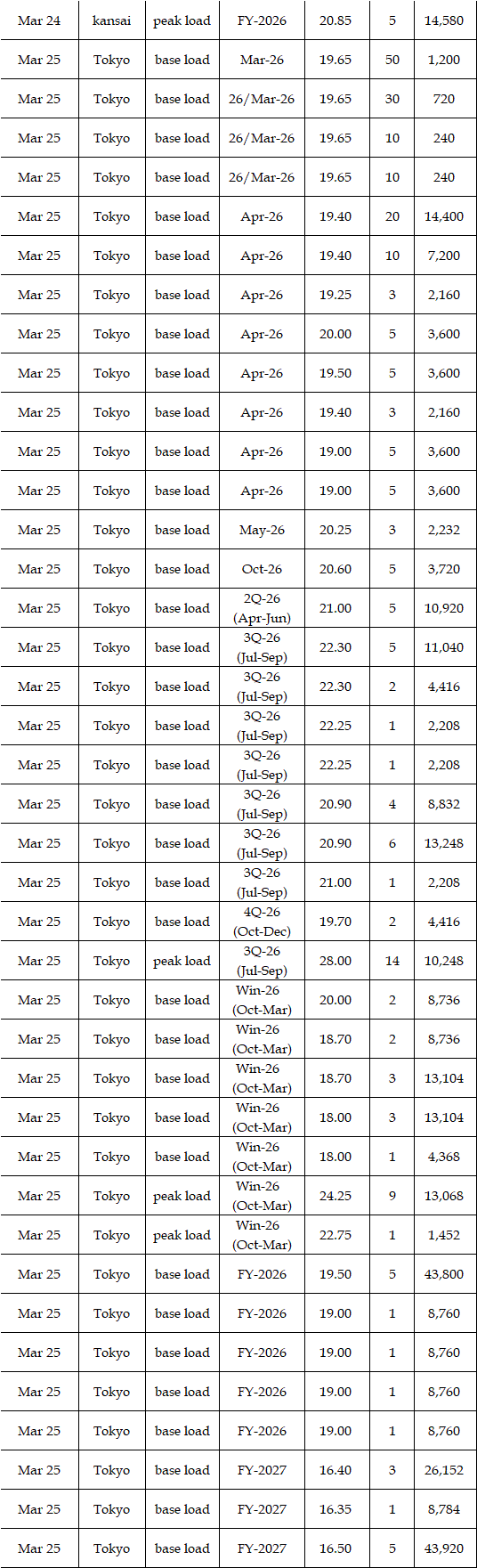
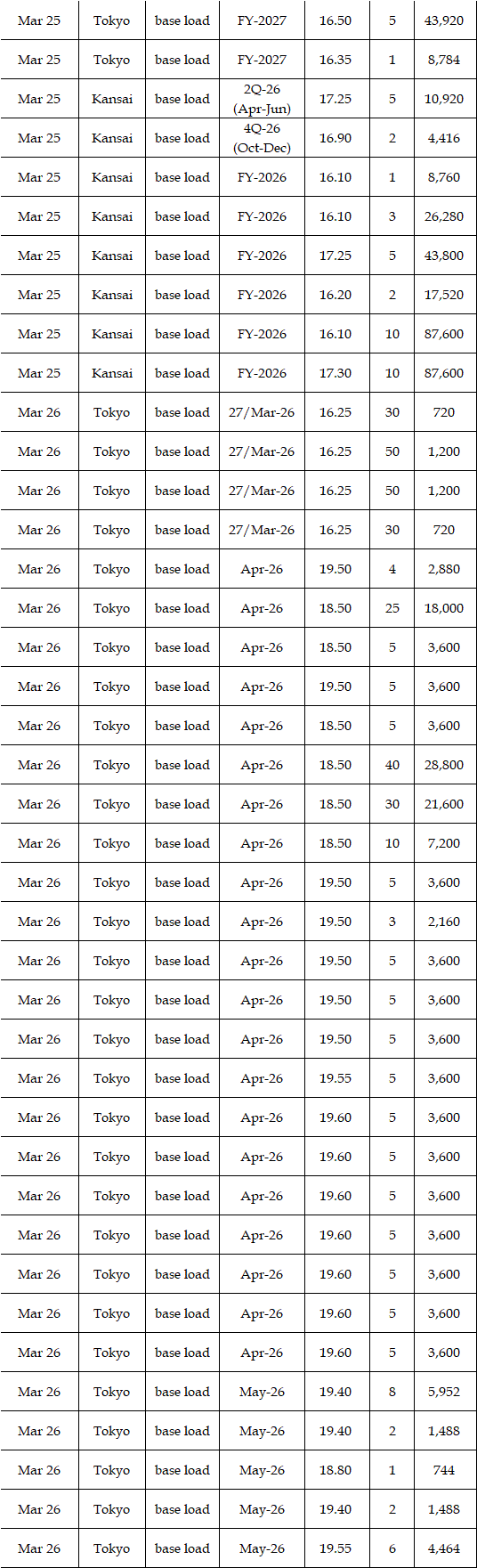
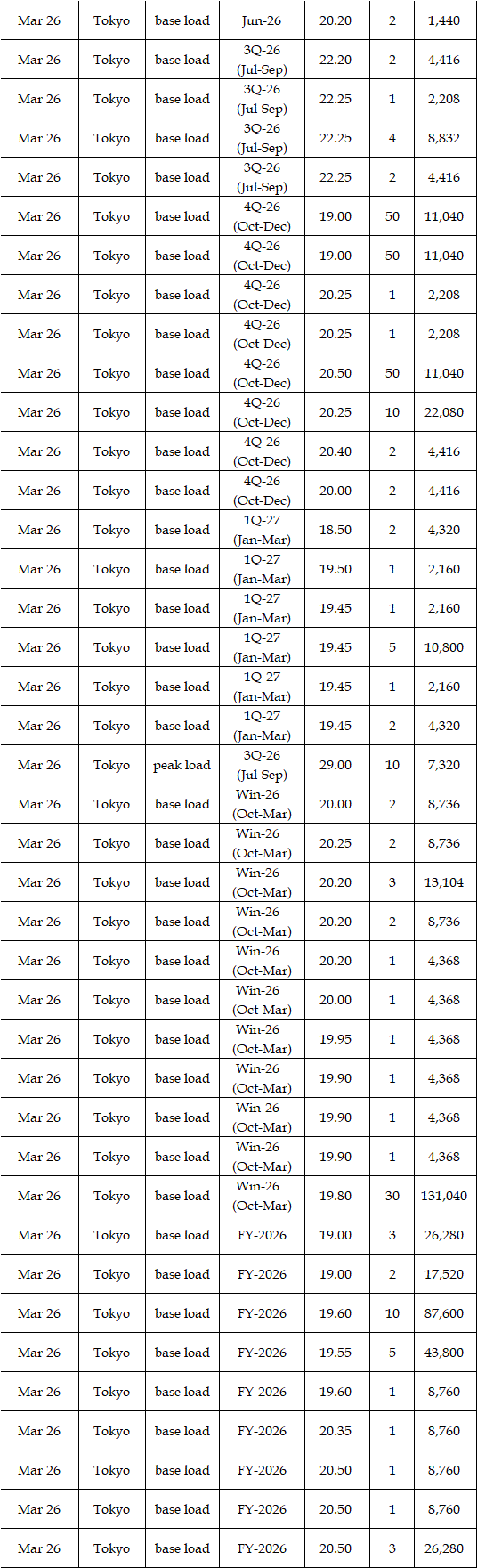
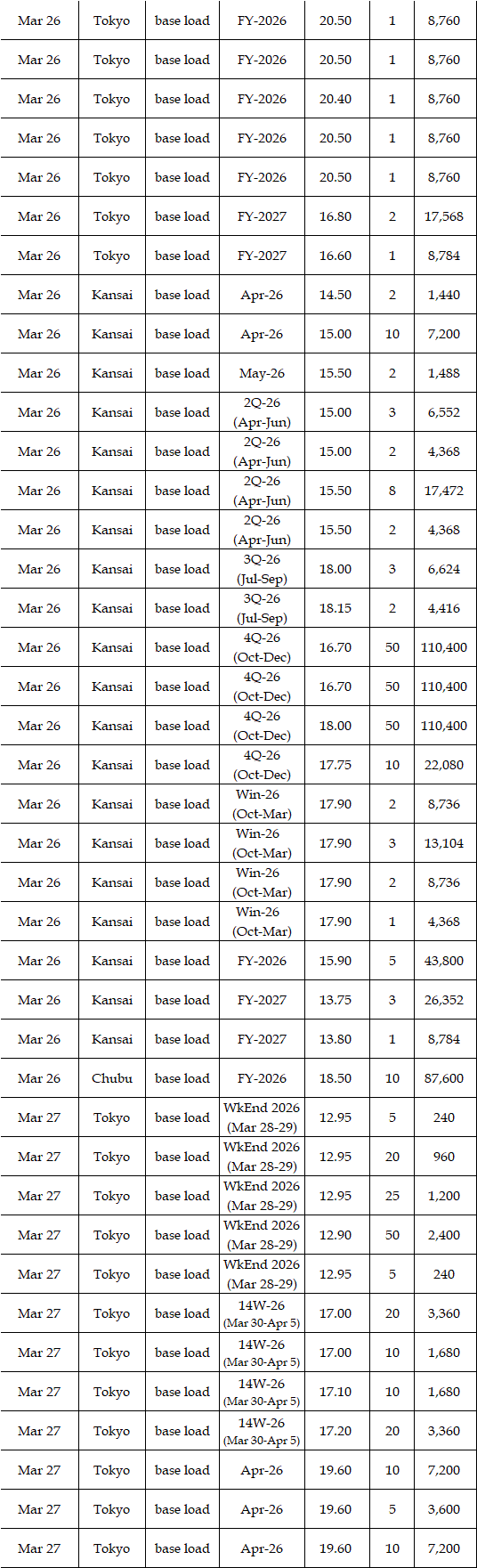
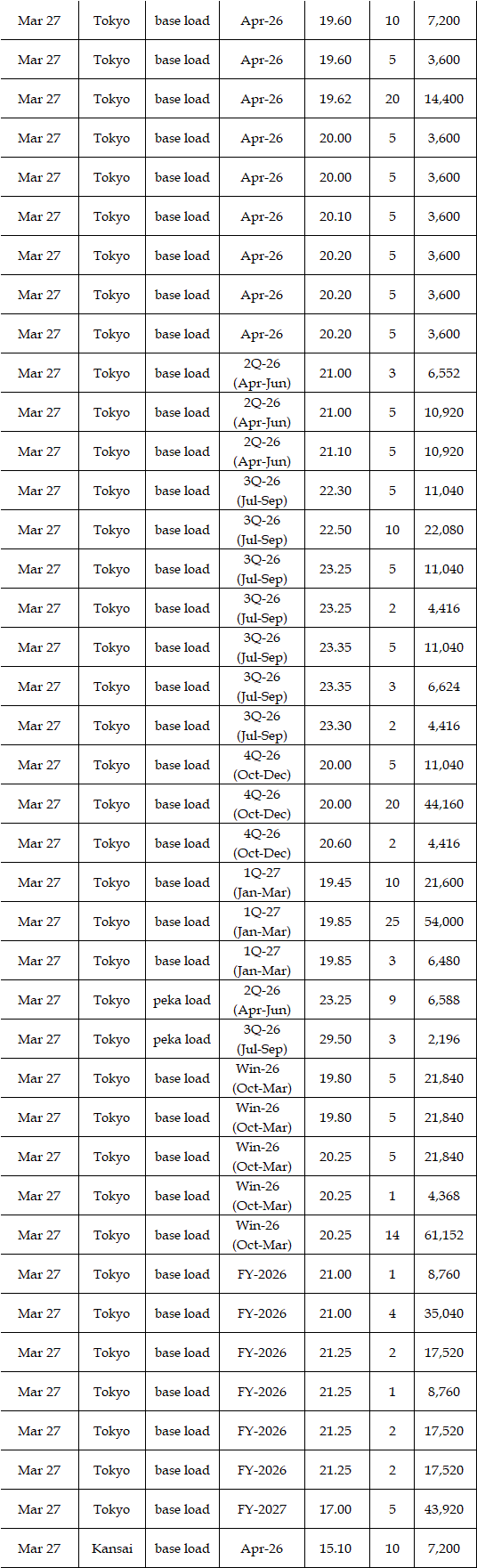
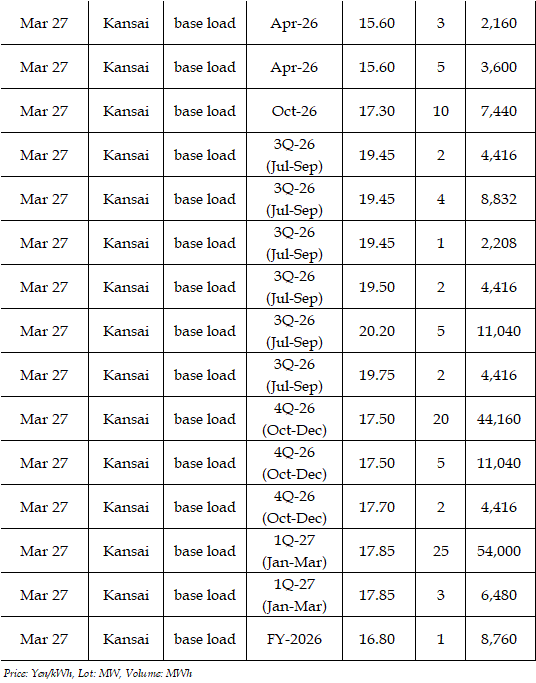
Deals reported on TOCOM (Tokyo Commodity Exchange) during Mar 23-27 were as below.
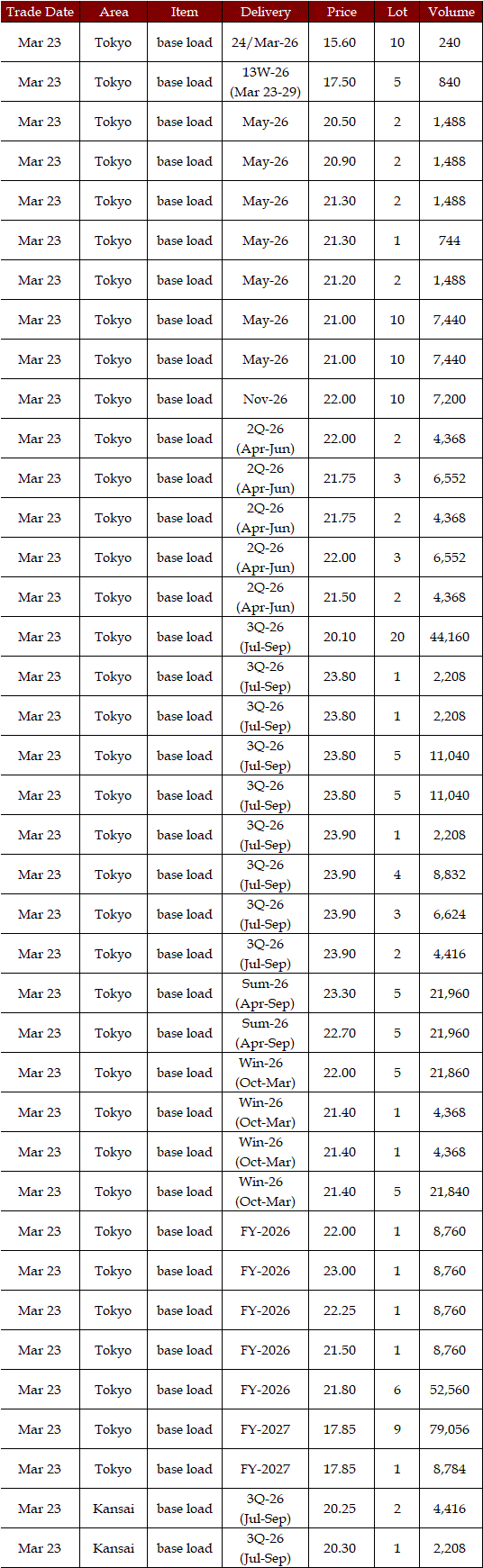
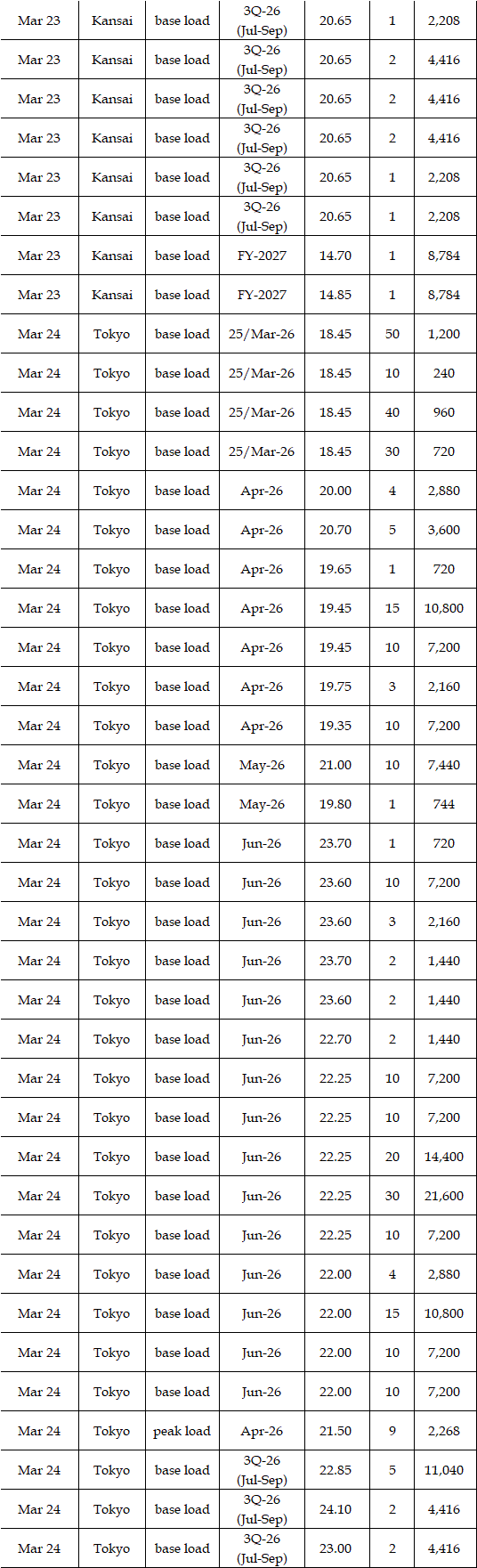
Deals reported on EEX (European Energy Exchange) during Mar 23-27 were as below.
Prices for the first week in April were expected to exceed those for the fourth week of March. Despite a spell of comfortable spring weather forecast, which requires neither air conditioning nor heating, the low supply capacity derived from more thermal power plants entering maintenance would support prices, especially in the first half of the week, when outputs from photovoltaic power plants are unlikely. Moreover, although the ratio may vary by each fiscal year, in April and May, the off-demand season, a certain number of players appeared to hike the spot ratio in their procurement of power instead of the ratio through private negotiations. Provided a strong buying interest comes amid high fuel costs, that may increase prices. Repair works at the grid interconnection line can accelerate the trend, especially in the Tokyo and Chubu areas. Asked about the price outlook for the first week of April, a source at a power producer and supplier said, "The futures market suggests spot prices will increase further in April. The base load prices will hover at Yen 20's for Tokyo and Yen 1.5-2 lower than those for Kansai."
|
JEPX: System Price (Day Ahead 24 hours)
|
|
Weekday Price
|
23-Mar
|
24-Mar
|
25-Mar
|
26-Mar
|
27-Mar
|
|
24-Hour Ave
|
14.49
|
13.43
|
17.49
|
15.37
|
14.08
|
|
Volume (MWh)
|
812,493
|
851,673
|
786,289
|
789,669
|
829,540
|
|
(unit: yen per kWh) (date: delivery day)
|
|
|
|
 - Fair & Reliable -
 Post
Post Print
Print


