|
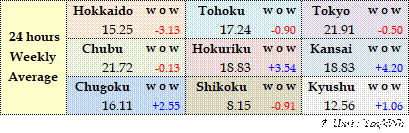
In the day-ahead market on JEPX (Japan Electric Power Exchange), the 24-hour spot power prices on a weekly average basis for Apr 6-10 delivery retreated compared with the week before for East Japan (50 Hz) but gained further for West Japan (60 Hz). With the arrival of the off-demand season in spring, demand for power has been tepid, and prices weakened in East Japan from a week earlier; however, the mean price during the week still stayed at a high level―over Yen 20, much higher compared with usual. This was because of high fuel costs and bids by major utilities, especially for the latter part; many viewed the impacts as possibly lingering in the Tokyo and Chubu areas, where major utilities ended procurement through private negotiations in the 2025 fiscal year. In West Japan, on the other hand, the reduced outputs from photovoltaic power plants as well as the fresh maintenance at nuclear power stations raised prices. Under the high fuel costs, where the offered prices from thermal power plants tend to be high, the variation in outputs from photovoltaic power plants directly resulted in price levels, either low or high. For the nighttime prices, days of prices at around Yen 20s continued in areas except for Shikoku; many thought, "The prices were valid given the fuel costs at this moment."
In the intraday market on Apr 5, prices soared to Yen 999.00. In response to this, several sources pointed out a possible misplaced order by saying, "The trade might come from a misunderstanding with the spot market." Other than the trade, apparently strange prices have been standing out recently in the intraday market, including Yen 100, a too high price compared with the spot market.
The spread of the 24-hour spot average between Tokyo and Kansai, a major market area in East and West Japan, was Yen 9.80 on Apr 6, Yen 1.17 on Apr 7, Yen 2.17 on Apr 8, Yen 1.33 on Apr 9, and Yen 0.90 on Apr 10 in favor of Tokyo.
The fuel market trends in the second week of April were detailed as follows.
DES Northeast Asia spot LNG prices on Apr 9 hovered at high-$16's per mmBtu for May 2026 delivery, down by around $3.5 from the end of last week (Apr 3). Brokered by Pakistan, the US and Iran agreed to a ceasefire for two weeks, which mitigated supply worries and then sent prices lower. However, the uncertainty remains in the market, including possible military conflicts again between the US and Iran. The Ministry of Economy, Trade, and Industry (METI) announced on Apr 8 that Japan's LNG inventories for power generation stood at 2.20 mil mt as of Apr 5, the same as those from a week earlier. The figure was above the end of March last year (2.12 mil mt) and the average for the past five years (2.00 mil mt).
FOB Newcastle thermal coal prices in Australia were in the mid-$135's per ton for April 2026 loading as of Apr 9, down by around $2.5 from the end of the previous week (Apr 2). Prices followed weak natural gas and crude markets.
In the crude oil market, the prices hovered at mid-$98 for May 2026 for WTI and at mid-$96 for June 2026 for Brent at 11 AM on Apr 10. The prices were down by around $13 from the end of last week (Apr 2) for WTI and Brent, respectively. As mentioned earlier, prices plunged in the wake of the conditional ceasefire between the US and Iran.
The actual highest price during the week was at Yen 50.00 in Tokyo on Apr 9; the actual lowest price during the week was at Yen 0.01 in Hokkaido, Tohoku & Shikoku on Apr 6; in Chugoku, Shikoku & Kyushu on Apr 7; in three East Japan areas(Hokkaido, Tohoku, and Tokyo), Chugoku, Shikoku & Kyushu on Apr 8; and in Hokkaido & Tohoku on Apr 9.
The weekly average of the 24-hour spot prices by area and the weekly average volume of offers, bids, and trades are shown in the table below.

Power demand in nine areas of Japan during Apr 6-Apr 10 was 10,690.85 mil kWh, up 0.3% from 10,657.93 mil kWh during Mar 31-Apr 3. The figure was up 0.7% from the corresponding period a year earlier, which was 10,619.64 mil kWh during Apr 7-11, 2025, after day-of-week adjustment.
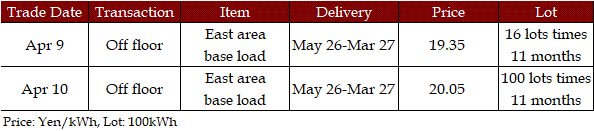
Deals reported on TOCOM (Tokyo Commodity Exchange) during Apr 6-10 were as below.
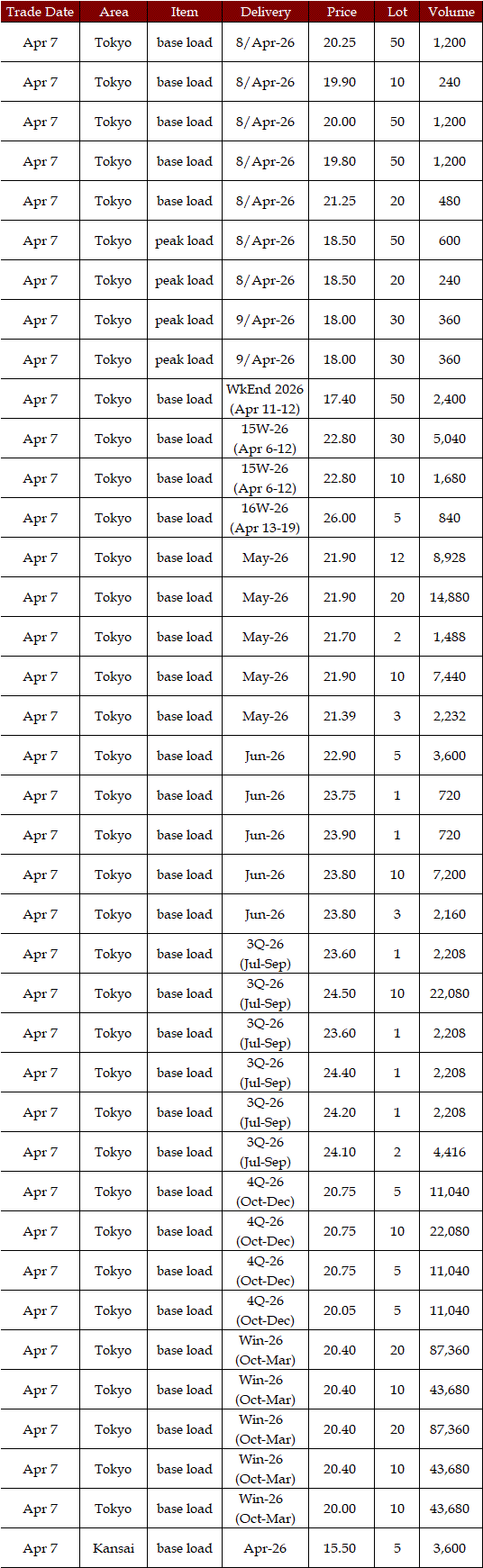
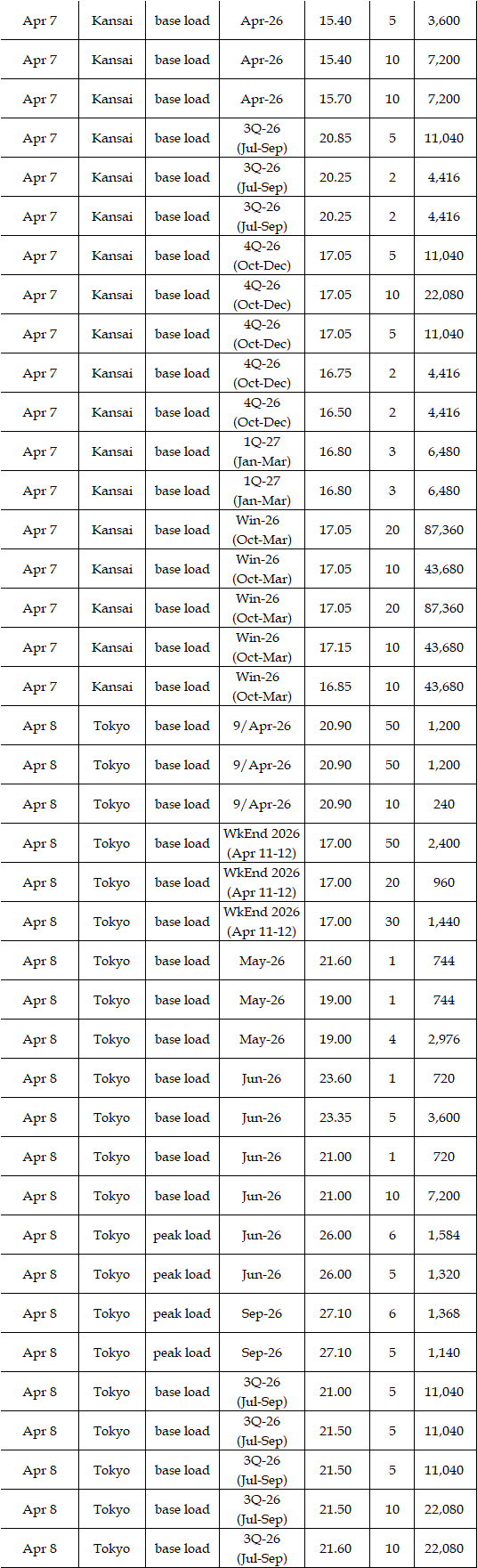
Deals reported on EEX (European Energy Exchange) during Apr 6-10 were as below.
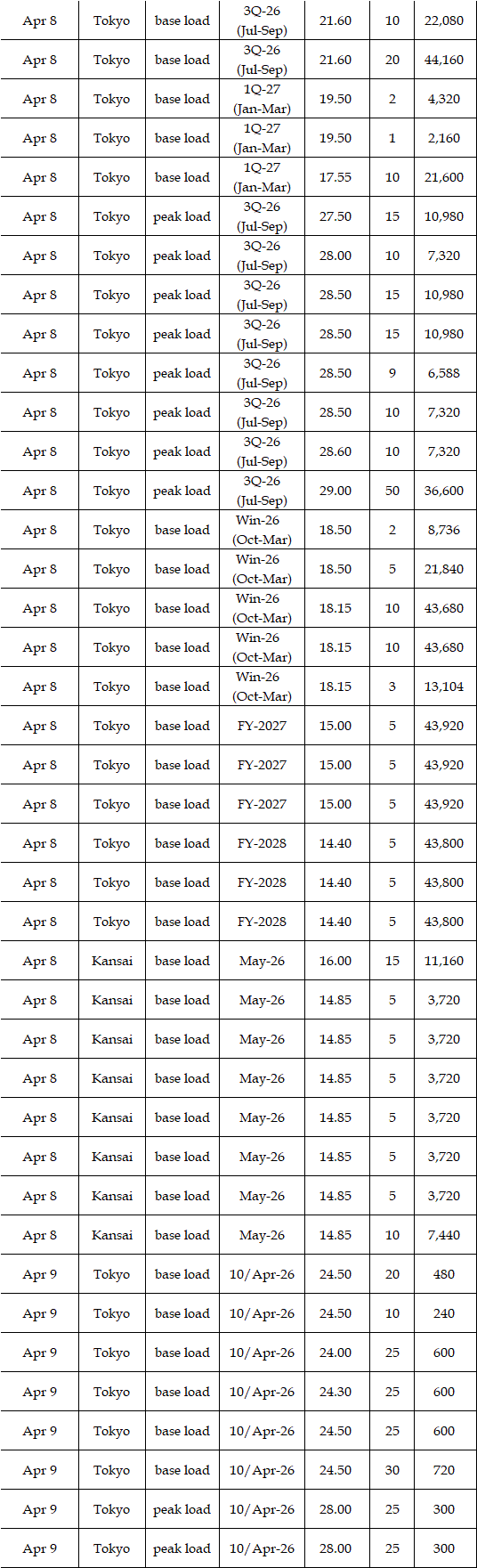
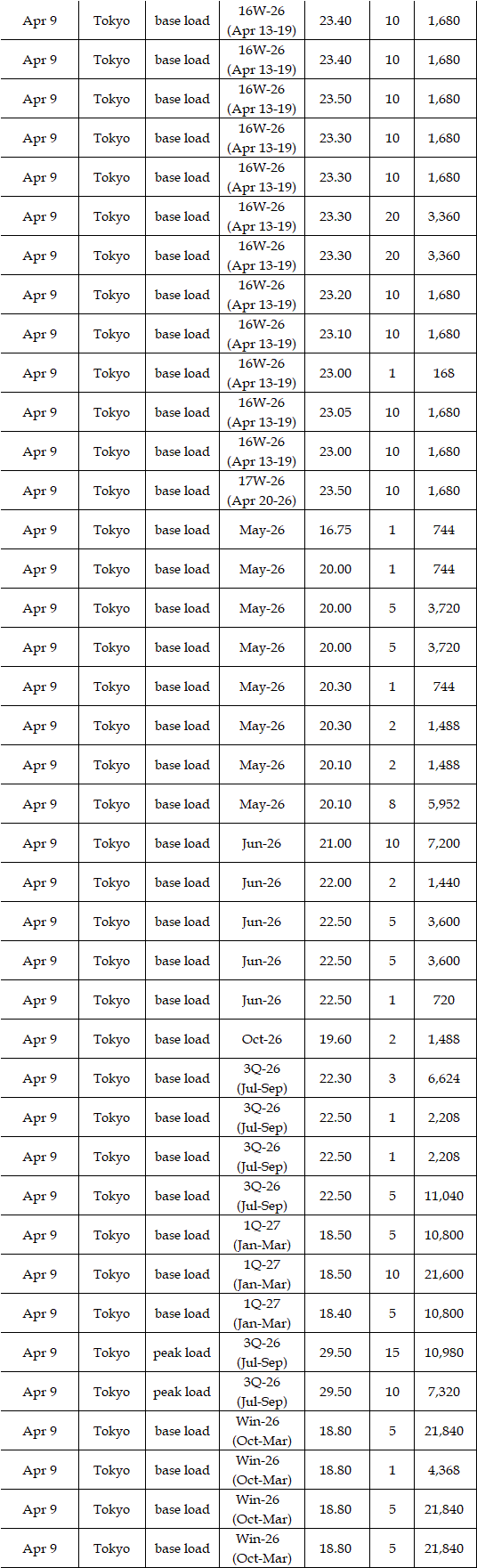
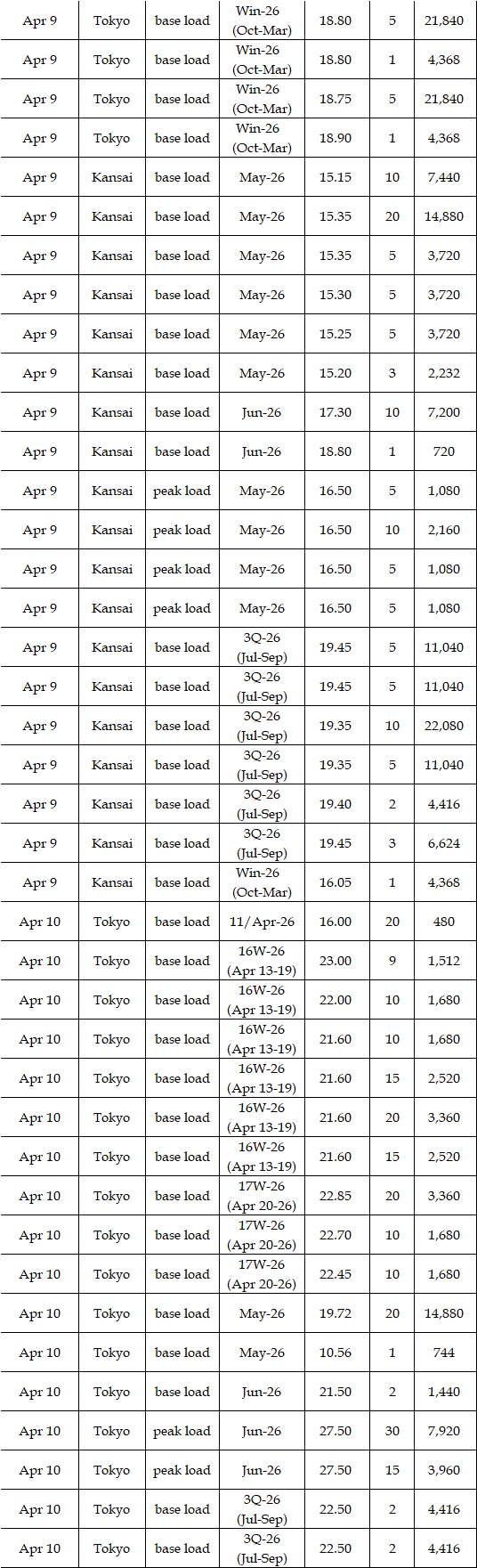
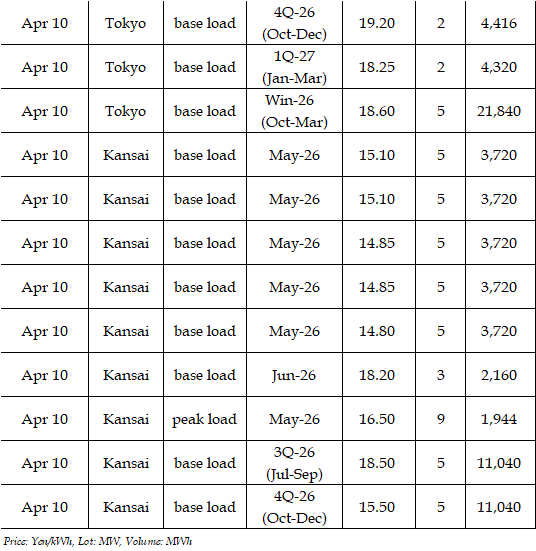
Prices for the third week in April were expected to be solid. Cloudy days were to come, limiting outputs from photovoltaic power plants and then sending prices higher levels. Despite mild temperatures, which would reduce demand, prices would be supported by bids from major utilities. Indeed, several sources said, "Bids by major utilities will last and may prevent prices from falling." Asked about the outlook of the third week in April, a source at a power producer and supplier said, "Base load prices in Tokyo will stay at above Yen 20; in Kansai, maintenance at thermal power plants as well as nuke power stations supports prices, making price levels the same as those in Tokyo on days without outputs from solar power plants and Yen 2-3 cheaper than those in Tokyo on days with outputs from the plants." Provided LNG prices keep at around $20, the offered prices in the power spot market will exceed Yen 20 repeatedly.
|
JEPX: System Price (Day Ahead 24 hours)
|
|
Weekday Price
|
6-Apr
|
7-Apr
|
8-Apr
|
9-Apr
|
10-Apr
|
|
24-Hour Ave
|
12.68
|
20.07
|
14.75
|
17.93
|
22.39
|
|
Volume (MWh)
|
881,295
|
985,578
|
981,013
|
971,829
|
965,074
|
|
(unit: yen per kWh) (date: delivery day)
|
|
|

|
 - Fair & Reliable -
 Post
Post Print
Print


