|
For Apr 13-17 delivery, the 24-hour average of power spot prices in both East Japan (50Hz) and West Japan (60Hz) retreated from the previous week. On the back of increased solar power generation compared to the previous week, there were more days when prices slumped to an extremely low Yen 0.01 during daytime hours, weighing on the overall 24-hour average. However, prices in the evening and nighttime hours continued to feature elevated prices, as high fuel costs and purchasing by major utilities had a significant impact. Especially in Tokyo, the base price never fell below Yen 20 throughout the week, and with some days seeing prices exceed Yen 50, days of uniquely high prices continued. Many market participants continued to believe that purchasing by major utilities significantly impacted prices. Many now view this trend as likely to continue into next week and beyond.
Looking at the spread in 24-hour average power spot prices between Tokyo and Kansai, the major East and West areas, the East-West spread was Yen 6.01 in favor of the East on Apr 13, Yen 6.04 on Apr 14, Yen 2.33 on Apr 15, Yen 10.44 on Apr 16, and Yen 10.60 in favor of the East on Apr 17, with the East-West spread remaining significantly diverged.
For the third week of April, fuel prices were as follows.
LNG spot prices in the DES Northeast Asia market, for the prompt May 2026 delivery, stood at the high $15 level per mmBtu as of Apr 16, falling by about $1.3 from the end of the previous week (Apr 10). Expectations for a ceasefire negotiation between the US and Iran weighed on prices. The Ministry of Economy, Trade, and Industry (METI) announced on Apr 15 that LNG inventory for power generation as of Apr 12 was 2.29 million tons, an increase of 70,000 tons from the previous week. This exceeded both 2.0 million tons as of the end of March last year and the five-year average of 2.12 million tons. At present, there appears to be no supply-side impact due to the deteriorating situation in the Middle East.
FOB Newcastle Australia thermal coal prices for April 2026 loading were in the mid-$133s per ton as of Apr 16, a decline of about $1.5 from the end of the previous week (Apr 10). This reflected the decline in gas and crude oil prices.
Crude oil prices, as of 11:00 JST on Apr 16, saw NYMEX WTI contract for May 2026 futures hover at the mid-$93 level per barrel, and ICE Brent contract for June 2026 futures at the low-$98 level per barrel. Both WTI and Brent were down about $3 each from the end of the previous week (Apr 10). As noted in the LNG section, expectations for a ceasefire negotiation between the US and Iran weighed on prices.
The actual highest price during the week was at Yen 57.88 in Tokyo on Apr 16; the actual lowest price during the week was at Yen 0.01 in Hokkaido, Tohoku & Shikoku on Apr 13; in Hokkaido & Tohoku on Apr 14; in all of nine areas & system price on Apr 16; and in Hokkaido & Tohoku on Apr 17.
The weekly average of the 24-hour spot prices by area and the weekly average volume of offers, bids, and trades are shown in the table below.
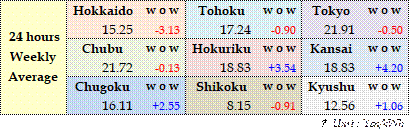

Power demand in nine areas of Japan during Apr 13-17 was 10,321.31 mil kWh, down 3.5% from 10,690.85 mil kWh during Apr 6-10. The figure was down 2.7% from the corresponding period a year earlier, which was 10,605.21 mil kWh during Apr 14-18, 2025, after day-of-week adjustment.
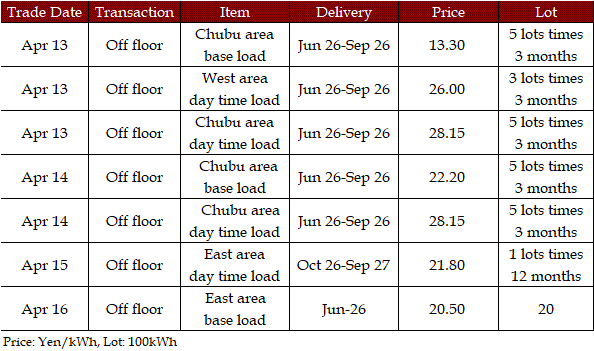
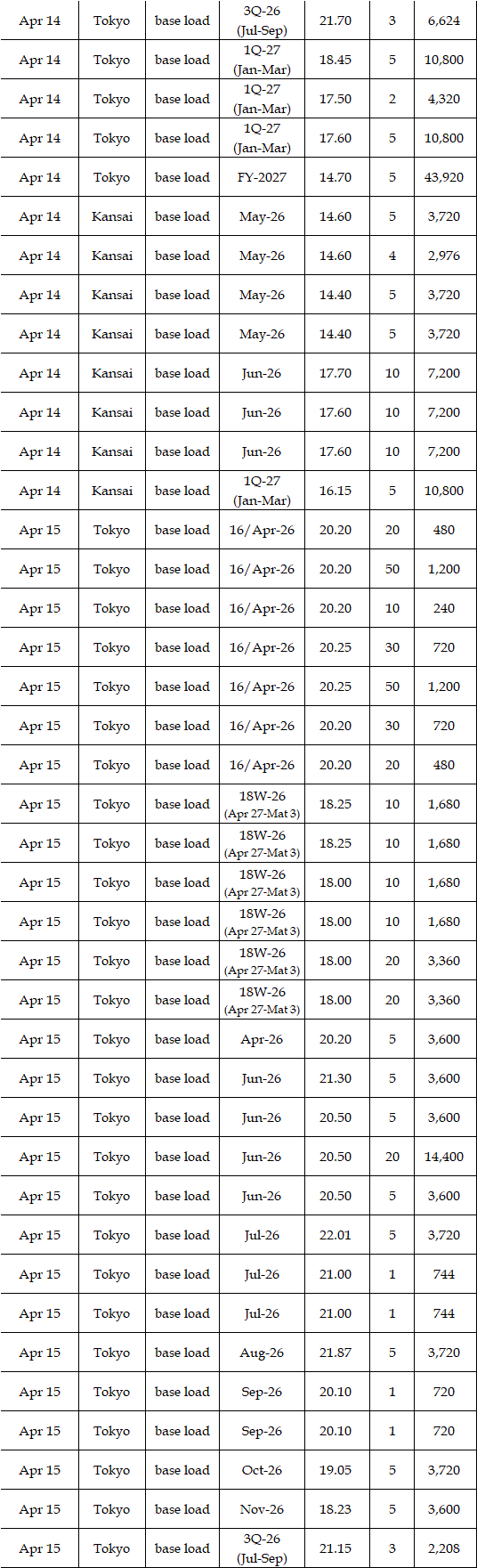
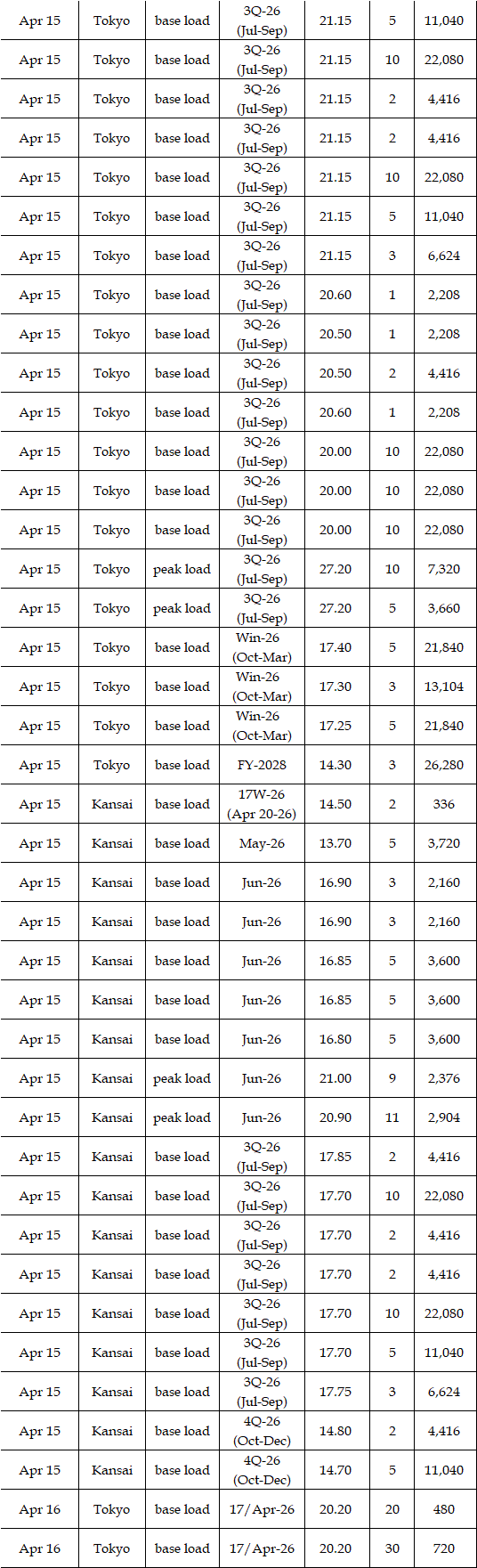
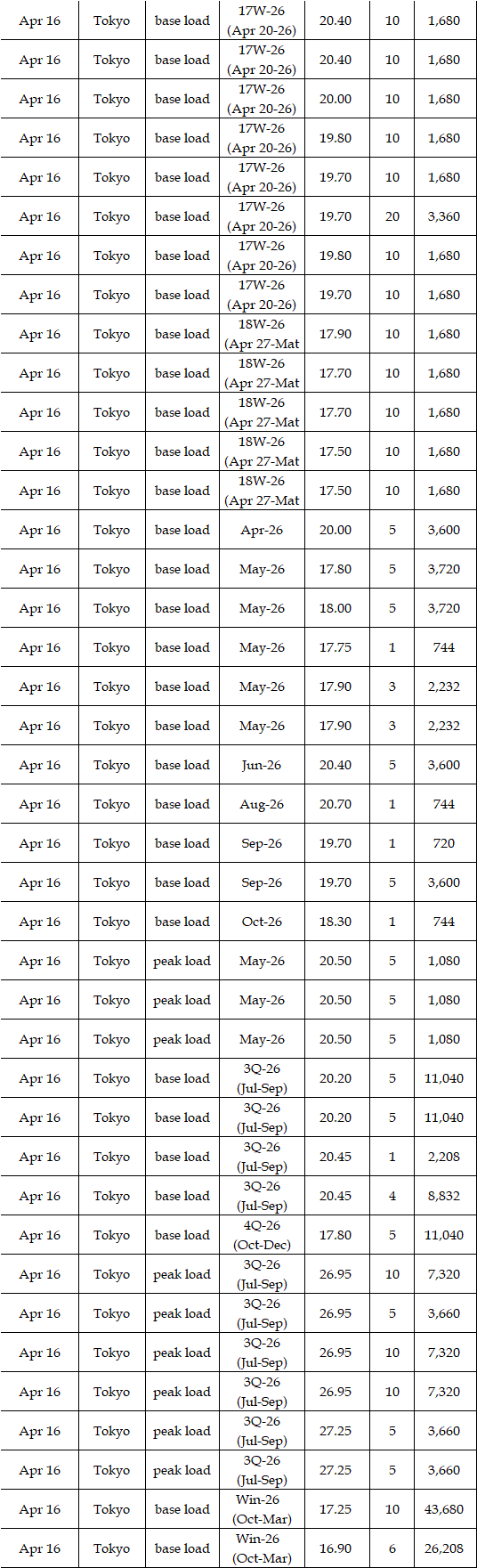
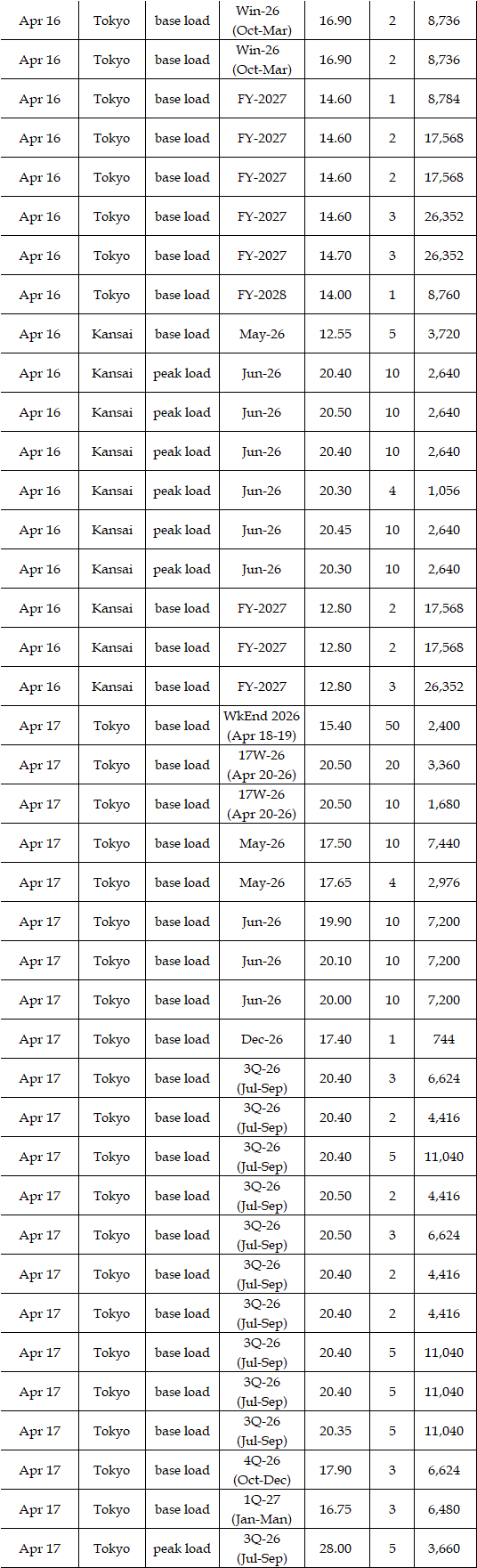
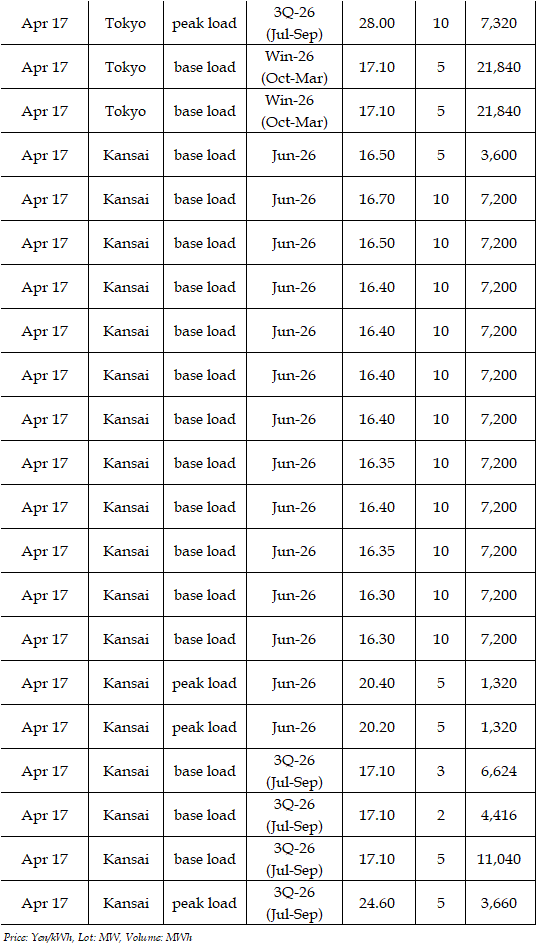
Deals reported on TOCOM (Tokyo Commodity Exchange) during Apr 13-17 were as below.
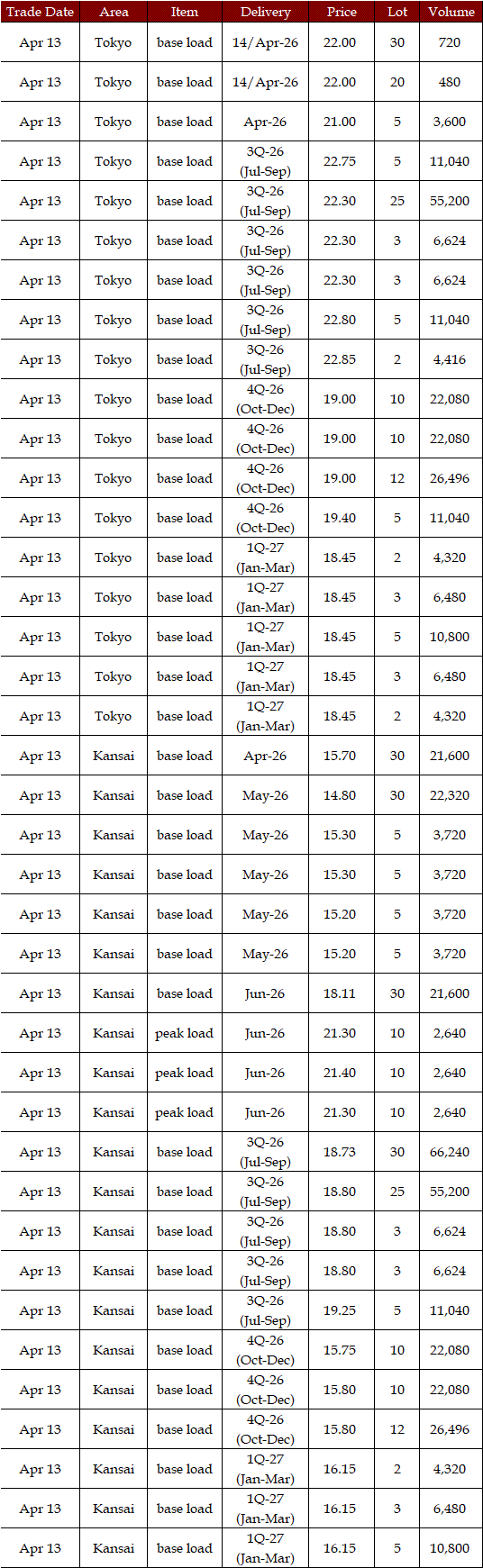
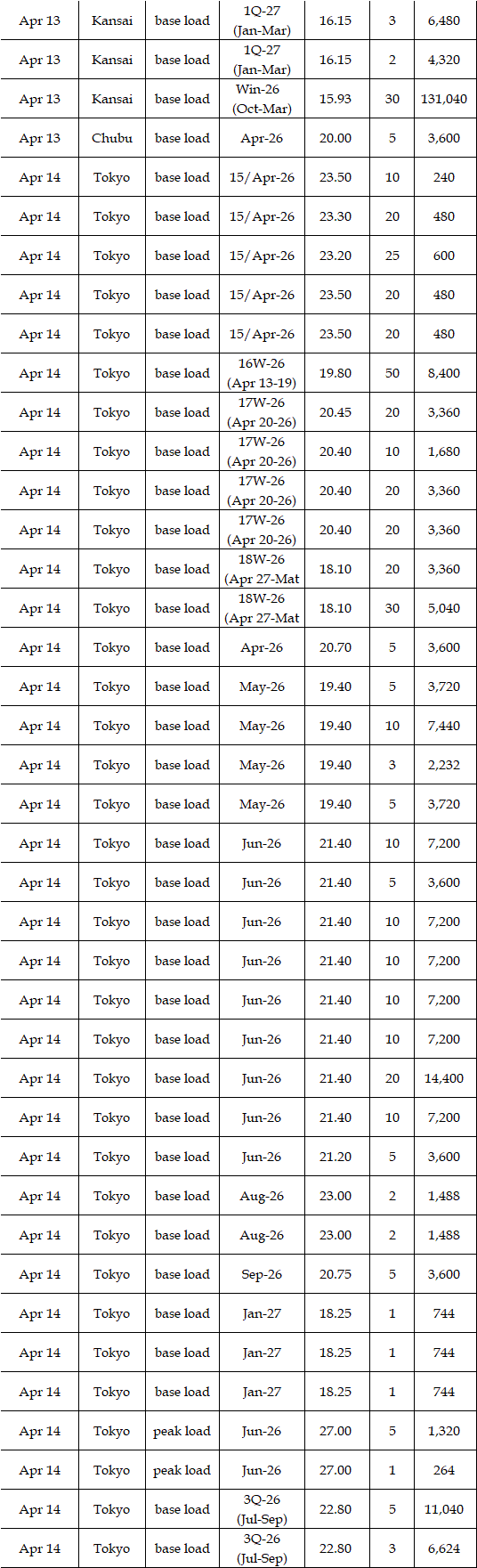
Deals reported on EEX (European Energy Exchange) during Apr 13-17 were as below.
For the fourth week of April, power spot prices are not expected to see significant changes from the third week. As many sunny days are expected in the first half of the week, leading to abundant solar power generation, prices in the single digits are likely to be prevalent during daytime hours. In reaction to this, prices from the evening onwards are expected to remain relatively high. In the latter half of the week, as the weather is expected to deteriorate, daytime prices are expected to see an upward trend, and the overall 24-hour average is likely to surpass that of the first half of the week. However, several market participants were heard saying that "the purchasing behavior by major utilities will continue to be more significant than weather trends," with many keeping a close watch on the trend of bids. While this trend is particularly observed in Tokyo and Chubu, in Tokyo, with the start of commercial operation of Unit 6 of TEPCO's Kashiwazaki-Kariwa Nuclear Power Plant (capacity 1,356,000kW, ABWR type, Kashiwazaki City, Niigata Prefecture) from Apr 16, it is noteworthy how much this will affect power spot prices. Regarding price trends in the fourth week, some market participants commented, "Tokyo's base price is expected to remain in the Yen 20's. Even with falling fuel prices, there was no significant change in prices. As purchasing by major utilities is expected to continue, the downside potential for prices may be limited even if demand slows down. As for Kansai, prices are likely to be lower than Tokyo, but as solar power generation trends could lead to a tightening supply-demand balance, the price fluctuation range could be wider within the week. Although difficult to anticipate, there might be days when prices range from Yen 10's to over Yen 15," said a market trading representative of a new power retailer.
|
JEPX: System Price (Day Ahead 24 hours)
|
|
Weekday Price
|
13-Apr
|
14-Apr
|
15-Apr
|
16-Apr
|
17-Apr
|
|
24-Hour Ave
|
14.95
|
17.09
|
19.82
|
13.62
|
14.43
|
|
Volume (MWh)
|
922,880
|
961,947
|
957,084
|
950,068
|
917,744
|
|
(unit: yen per kWh) (date: delivery day)
|
|
|

|
 - Fair & Reliable -
 Post
Post Print
Print


