|
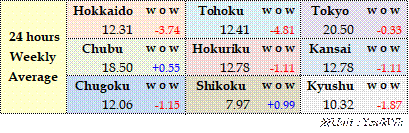
For Apr 20-24 delivery, the weekly 24-hour average of spot power prices in both East Japan (50Hz) and West Japan (60Hz) continued to fall from the previous week. Entering a full-fledged off-peak demand season, and amid sluggish power demand, many days saw abundant solar power generation, which put a lid on prices. However, on Apr 23, which was rainy nationwide, bids and offers balanced out, and the impact of solar power on price trends further intensified. Furthermore, price decoupling trends also had a greater impact on price movements; as price decoupling between Tohoku and Tokyo increased compared to the previous week, Hokkaido and Tohoku saw larger decreases.
Looking at the difference in 24-hour average spot power prices between the key East-West areas of Tokyo and Kansai, the East-West spread was at Yen 9.35 in favor of the East on Apr 20, Yen 9.12 on Apr 21, Yen 7.34 on Apr 22, Yen 3.93 on Apr 23, and Yen 8.75 on Apr 24, with the East-West spread further widening from the previous week.
The fuel market during the fourth week of April was as follows.
DES Northeast Asia LNG spot prices as of Apr 23 were at the mid-$16 level per mmBtu for prompt month June 2026 delivery, increasing by approximately $0.7 from the previous weekend (Apr 17). As ceasefire negotiations between the US and Iran made no progress and future uncertainty further intensified, prices also advanced. According to data announced by the Ministry of Economy, Trade and Industry (METI) on Apr 22, power generation LNG inventories as of Apr 19 stood at 2.22 million tons, a decrease of 70,000 tons from the previous week. This exceeded both 2.00 million tons at the end of April last year and the five-year average of 2.12 million tons. So far, no supply-side impact from the deteriorating Middle East situation has been observed.
FOB Newcastle Australia thermal coal prices as of Apr 23 were at the low-$133 level per ton for April 2026 loading, increasing by approximately $1 from the previous weekend (Apr 17). This reflected the rise in gas and crude oil prices.
Crude oil prices as of 12:00 JST on Apr 23 saw the NYMEX WTI contract for June 2026 at the mid-$96 level per barrel and the ICE Brent contract for June 2026 at the high-$105 level. WTI was approximately $13 higher and Brent approximately $15 higher from the previous weekend (Apr 17). As mentioned for LNG, expectations for ceasefire negotiations between the US and Iran faded, and prices further rose. Currently, there is no prospect for the Strait of Hormuz to be reopened.
The highest price throughout the week was Yen 60.00, marked in Tokyo on Apr 23, marking the highest level since Yen 80.00, recorded in Hokkaido on Oct 23 last year. Meanwhile, the lowest effective price was Yen 0.01, recorded in Hokkaido, Tohoku, and Kyushu on Apr 20; in the three East Japan areas, Shikoku, Kyushu, and for system price on Apr 21; in Hokkaido and Tohoku on Apr 22; and in Hokkaido, Tohoku, and Kyushu on Apr 24.
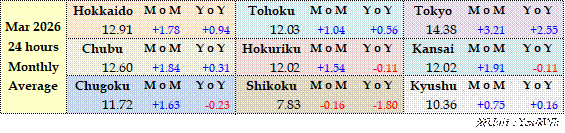
The weekly average of the 24-hour spot prices by area and the weekly average volume of offers, bids, and trades are shown in the table below.
Power demand in nine areas of Japan during Apr 20-24 was 10,230.75 mil kWh, down 0.9% from 10,321.31 mil kWh during Apr 13-17. The figure was up 0.4% from the corresponding period a year earlier, which was 10,185.50 mil kWh during Apr 21-25, 2025, after day-of-week adjustment.
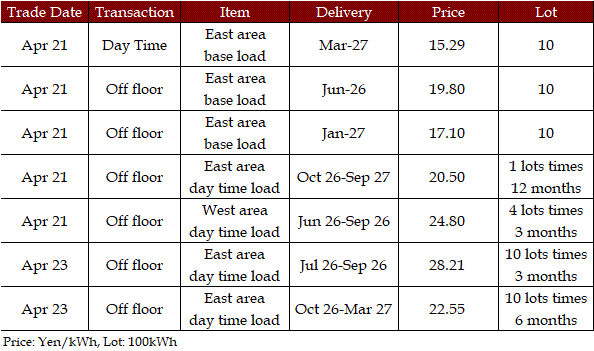
Deals reported on TOCOM (Tokyo Commodity Exchange) during Apr 20-24 were as below.
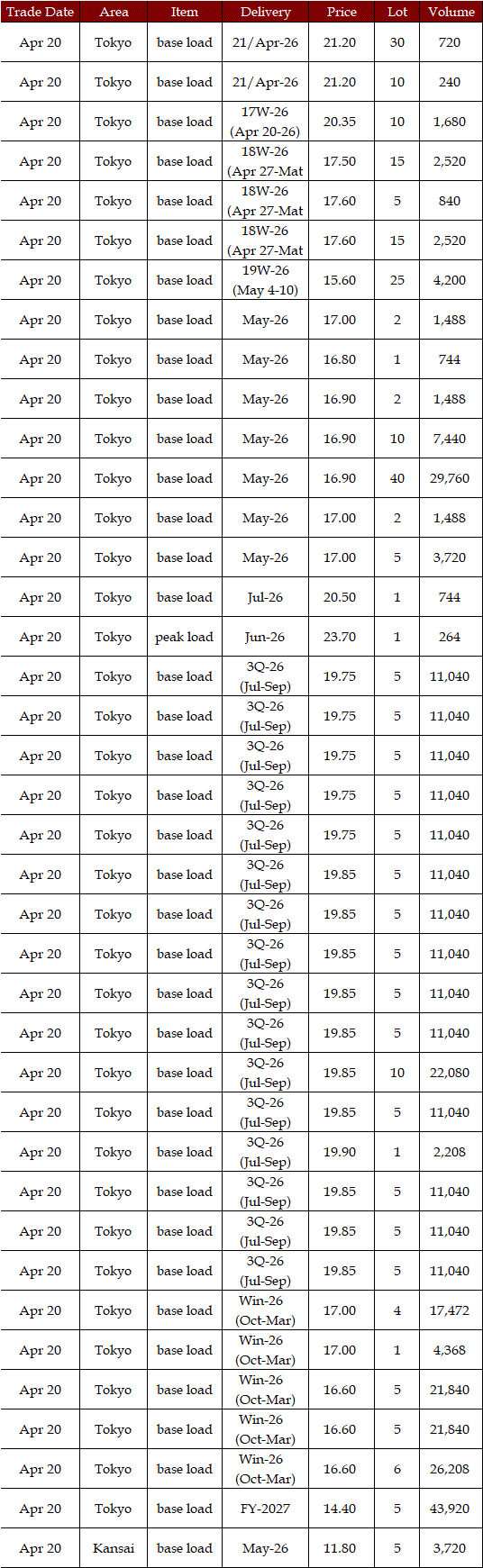
Deals reported on EEX (European Energy Exchange) during Apr 20-24 were as below.
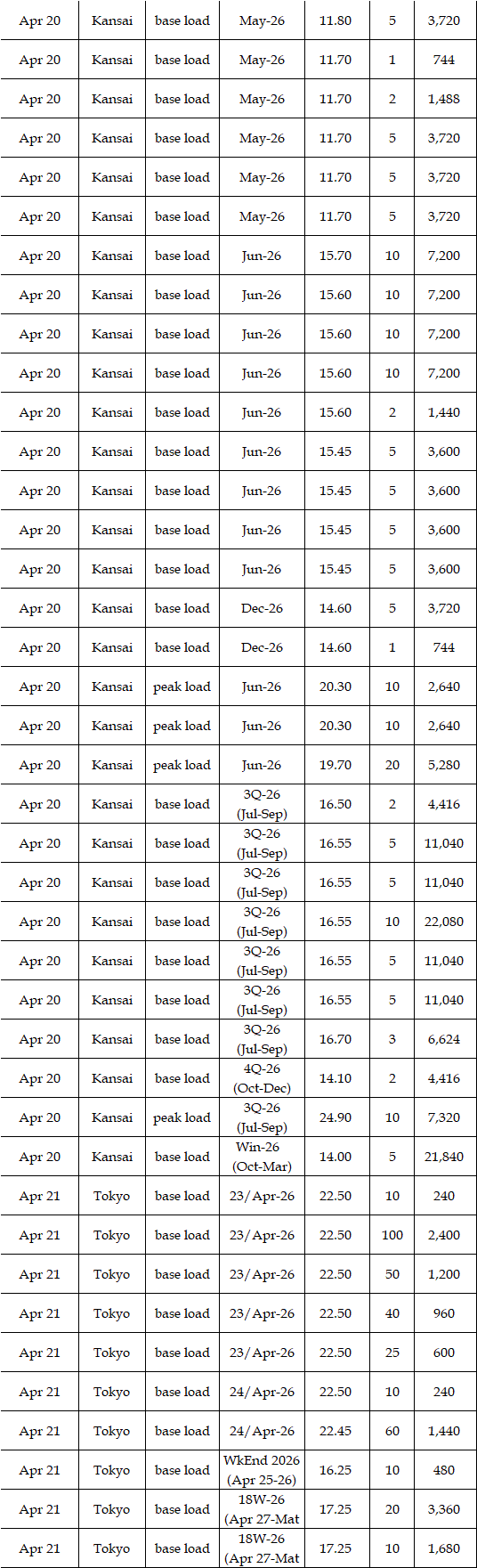
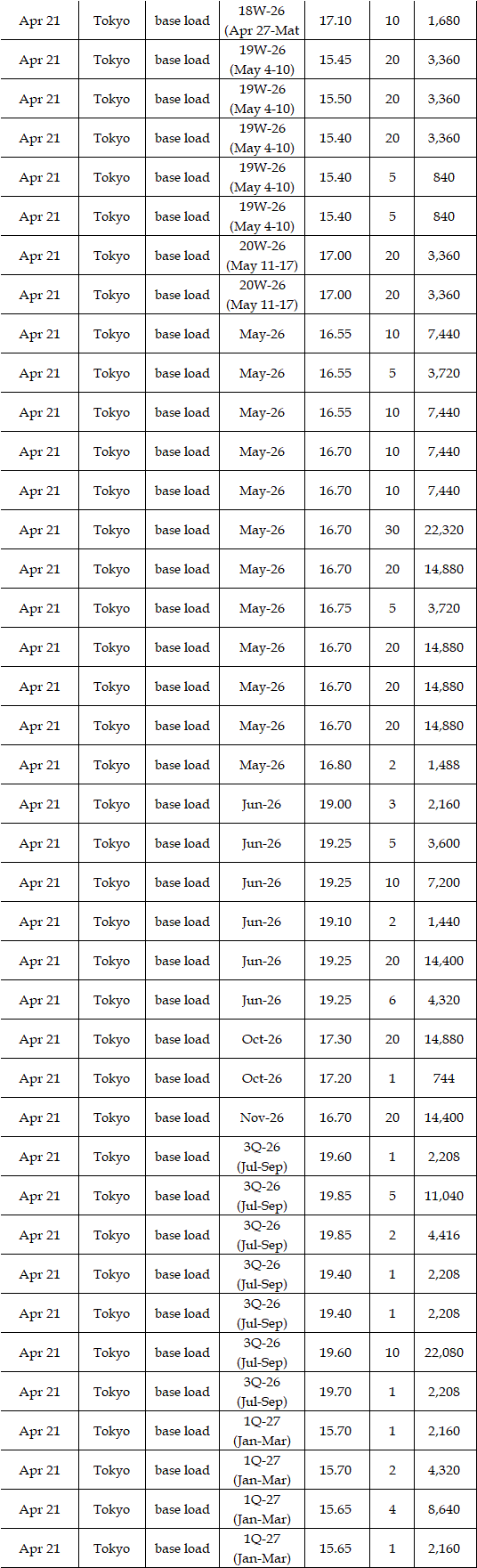
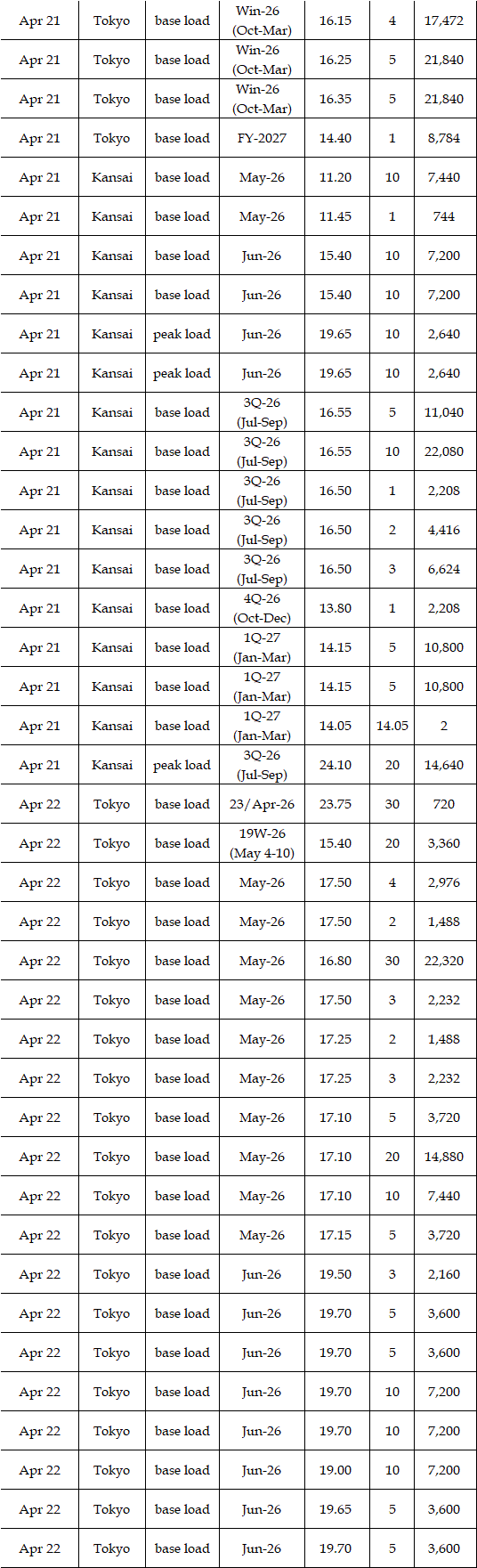
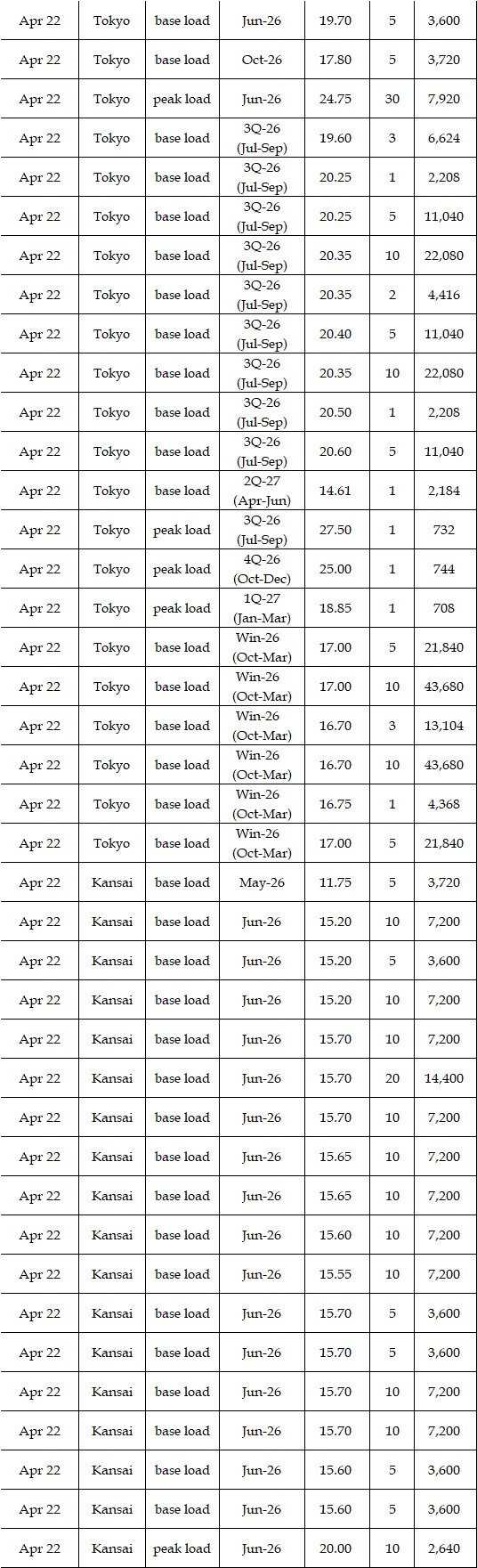
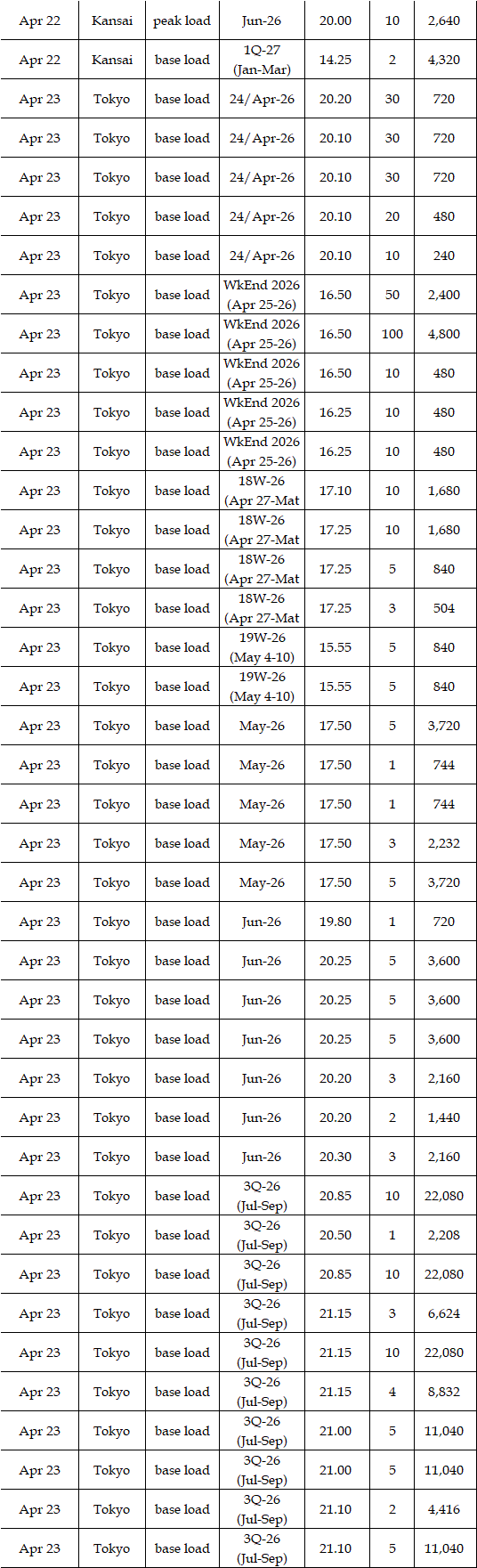
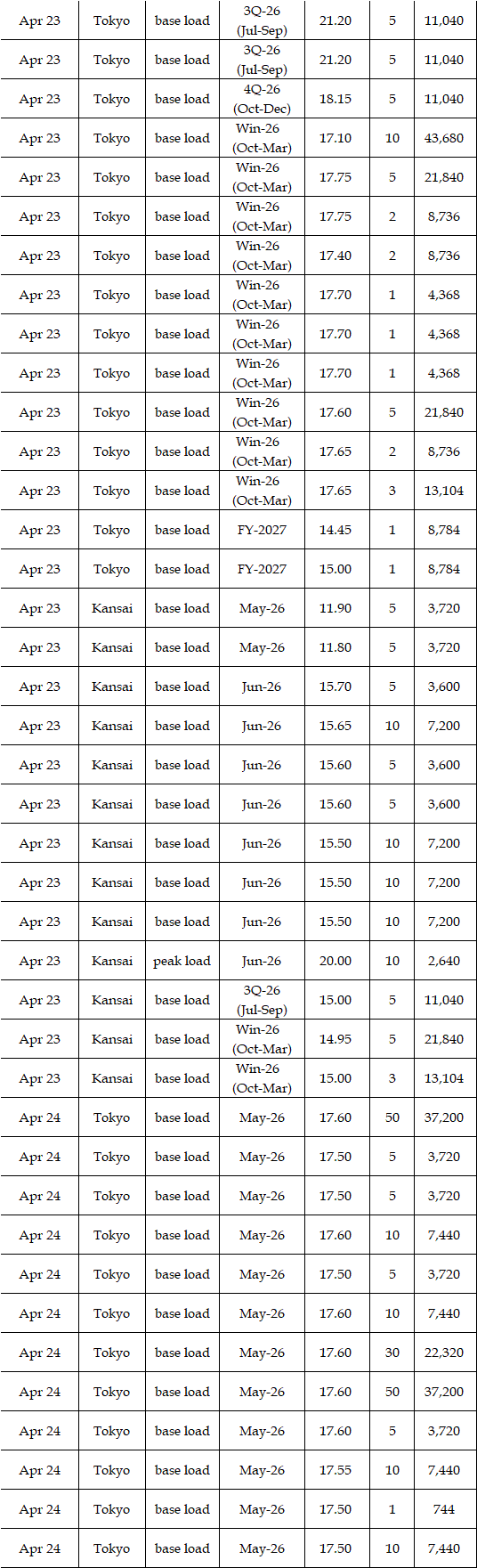
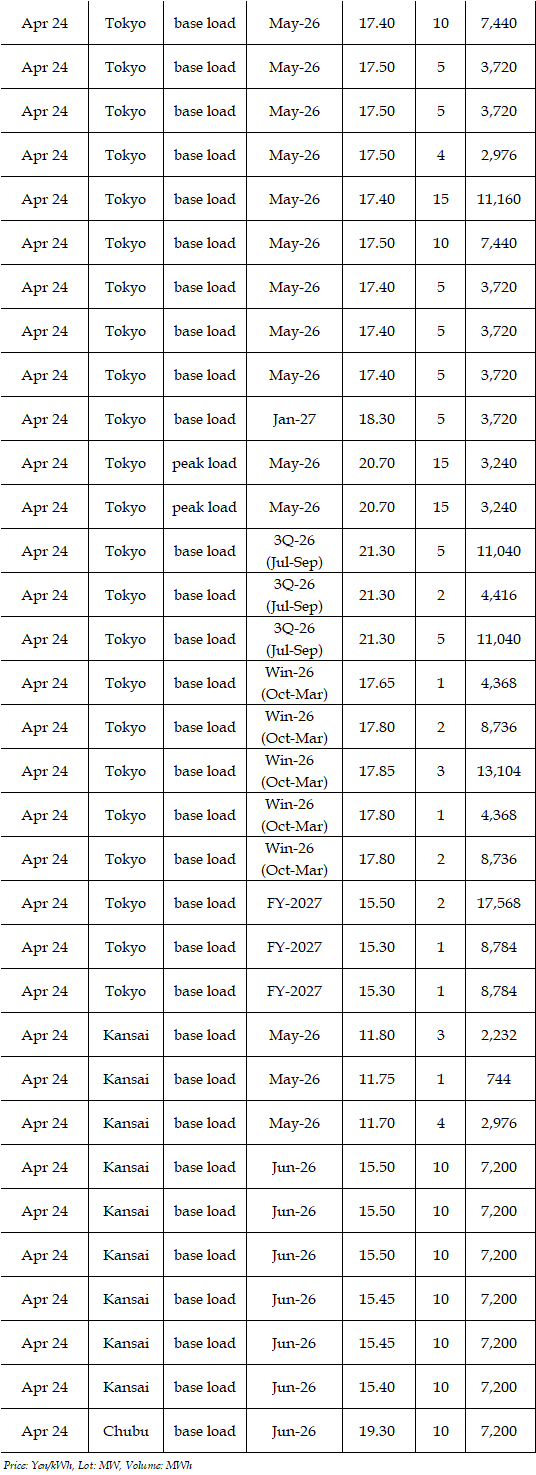
Power spot prices for the final week of April are expected to soften from the fourth week. As many factories will cease operations for the Golden Week holidays from Apr 29, the decline in industrial demand is expected to ripple through to prices. However, as thermal power generation operations will also be curtailed during this period, the risk of price increases would be heightened if there are power generation facility issues or unexpected temperature trends. Furthermore, amidst growing uncertainty surrounding the Middle East situation, trends in the fuel market could also serve as a bullish factor for power spot prices. A market trading representative from a new power company commented on price trends for the final week: "Tokyo's base price is expected to fall below Yen 20, but looking at the futures market, it will likely trade at Yen 17-18. Especially on Apr 28, before the Golden Week holidays, Kanto and western Japan will see summer days with temperatures above 25 degrees Celsius, so prices could exceed Yen 20 depending on temperature trends. Regarding Kansai, I believe price fluctuations will be significant due to changes in solar power generation, as was the case in the fourth week. There might even be days when the base price falls below Yen 10 on the downside and exceeds Yen 15 on the upside."
|
JEPX: System Price (Day Ahead 24 hours)
|
|
Weekday Price
|
20-Apr
|
21-Apr
|
22-Apr
|
23-Apr
|
24-Apr
|
|
24-Hour Ave
|
13.56
|
12.86
|
14.96
|
19.64
|
13.51
|
|
Volume (MWh)
|
912,427
|
972,933
|
962,329
|
1,016,463
|
945,450
|
|
(unit: yen per kWh) (date: delivery day)
|
|
|

|
 - Fair & Reliable -
 Post
Post Print
Print


