|
The weekly average of 24-hour power spot prices for Apr 27-May 1 delivery extended losses from the previous week in both East Japan (50Hz) and West Japan (60Hz). As some factories entered a long holiday from Apr 29, a significant slowdown in demand became evident, which also impacted price movements. However, Tokyo's uniquely high prices continued to persist, and it is widely believed that the impact of buying by major power companies continues.
Looking at the East-West spread in 24-hour average power spot prices between Tokyo and Kansai, the major East-West areas, it was Yen 8.33 on Apr 27, Yen 6.02 on Apr 28, Yen 3.67 on Apr 29, Yen 5.84 on Apr 30, and Yen 7.16 on May 1, all in favor of the East, and the East-West spread continued to widen.
The fuel market from the final week of April through the first week of May was as follows.
DES Northeast Asia LNG prices for prompt June 2026 delivery stood at the high $17 level per mmBtu as of Apr 30, up by around $1 from the previous weekend (Apr 24). Following the cancellation of ceasefire negotiations between the US and Iran, expectations for a prolonged blockade of the Strait of Hormuz strengthened, and prices were underpinned. The power generation LNG inventory as of Apr 26, announced by the Ministry of Economy, Trade, and Industry (METI) on Apr 29, was 2.16 million tons, decreasing by 0.06 million tons from the previous week. However, this exceeded both 2.0 million tons as of the end of April last year and the five-year average of 2.12 million tons.
FOB Newcastle thermal coal prices for May 2026 loading stood at around $134 per ton as of Apr 30, up by around $4 from the previous weekend (Apr 24). This reflected the rise in crude oil and gas prices.
Crude oil prices as of 13:00 JST on Apr 30 saw WTI crude futures for June 2026 delivery hovering at the mid-$105 level per barrel, and the ICE Brent contract for July 2026 delivery at the mid-$111 level. WTI crude futures were up around $11 and the ICE Brent contract was up around $15 respectively from the previous weekend (Apr 24). As mentioned for LNG, the lack of progress in ceasefire negotiations between the US and Iran, with no prospect for the opening of the Strait of Hormuz, strengthened concerns over crude oil supply, pushing prices further higher.
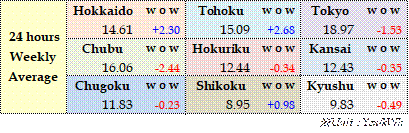
The actual highest price throughout the week was Yen 64.28, marked in Tokyo on Apr 28. Meanwhile, the lowest effective price was Yen 0.01, recorded in Shikoku, and Kyushu on Apr 27, 28,& May 1; and in Hokkaido and Tohoku on Apr 30.
The weekly average of the 24-hour spot prices by area and the weekly average volume of offers, bids, and trades are shown in the table below.

Power demand in nine areas of Japan during Apr 27-May 1 was 9,564.12 mil kWh, down 6.5% from 10,230.75 mil kWh during Apr 20-24. The figure was up 5.3% from the corresponding period a year earlier, which was 9,086.90 mil kWh during Apr 28-May 2, 2025, after day-of-week adjustment.
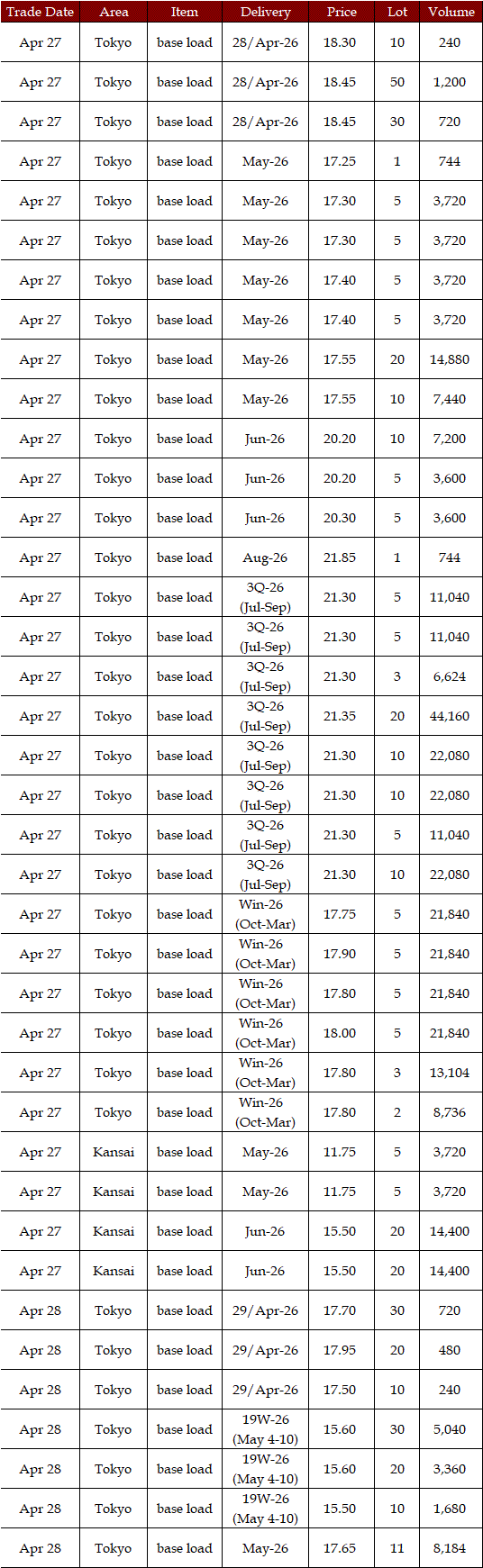
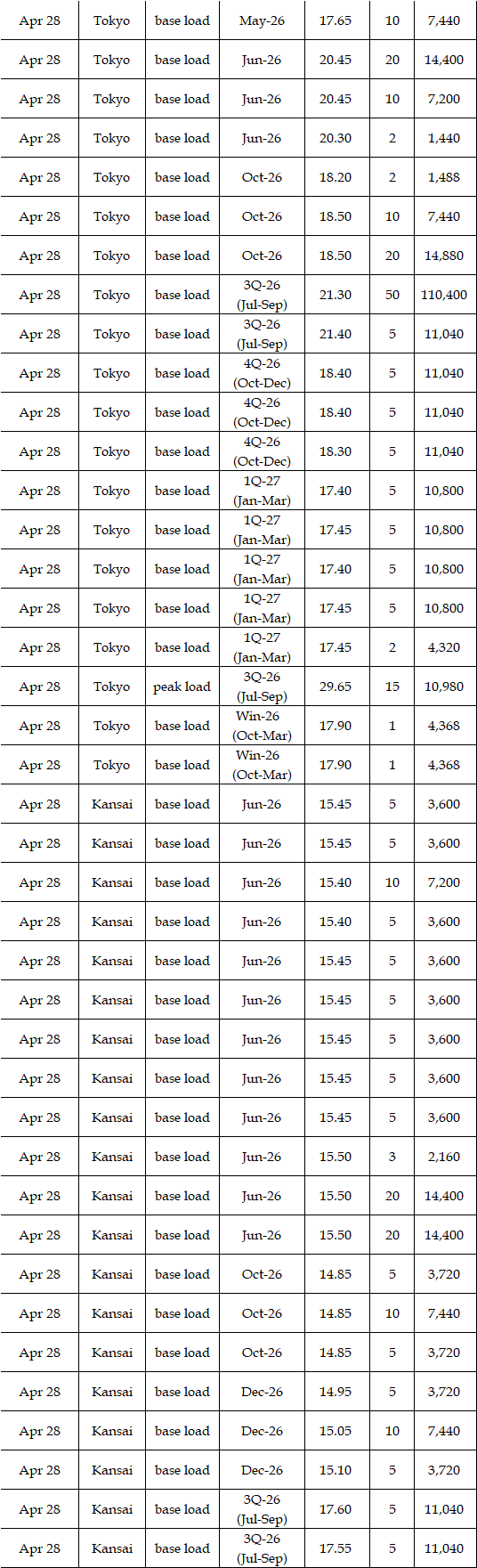
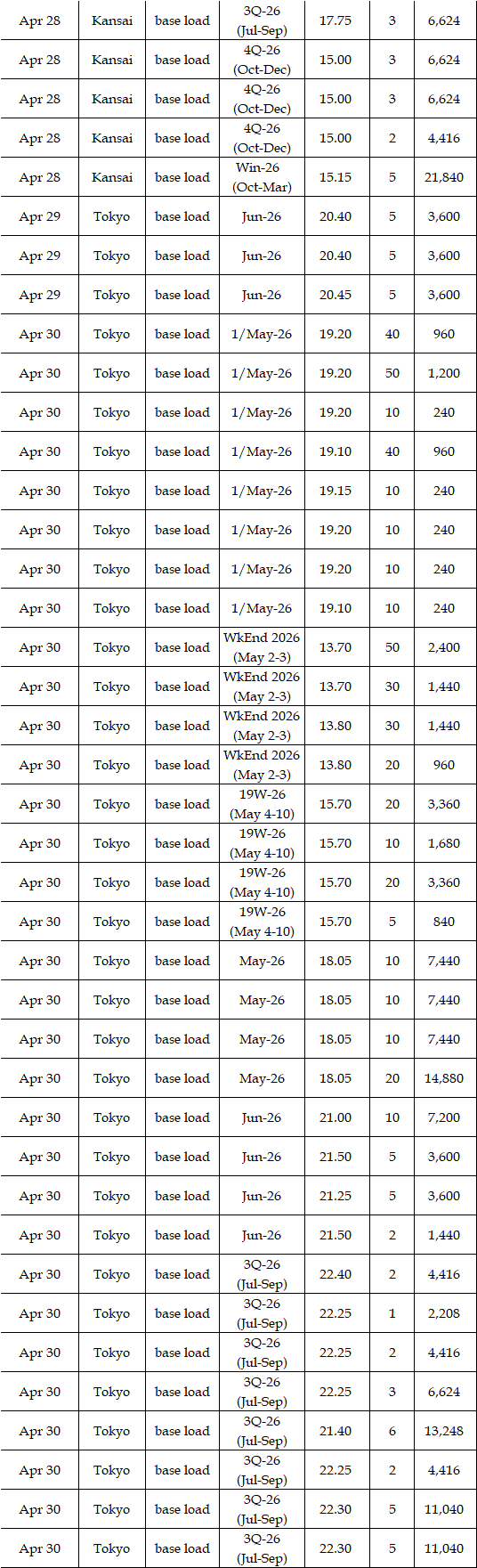
Deals reported on TOCOM (Tokyo Commodity Exchange) during Apr 27-May 1 were as below.
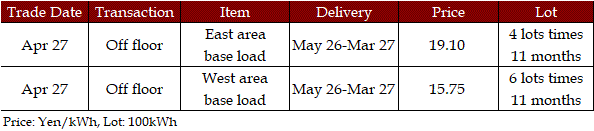
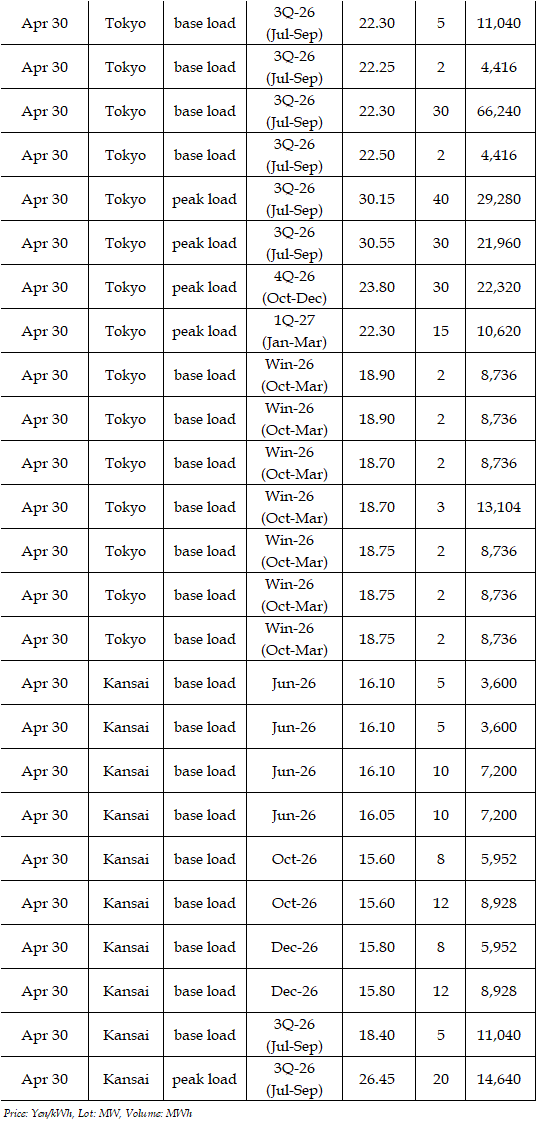
Deals reported on EEX (European Energy Exchange) during Apr 27-May 1 were as below.
Power spot prices are expected to soften in the second week of May. As the long holiday period continues, industrial demand will remain subdued, likely keeping prices under upward pressure. Particularly, as sunny weather is forecast to continue from mid-week onward, ample solar power generation is expected to put a lid on daytime prices. A market trading manager at a power producer and supplier commented, "Tokyo's base prices would hover around Yen 15, even considering futures prices. Kansai is expected to frequently fall below Yen 10, and the East-West spread would continue to widen."
|
JEPX: System Price (Day Ahead 24 hours)
|
|
Weekday Price
|
27-Apr
|
28-Apr
|
29-Apr
|
30-Apr
|
1-May
|
|
24-Hour Ave
|
13.96
|
13.90
|
13.87
|
15.39
|
15.03
|
|
Volume (MWh)
|
896,676
|
943,008
|
809,427
|
835,922
|
840,445
|
|
(unit: yen per kWh) (date: delivery day)
|
|
|

|
 - Fair & Reliable -
 Post
Post Print
Print


