|
For May 11-15 delivery, the 24-hour average of power spot prices rebounded in both East Japan and West Japan from the previous week. Following the Golden Week holidays, as demand for high and extra-high voltage from offices and factories returned to normal levels, prices also firmed up. Additionally, days with temperatures exceeding 25 degrees in Kanto and western regions served as a bullish factor for prices.
Against this backdrop, the Shikoku area fetched Yen 0.01 in multiple windows from nighttime to daytimefor May 14-15 delivery. In late March last year, too, there were days when Yen 0.01 was seen day and night due to operations of the Honshi interconnection line connecting Honshu and Shikoku being halted following a fire in Imabari City, but this time, it does not appear to be such a special circumstance. Because system maintenance is being carried out on the Honshi interconnection line and the Anan-Kihoku line connecting Shikoku and Kansai, electricity in the Shikoku area became more prone to congestion, which appeared to have led to extremely low prices. While it remains unclear if such price movements will continue, a supply-demand manager at a power producer and supplier said, 'It is a serious problem for power producers, and since the impact on earnings is significant, I believe it is temporary'.
Looking at the East-West spread of the 24-hour average of power spot prices between Tokyo and Kansai, which are major areas, it was Yen 2.20 on May 11, Yen 6.81 on May 12, Yen 5.08 on May 13, Yen 3.33 on May 14, and Yen 1.41 on May 15, all in favor of the East.
The fuel market from the third week of May was as follows.
LNG spot prices in Northeast Asia, for prompt June 2026 delivery, stood at the high $17 level per mmBtu as of May 14, rising by around $0.61 from the previous weekend (May 8). Negotiations toward ending the US-Iran conflict failed to progress, and views strengthened that the Strait of Hormuz blockade would be prolonged, leading to prices also firming up. However, with many market participants taking a wait-and-see approach regarding the US-China summit held on May 14, prices were little changed from mid-week onward.
FOB Newcastle Australia thermal coal prices, for May 2026 loading, were at the mid-$130 level per tonne as of May 14, falling by nearly $1.5 from the previous weekend (May 8).
Crude futures, as of 14:00 JST on May 15, for the NYMEX WTI June 2026 contract, were hovering at the high $102 level per barrel, and for the ICE Brent July 2026 contract, were at the mid-$107 level. From the previous weekend (May 8), WTI was higher by over $7 and Brent was higher by over $6, respectively. As mentioned for LNG, negotiations toward ending the US-Iran conflict failed to progress, which served as a bullish factor for prices.
The highest actual price observed throughout the week was Yen 35.321 fetched in Tokyo on May 14. The lowest actual price was Yen 0.01, which was observed on May 11 in seven areas excluding Tokyo and Chubu, and in System Price (SP); on May 12 in Hokkaido, Tohoku, and Kyushu; on May 13 in Kyushu; on May 14 in Shikoku and Kyushu; and on May 15 in Hokkaido, Tohoku, Shikoku, Kyushu, and System Price (SP).
The weekly average of the 24-hour spot prices by area and the weekly average volume of offers, bids, and trades are shown in the table below.
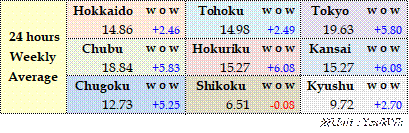

Power demand in nine areas of Japan during May 11-15 was 10,268.39 mil kWh, up 15.5% from 8,888.13 mil kWh during May 4-8. The figure was up 0.4% from the corresponding period a year earlier, which was 10,230.54 mil kWh during May 12-16, 2025, after day-of-week adjustment.
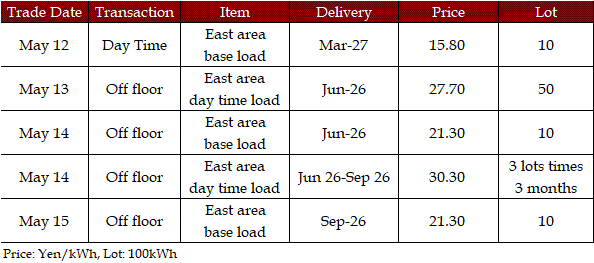
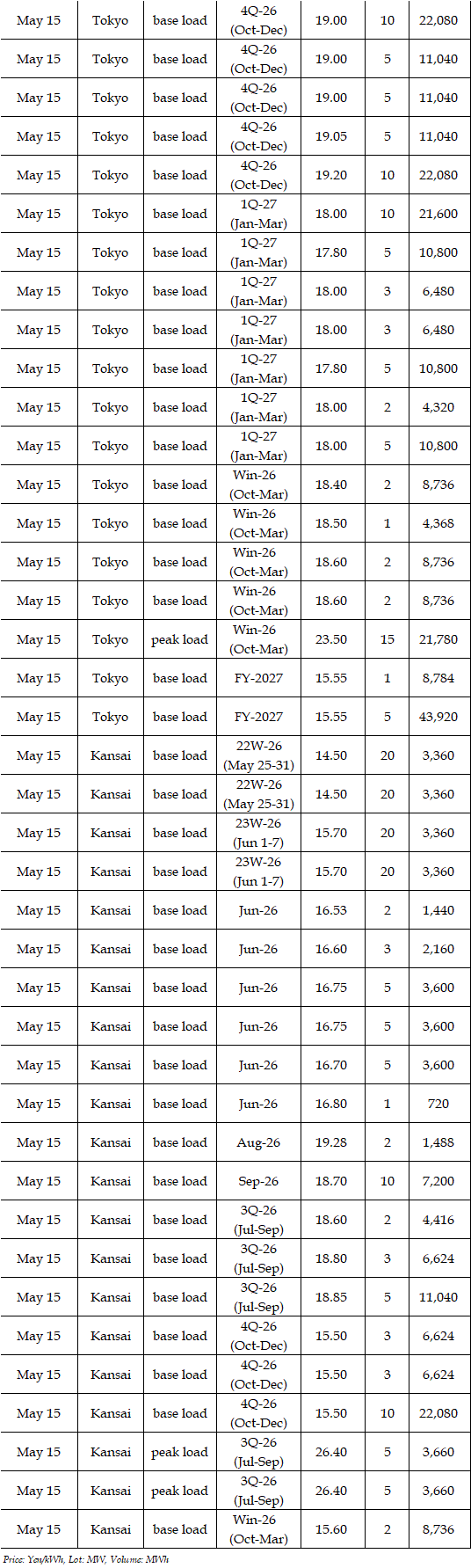
Deals reported on TOCOM (Tokyo Commodity Exchange) during May 11-15 were as below.
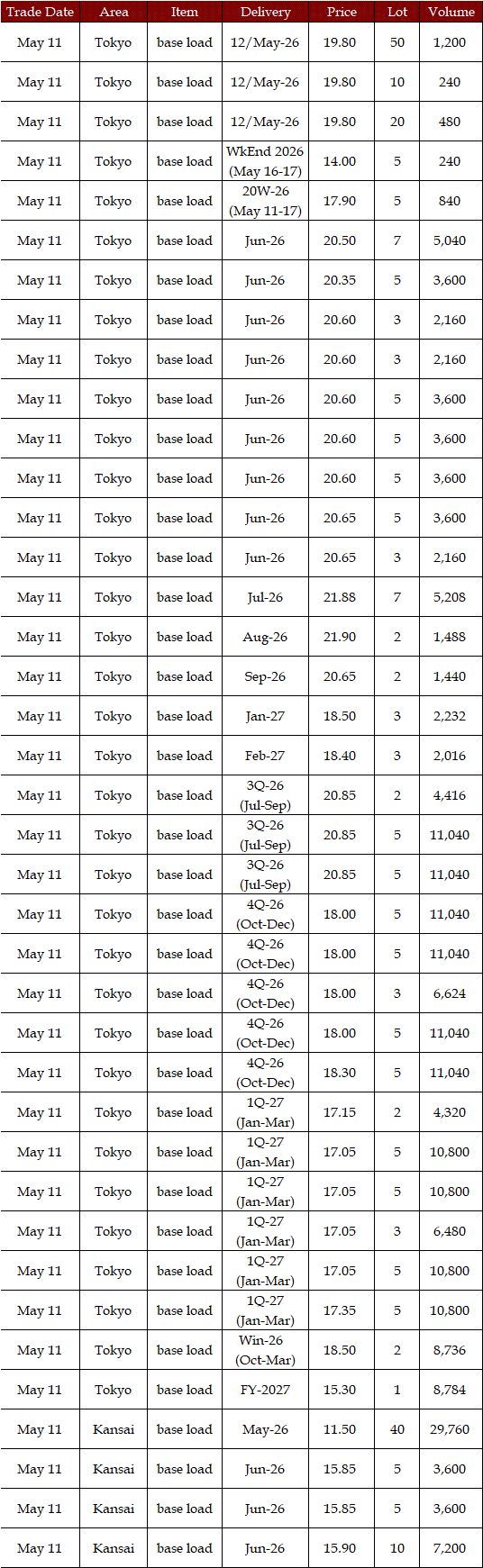
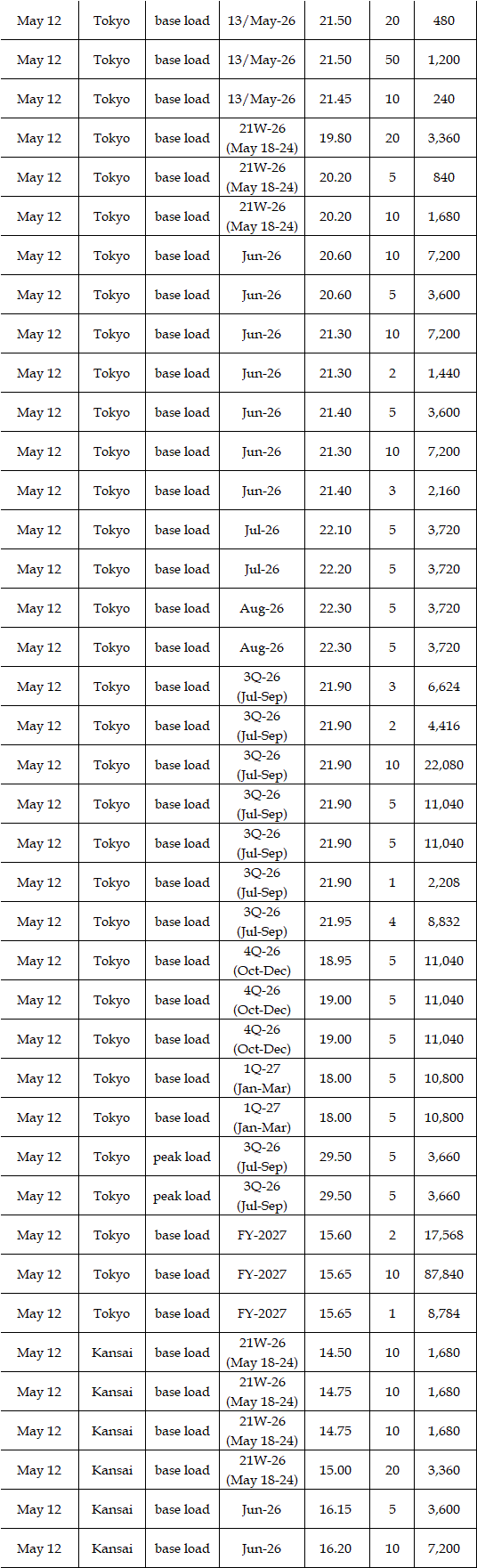
Deals reported on EEX (European Energy Exchange) during May 11-15 were as below.
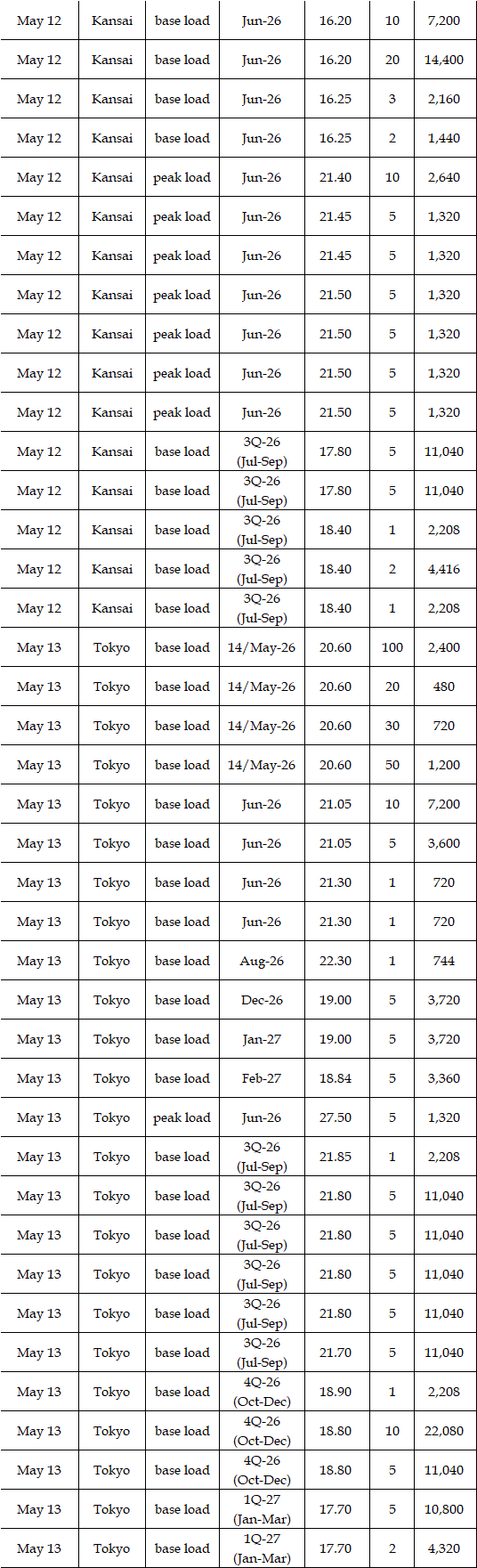
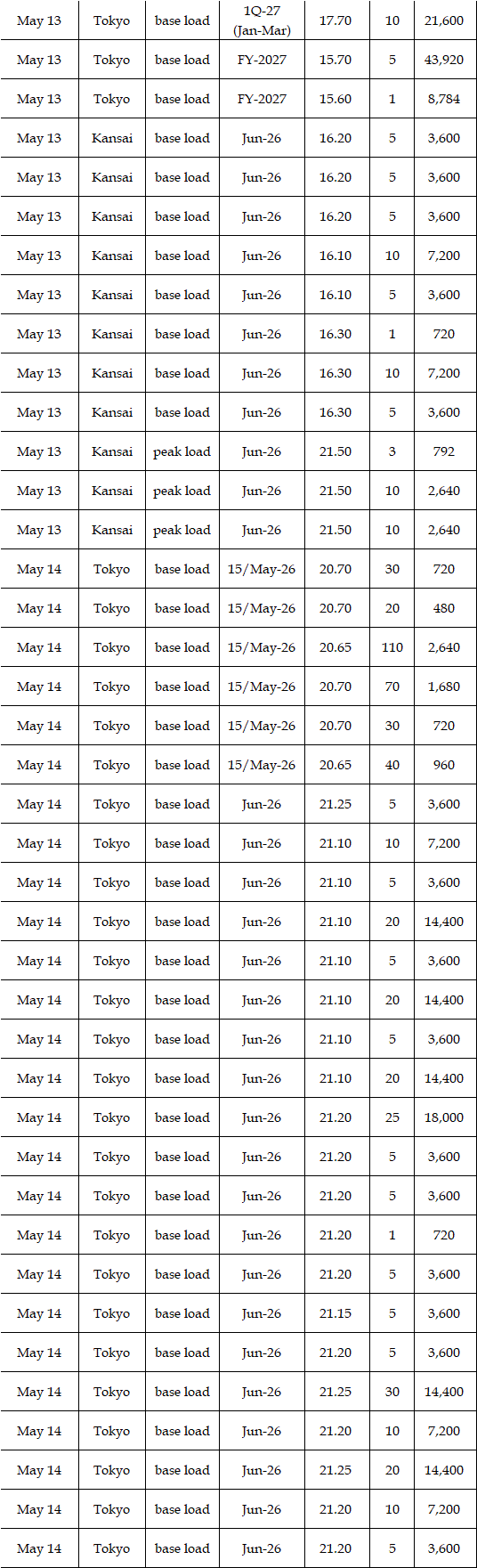
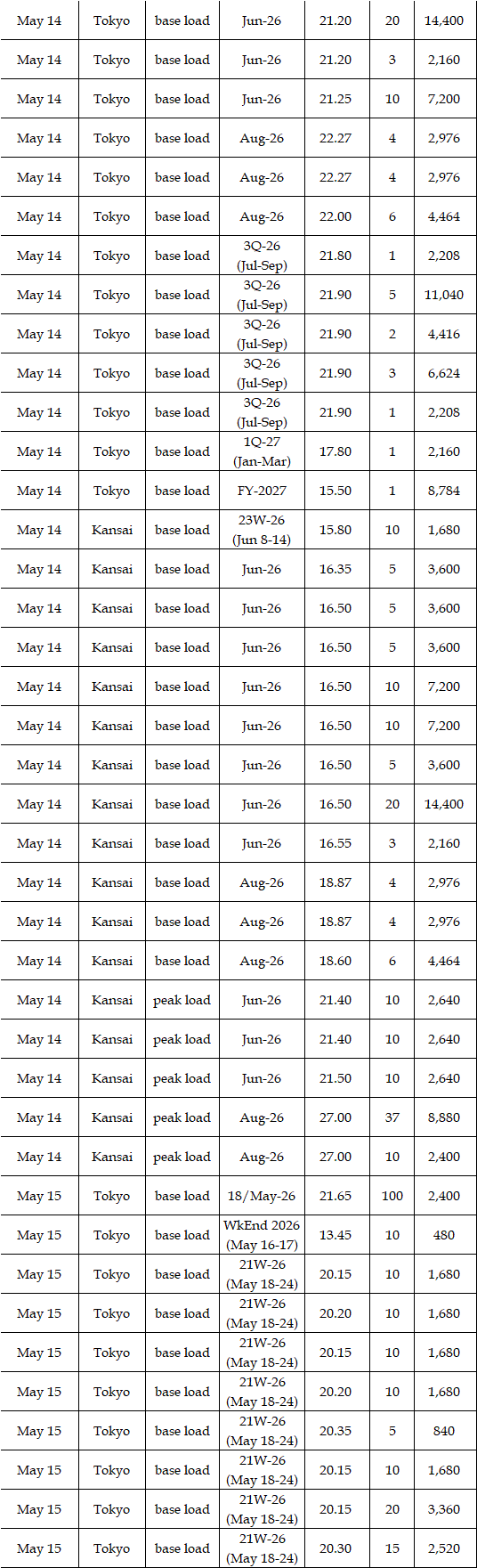
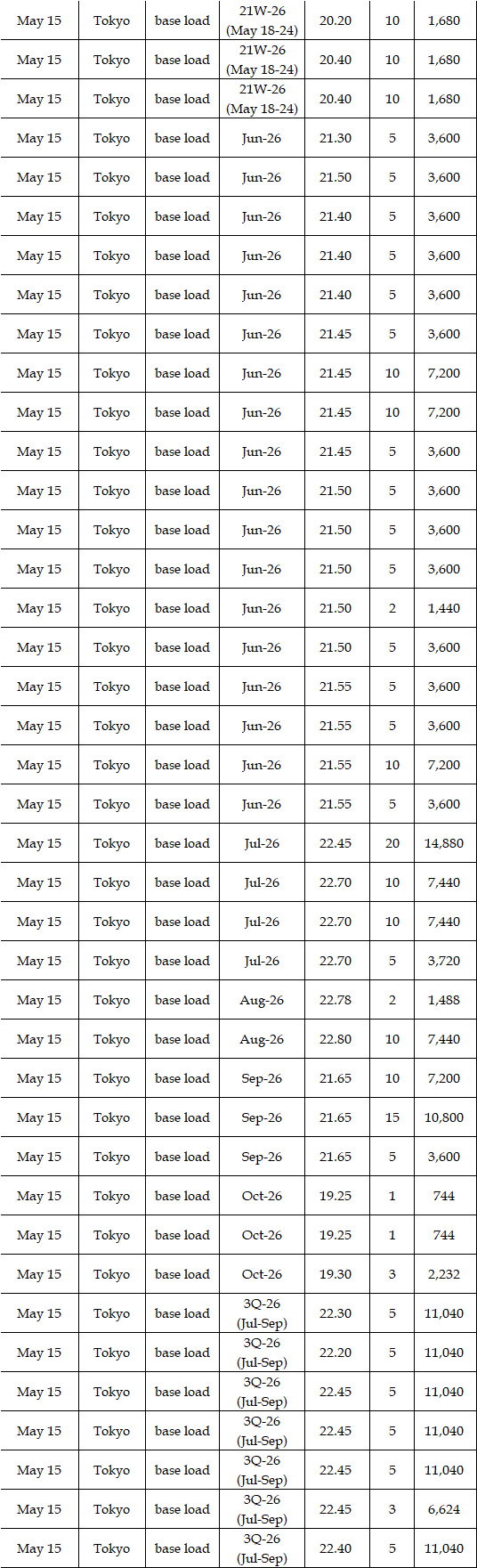
Power spot prices for the fourth week of May are likely to test higher levels. Regarding next week's temperature trends, highest temperatures in Kanto and western regions are expected to continue exceeding 28 degrees, likely increasing air-conditioning demand. Meanwhile, while abundant solar power generation is expected at the beginning of the week, clouds are forecast to increase from mid-week onward, and solar power generation is expected to be on a declining trend. Consequently, prices are expected to show an upward trend towards the latter half of the week. Prompt futures prices (as of May 15) were around the low Yen 20s at the beginning of the week but are trading around the mid-Yen 21s towards the latter half of the week.
Regarding next week's price trends, a market trading manager at a power producer and supplier stated, "As early summer-like weather is expected for the fourth week, prices are highly likely to exceed those of the third week, and I believe Tokyo's base prices will surpass Yen 20. Kansai's price levels have also been rising recently, and I expect them to trade at levels about Yen 2-3 lower than Tokyo." However, as many thermal power plants are still offline due to regular maintenance and other reasons, there is still potential for further upside depending on temperature trends.
|
JEPX: System Price (Day Ahead 24 hours)
|
|
Weekday Price
|
11-May
|
12-May
|
13-May
|
14-May
|
15-May
|
|
24-Hour Ave
|
12.06
|
15.24
|
16.19
|
16.97
|
13.67
|
|
Volume (MWh)
|
909,571
|
928,818
|
950,183
|
963,731
|
959,159
|
|
(unit: yen per kWh) (date: delivery day)
|
|
|

|
 - Fair & Reliable -
 Post
Post Print
Print


