|
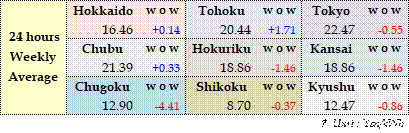
For Jun 1-5 delivery, the 24-hour average for power spot prices in East Japan (50Hz) remained unchanged from the previous week, while West Japan (60Hz) retreated. Typhoon No. 6 hit the archipelago, and especially in West Japan, rainy weather continued for several days and temperatures tended to fall, which led to a decline in air-conditioning demand and pressured down prices. East Japan also felt the impact of the typhoon, but its effect was limited compared to West Japan, and thus had little to no effect on prices. Meanwhile, as rainy weather became frequent in both East and West Japan, and temperature rises were suppressed, high prices exceeding Yen 50 were observed only on Jun 1 in East Japan.
Looking at the East-West spread of 24-hour average power spot prices between Tokyo and Kansai, the major areas in East and West Japan, the spread was at Yen 5.48 on Jun 1, Yen 0.84 on Jun 2, Yen 6.59 on Jun 3, Yen 2.20 on Jun 4, and Yen 2.84 on Jun 5, all in favor of the East.
The following is an overview of fuel market trends during the first week of June.
LNG spot prices in Northeast Asia stood at the high $18 level per mmBtu for prompt July 2026 delivery as of Jun 4, up around $1.25 from the end of the previous week (May 29). Amid stalled peace talks between the US and Israel, continued Israeli attacks on Lebanon, and Iran's missile strikes on neighboring countries, concerns over Middle Eastern supply intensified, which buoyed the market. Additionally, scattered buying interest from end-users in Northeast Asia due to rising temperatures also served as a bullish factor for the market. Japan's LNG inventory for power generation stood at 1.91 mil tons as of May 31, falling below both 2.32 mil tons at the end of May last year and the five-year average of 2.17 mil tons.
FOB Newcastle Australia thermal coal prices stood at the mid-$147 level per ton for June 2026 delivery as of Jun 4, rising by over $10 from the end of the previous week (May 29). This reflected the rises in LNG and crude oil prices.
Crude oil prices, as of 08:00 JST on Jun 5, saw WTI July 2026 futures hovering at the high $92 level per barrel, while Brent August 2026 futures were at the mid-$95 level. From the end of the previous week (May 29), WTI rose by over $5 and Brent by over $4, respectively. As mentioned with LNG, developments in the US and Iran were considered market factors, which further buoyed the market.
The week's highest actual price was Yen 50.00, observed in Tokyo on Jun 1. Meanwhile, the lowest actual price was Yen 0.01, seen in Hokkaido and Shikoku on Jun 1, and in Shikoku on Jun 2 and Jun 3, respectively.
The weekly average of the 24-hour spot prices by area and the weekly average volume of offers, bids, and trades are shown in the table below.

Power demand in nine areas of Japan during Jun 1-5 was 10,744.06 mil kWh, down 1.8% from 10,939.16 mil kWh during May 25-29. The figure was up 2.4% from the corresponding period a year earlier, which was 10,488.92 mil kWh during Jun 2-6, 2025, after day-of-week adjustment.
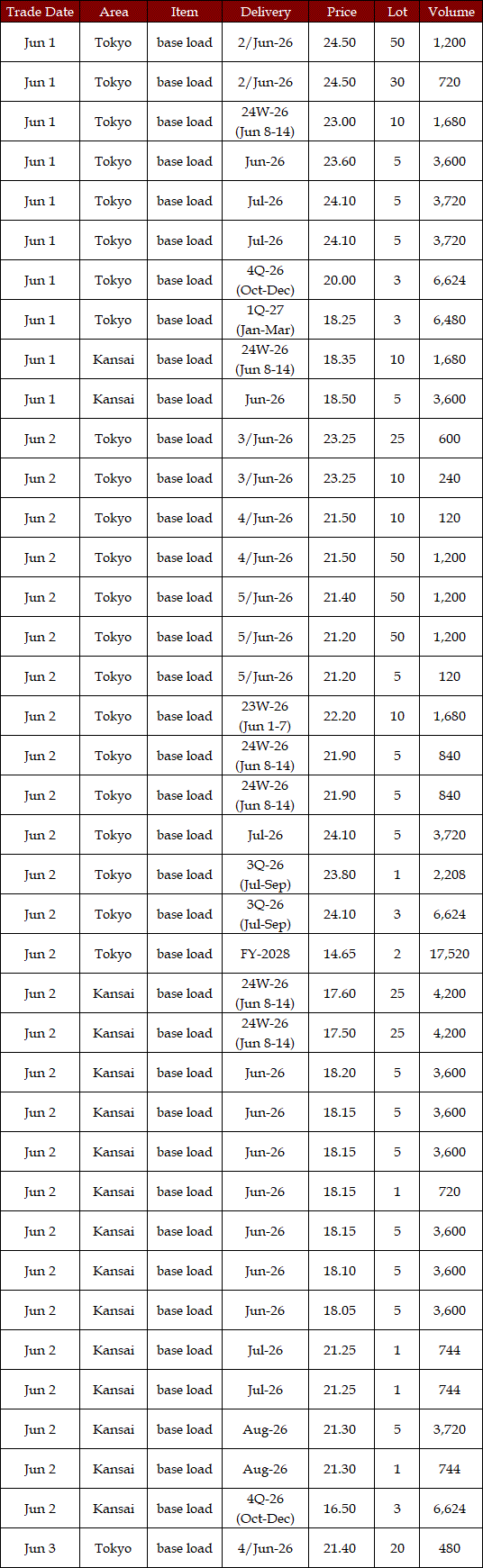
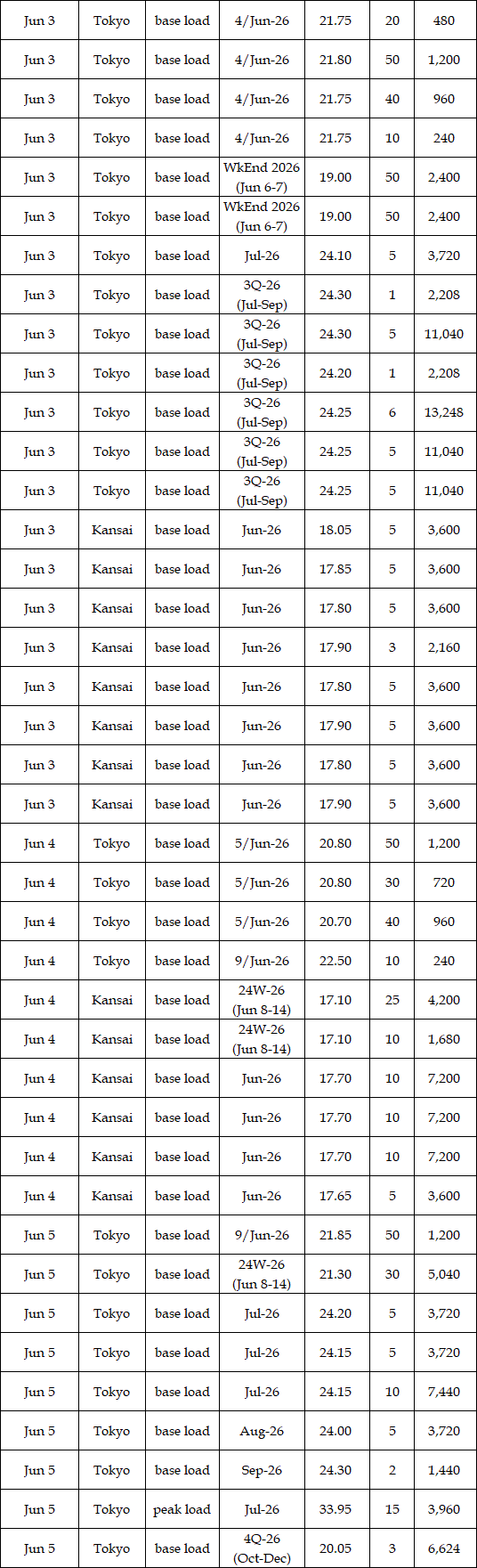
Deals reported on TOCOM (Tokyo Commodity Exchange) during Jun 1-5 were as below.

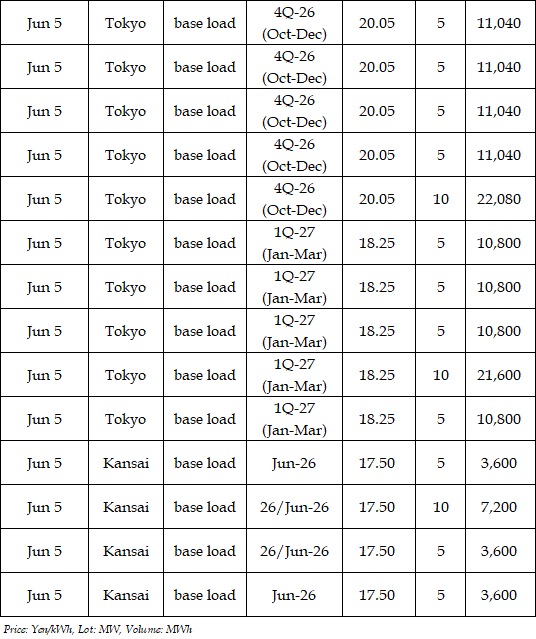
Deals reported on EEX (European Energy Exchange) during Jun 1-5 were as below. The transactions were low due to the event, "Power Week," where major traders joined from overseas.
Power spot prices for the second week of June are expected to be at higher levels than the first week. Maximum temperatures from Tohoku to Kyushu are forecast to remain at a summery 25-30 degrees, leading to a certain level of air-conditioning demand. The weather is forecast to be rainy in the first half of the week, but sunny spells are expected to spread in the latter half. Consequently, solar power generation is expected to increase towards the end of the week, which is likely to cap daytime prices in the latter half of the week. However, with widespread sunny spells, temperature rises due to sunshine will also become significant. Therefore, even with increased solar power generation, the room for price decline is seen to be limited. Regarding price trends for the second week of June, a market trading representative at a power producer and supplier commented, "Regions entering the rainy season are increasing from West Japan, and a decrease in solar power coupled with sultry weather is likely to become a bullish factor for prices. Tokyo's base prices would continue to exceed Yen 20. Kansai, I believe, will be below Yen 20, but depending on weather conditions, it could rise to around Yen 20."
|
JEPX: System Price (Day Ahead 24 hours)
|
|
Weekday Price
|
1-Jun
|
2-Jun
|
3-Jun
|
4-Jun
|
5-Jun
|
|
24-Hour Ave
|
18.25
|
22.08
|
21.40
|
19.45
|
16.43
|
|
Volume (MWh)
|
1,048,995
|
1,112,221
|
1,054,483
|
980,835
|
949,334
|
|
(unit: yen per kWh) (date: delivery day)
|
|
|

|
 - Fair & Reliable -
 Post
Post Print
Print


