|
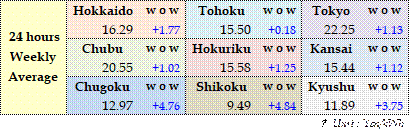
The weekly average of 24-hour average spot prices for Jun 15-19 delivery rebounded from the previous week in both East Japan (50Hz) and West Japan (60Hz). Compared to the previous week, temperatures remained higher in both East and West Japan, which strengthened air-conditioning demand and spurred increased spot procurement to meet the rising demand. Furthermore, in West Japan, a decrease in solar power generation compared to the previous week also served as a bullish factor, leading to larger price gains than in East Japan.
In the Hokkaido and Tohoku areas, power sharing from other regions was observed. The main reason for this was an unexpected reduction in supply from renewable energy sources such as solar and wind power. Additionally, in Tohoku, the planned suspension of Tohoku Electric Power Co.'s Haramachi coal-fired thermal unit 2 (capacity 1,000MW) due to a malfunction on Jun 16 also had an impact. Haramachi thermal unit 1 (same capacity) had also been under planned suspension due to a malfunction since May 23 and remained out of service as of Jun 19.
Looking at the spread in 24-hour average spot prices between Tokyo and Kansai, the major areas in East and West Japan, the East-West spread was Yen 10.10 in favor of the East on Jun 15, Yen 5.71 on Jun 16, Yen 7.40 on Jun 17, Yen 6.47 on Jun 18, and Yen 4.28 on Jun 19, with the divergence in the East-West spread remaining prominent.
Fuel market trends in the third week of June were as follows.
DES Northeast Asia LNG prices as of Jun 18 for prompt July 2026 delivery stood at the high $15 level per mmBtu, marking a decrease of nearly $2.5 from the previous weekend (Jun 12). As a memorandum of understanding (MoU) for peace was signed between the US and Iran, supply concerns over Middle Eastern energy receded, and downward pressure on prices intensified. Japan's LNG inventory for power generation as of Jun 14 was 2.04 mil tons, an increase of 0.24 mil tons from the previous week. However, it remained below 2.23 mil tons as of the end of June last year, and also below the five-year average for June of 2.12 mil tons. Also, according to the trade statistics for May released by the Ministry of Finance on Jun 17, LNG imports remained at 3.96 mil tons, significantly lower than 4.26 mil tons in the previous month and 5.86 mil tons two months prior. The import price for May was Yen 98,976 per ton, the highest level since Yen 100,371 in January 2025.
FOB Newcastle Australia thermal coal prices as of Jun 18 for June 2026 loading was $144 per ton, decreasing by about $5 from the previous weekend (Jun 12).
Crude oil prices as of 15:00 JST on Jun 19, WTI crude futures for July 2026 traded at the high $77 level per barrel, and ICE Brent contract for August 2026 traded at the mid $80 level. From the previous weekend (Jun 12), both WTI and Brent decreased by about $7. As mentioned in the LNG section, moves towards a peace agreement between the US and Iran served as a bearish factor, and downward pressure on prices intensified. However, concerns such as attacks by Israel on Lebanon were still seen, and uncertainty regarding the outlook remained.
The weekly average of the 24-hour spot prices by area and the weekly average volume of offers, bids, and trades are shown in the table below.
The weekly average of the 24-hour spot prices by area and the weekly average volume of offers, bids, and trades are shown in the table below.

Power demand in nine areas of Japan during Jun 15-19 was 11,088.17 mil kWh, up 4.9% from 10,569.71 mil kWh during Jun 8-12. The figure was down 14.1% from the corresponding period a year earlier, which was 12,902.16 mil kWh during Jun 16-20, 2025, after day-of-week adjustment.
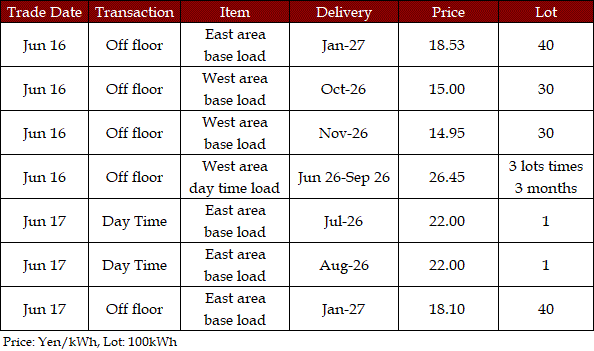
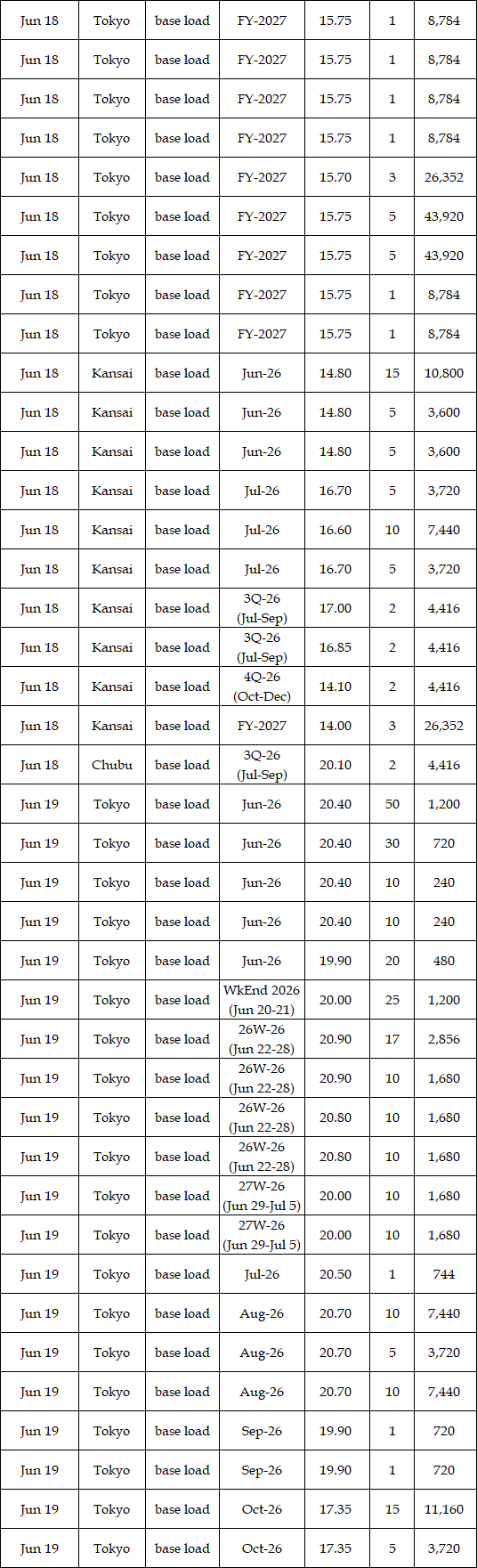
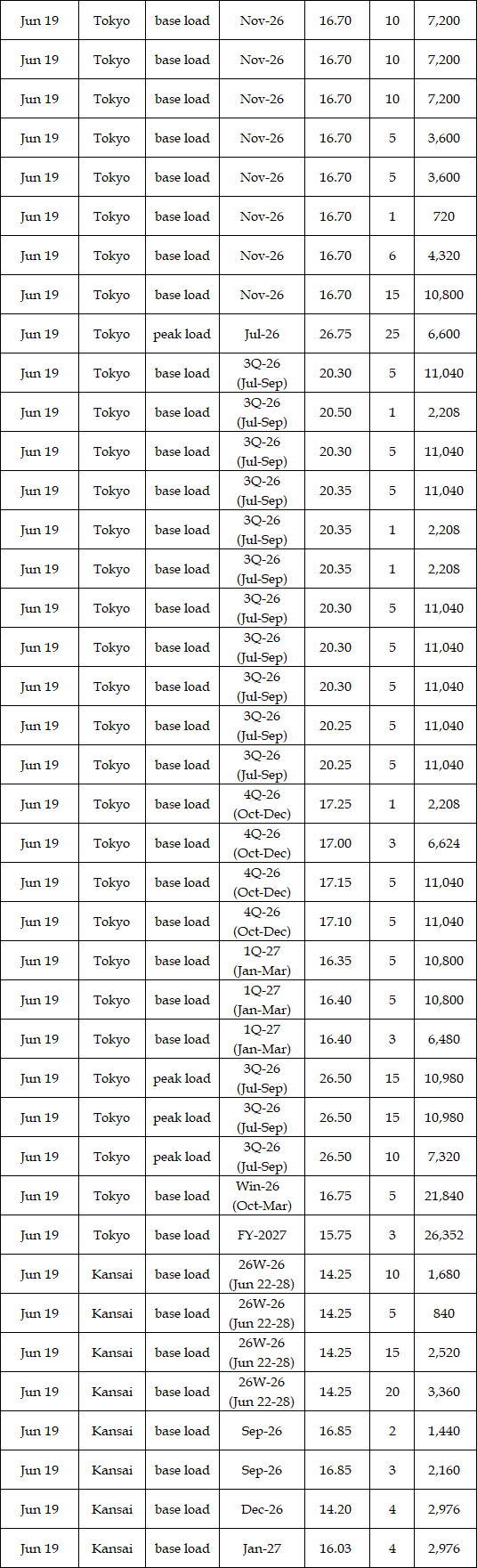
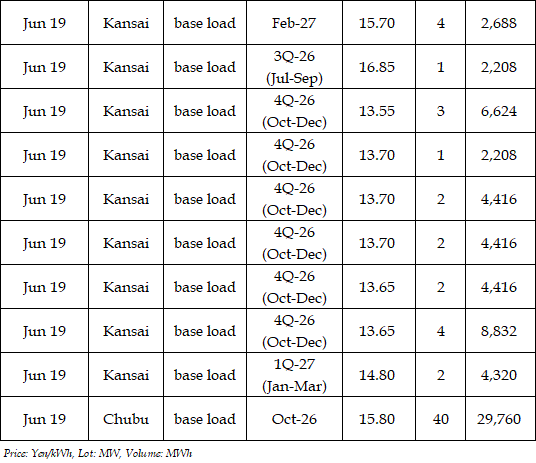
Deals reported on TOCOM (Tokyo Commodity Exchange) during Jun 15-19 were as below.
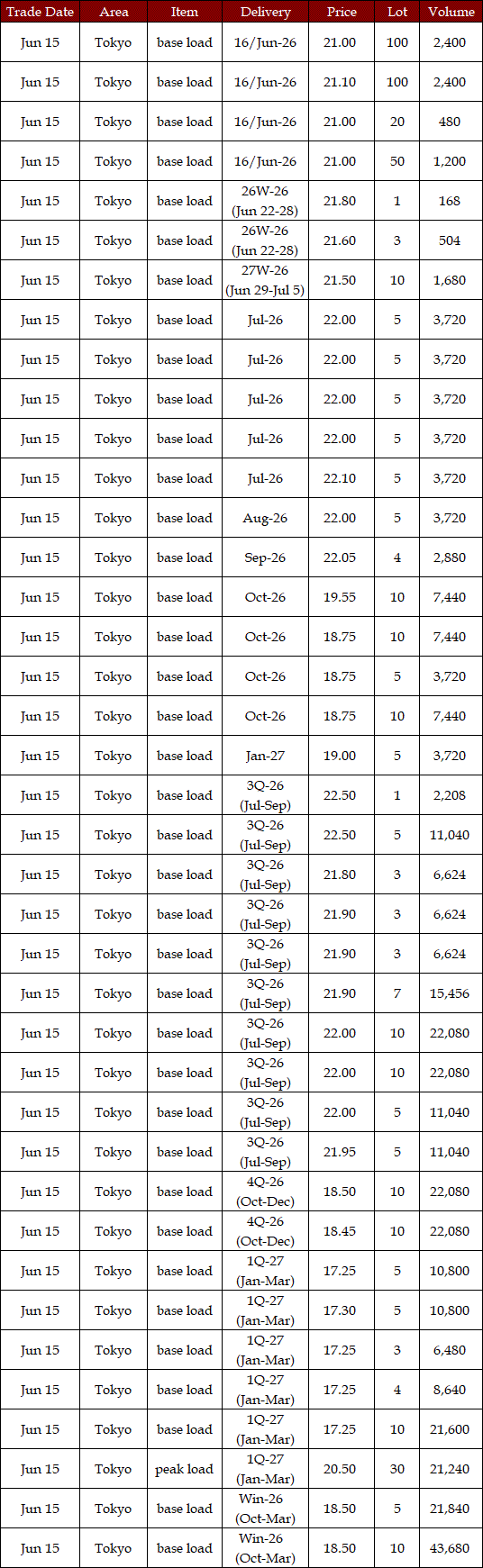
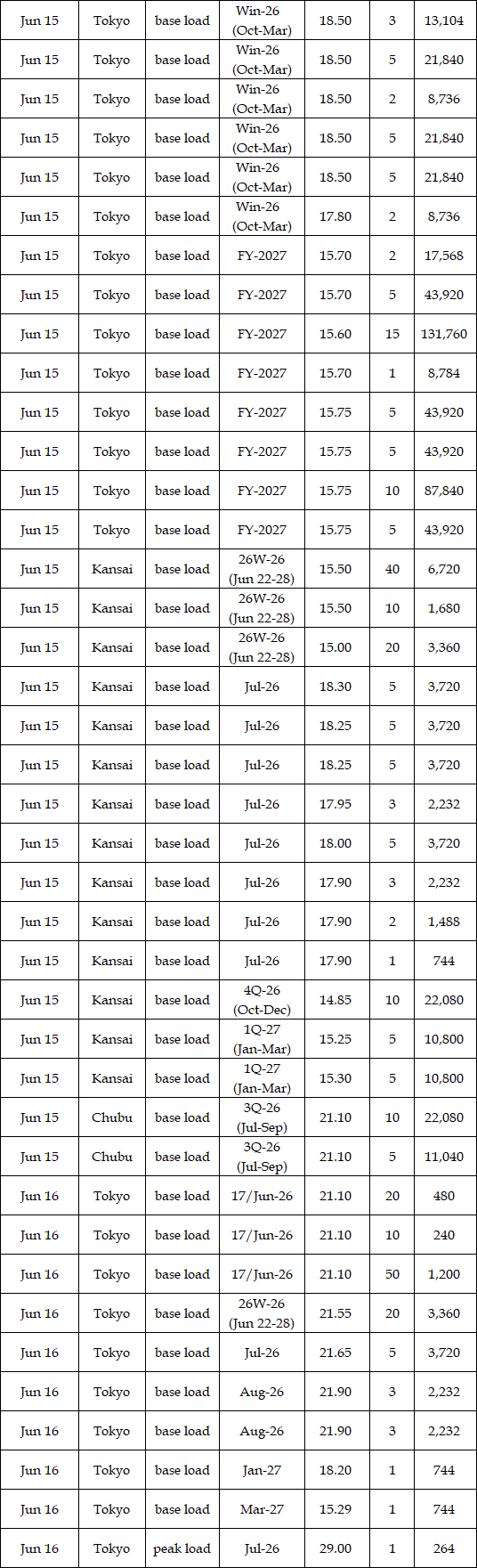
Deals reported on EEX (European Energy Exchange) during Jun 15-19 were as below.
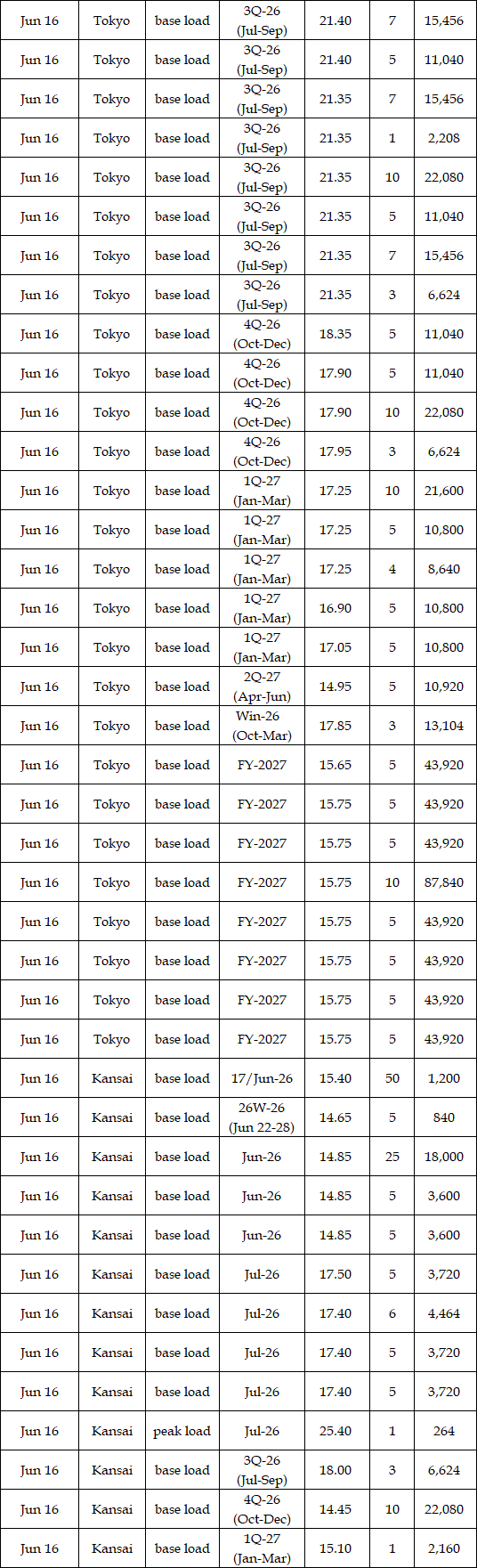
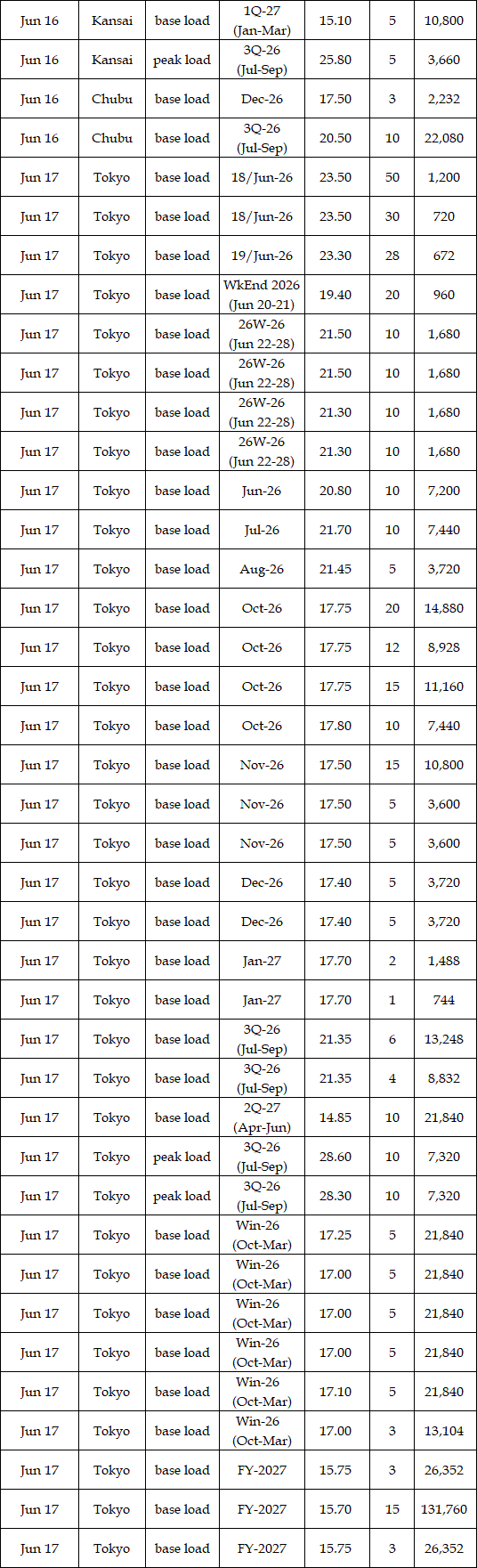
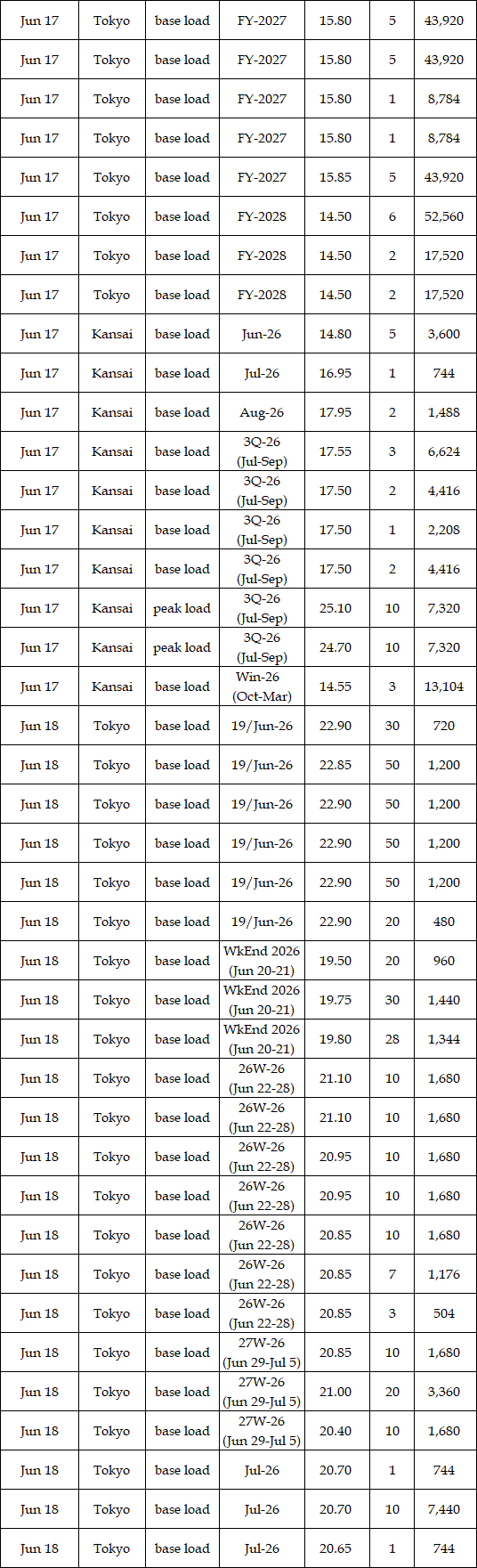
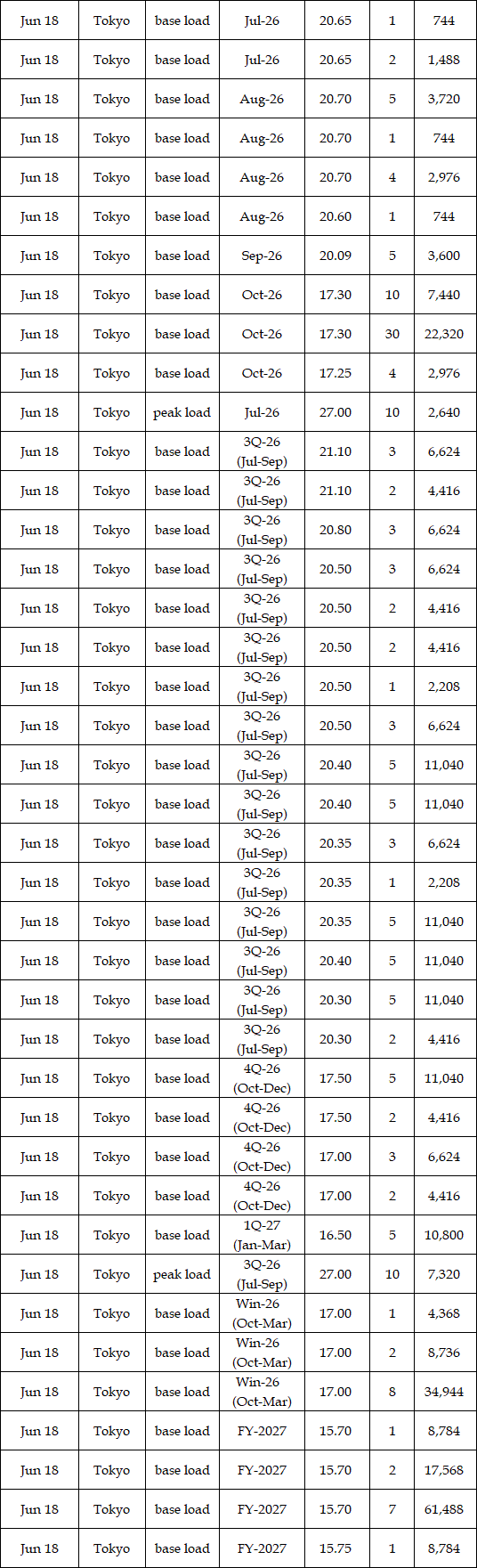
Power spot prices for the fourth week of June are not expected to see significant changes from the third week. The weather for the fourth week is forecast to be rainy throughout the week, with the peak of the rainy season expected. Regarding temperature trends, maximum temperatures in Kanto and West Japan are expected to remain around 25-30 degrees. While the heat from sunshine is likely to ease, muggy days are expected to continue, leading to some air-conditioning demand. Therefore, a decrease in solar power generation would push up daytime prices but gains in Evening and nighttime prices are likely to be capped. Nevertheless, For West Japan, which has a high solar power penetration, it is highly likely to see larger price increases. A market trading official at a power producer and supplier commented, "We expect no significant change from the third week, with Tokyo's base price remaining around Yen 21-22. Kansai's base price is expected to be around Yen 15, and the East-West spread would continue to diverge."
|
JEPX: System Price (Day Ahead 24 hours)
|
|
Weekday Price
|
15-Jun
|
16-Jun
|
17-Jun
|
18-Jun
|
19-Jun
|
|
24-Hour Ave
|
15.94
|
15.23
|
17.16
|
18.00
|
17.92
|
|
Volume (MWh)
|
957,713
|
993,203
|
1,002,881
|
1,044,686
|
1,046,544
|
|
(unit: yen per kWh) (date: delivery day)
|
|
|
|
 - Fair & Reliable -
 Post
Post Print
Print


