|
The weekly average of 24-hour average power spot prices for Jun 22-26 delivery retreated in both East Japan (50Hz) and West Japan (60Hz) from the previous week. As the weather was milder in both East and West Japan compared to the previous week, air conditioning demand was curbed, and the supply/demand balance relaxed. Reflecting this, offers exceeded 1.6 bil kWh throughout the week, and as buying interest decreased, prices were exposed to stronger downward pressure. Additionally, due to indications from the government analysis that sell blocks contributed to price increases, the apparent dispersion of sell blocks may also have influenced price movements.
Around 07:30 JST on Jun 25, an earthquake occurred with an epicenter off the coast of Iwate Prefecture, measuring Magnitude 7.2 (initially announced as 6.9), and a maximum seismic intensity of upper 6 (in Hashikami Town, Aomori Prefecture). Although tremors were widely felt across Tohoku, Hokkaido, and Kanto regions, there was no impact on nuclear or thermal power generation facilities.
Looking at the spread in 24-hour average power spot prices between Tokyo and Kansai, the major East and West Japan areas, the East-West spread was in favor of the East at Yen 4.72 on Jun 22, Yen 6.06 on 23, Yen 5.90 on 24, Yen 6.40 on 25, and Yen 7.27 on 26; thus, the decoupling of the East-West spread continued to be prominent.
Fuel market trends in the fourth week of June were as follows.
DES Northeast Asia LNG prices for prompt August 2026 delivery stood at the mid-$15 level per mmBtu as of Jun 25, having increased by $0.15 from the previous weekend (Jun 19). Despite an increase in vessels passing through the Strait of Hormuz, prices remained firm due to observed discrepancies in understanding between the US and Iran over nuclear inspections and buying interests from Chinese players. Meanwhile, Japan's LNG inventories for power generation totaled 2.11 million tons as of Jun 21, an increase of 0.07 million tons from the previous week. However, this was lower than both 2.23 million tons at the end of June last year and the five-year average for June alone of 2.12 million tons.
FOB Newcastle Australia thermal coal prices for June 2026 loading stood at the low $143 level per ton as of Jun 25, having decreased by $0.80 from the previous weekend (Jun 19). It tracked a softening in crude oil prices.
Crude oil prices for the NYMEX WTI contract for August 2026 delivery hovered at the high $70 level per barrel and for the ICE Brent contract for August 2026 delivery at the low $74 level per barrel as of 15:00 JST on Jun 26. From the previous weekend (Jun 19), both WTI and Brent decreased by approximately $6.00. Due to progress in talks between the US and Iran, an increase in vessels passing through the Strait of Hormuz raised expectations of increased future supply. However, a vessel was attacked off the coast of Oman on Jun 25, rekindling concerns over passage through the Strait of Hormuz, and crude futures also rebounded.
The week's highest level was Yen 35.83, posted in Tokyo on the 25th. Meanwhile, the lowest level was Yen 0.01, posted on the 22nd in Shikoku, on the 23rd in six West Japan areas, on the 24th in Hokkaido and Tohoku, and on the 25th-26th in Shikoku, respectively.
The weekly average of the 24-hour spot prices by area and the weekly average volume of offers, bids, and trades are shown in the table below.
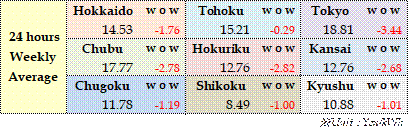

Power demand in nine areas of Japan during Jun 22-26 was 10,832.68 mil kWh, down 2.3% from 11,088.17 mil kWh during Jun 15-19. The figure was down 14.1% from the corresponding period a year earlier, which was 12,605.44 mil kWh during Jun 16-20, 2025, after day-of-week adjustment.
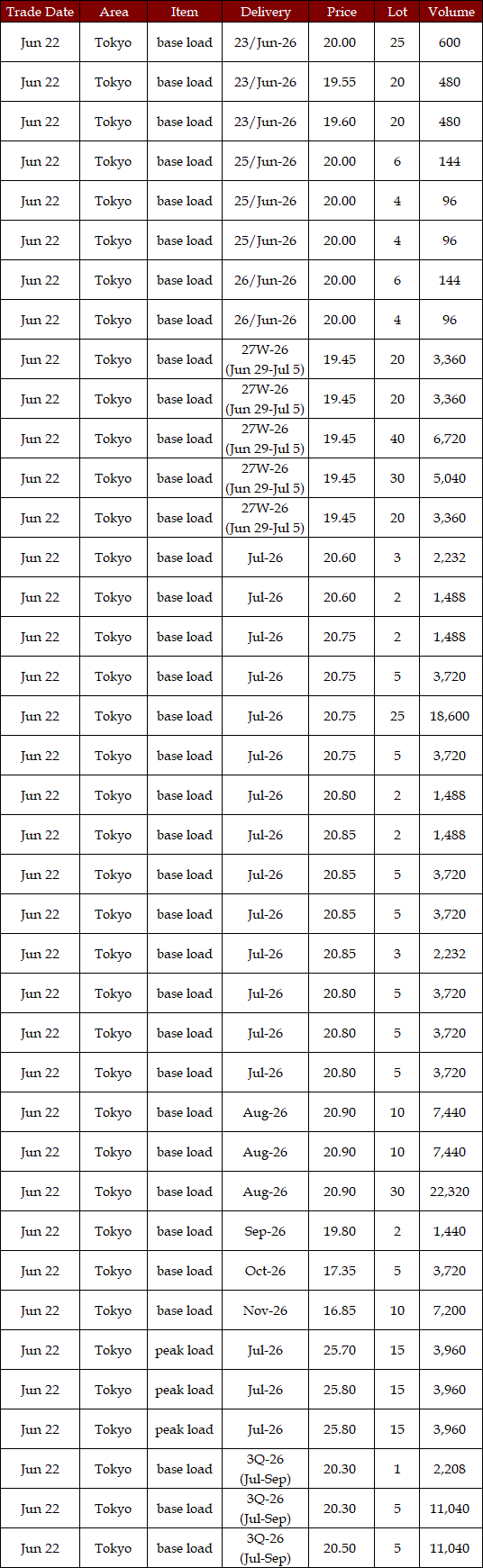
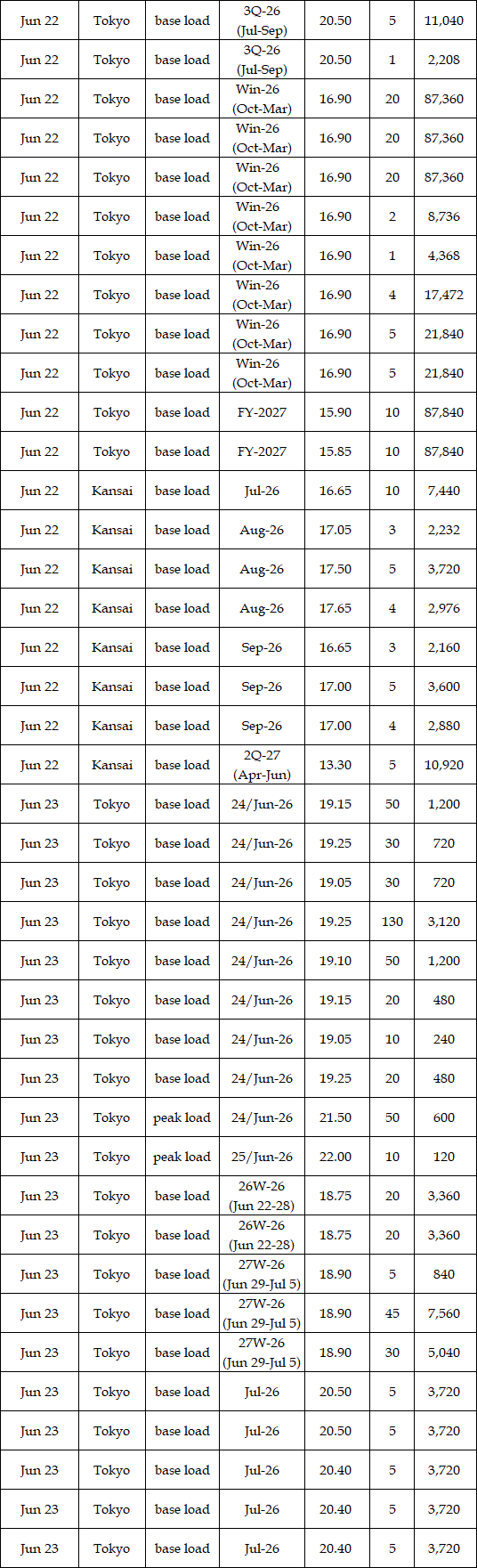
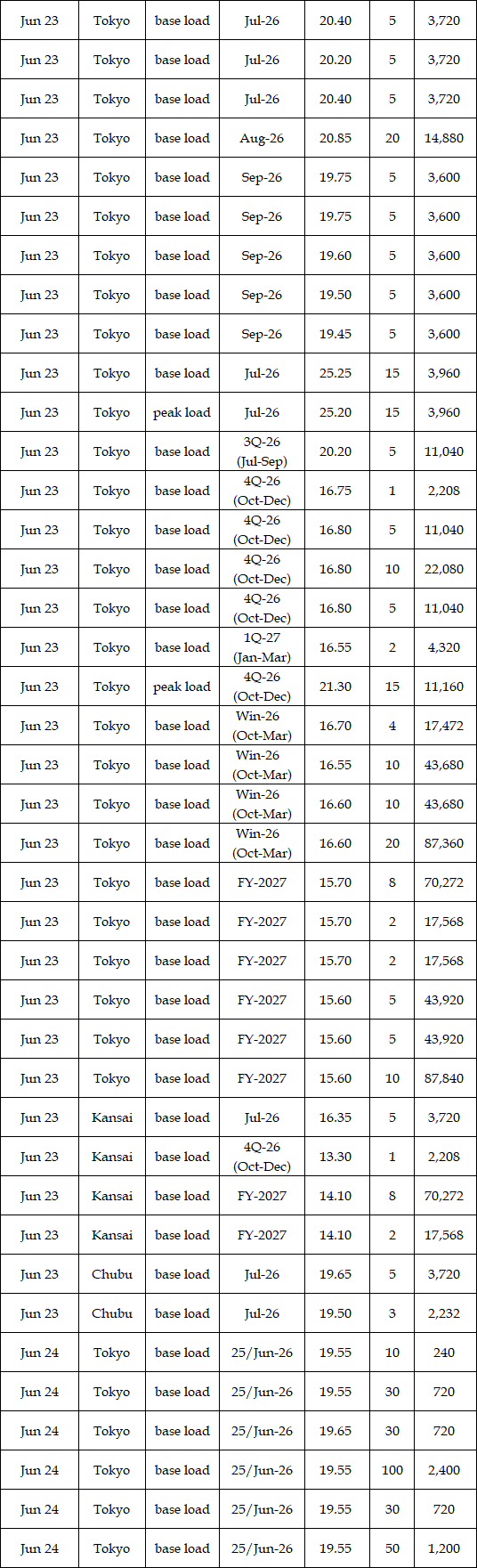
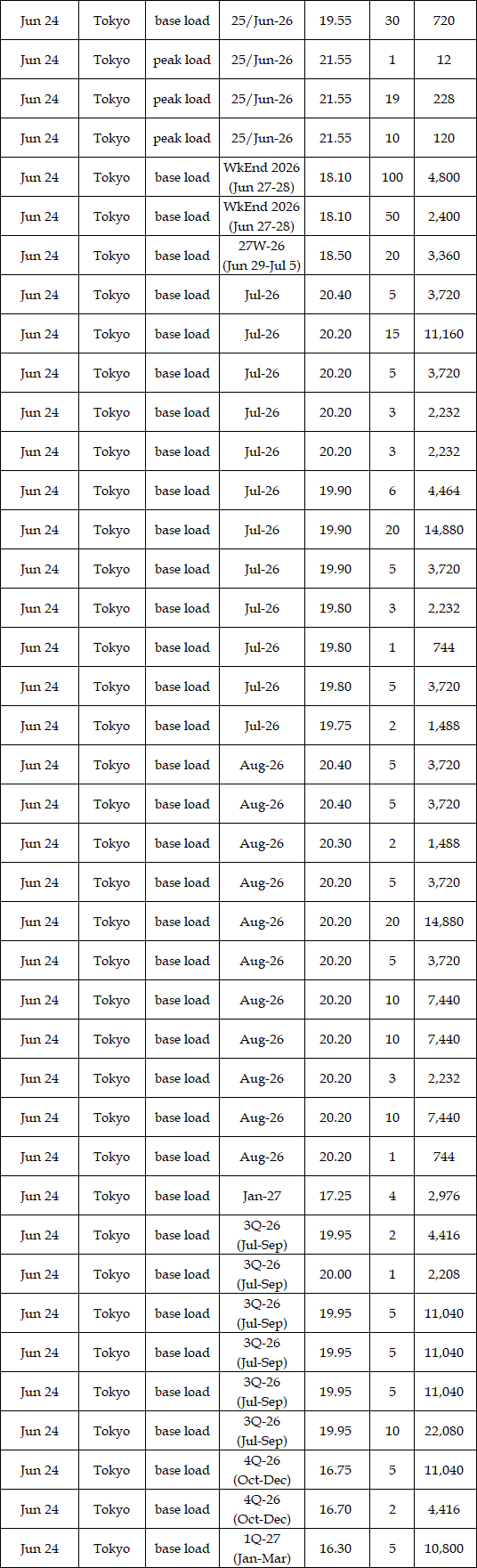
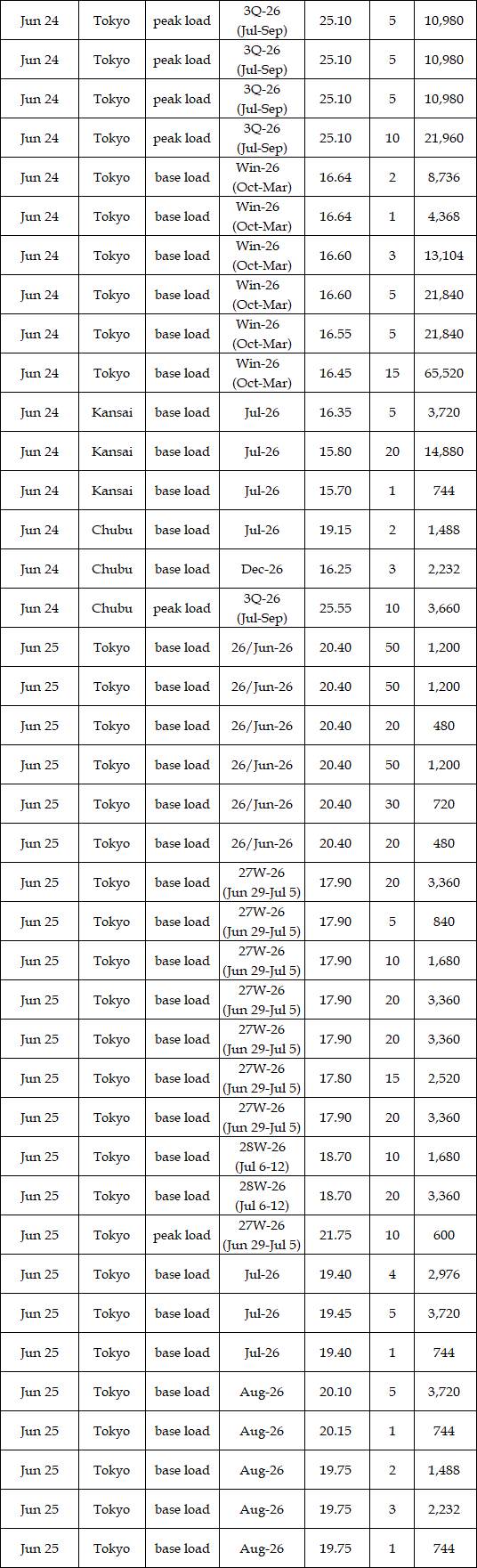
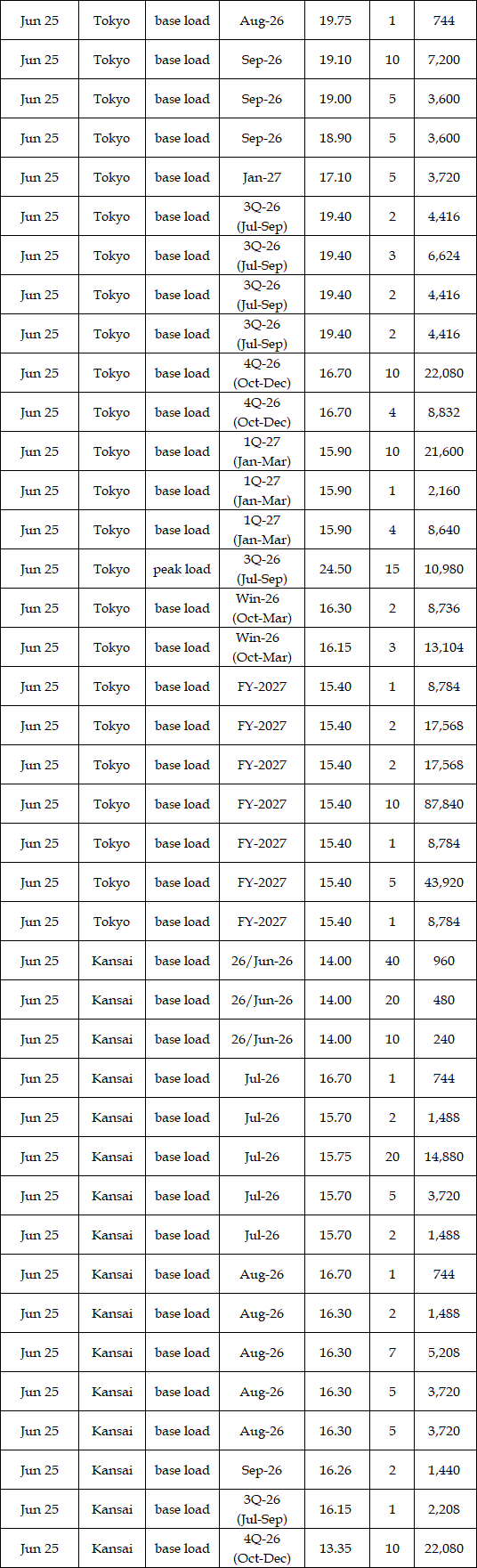
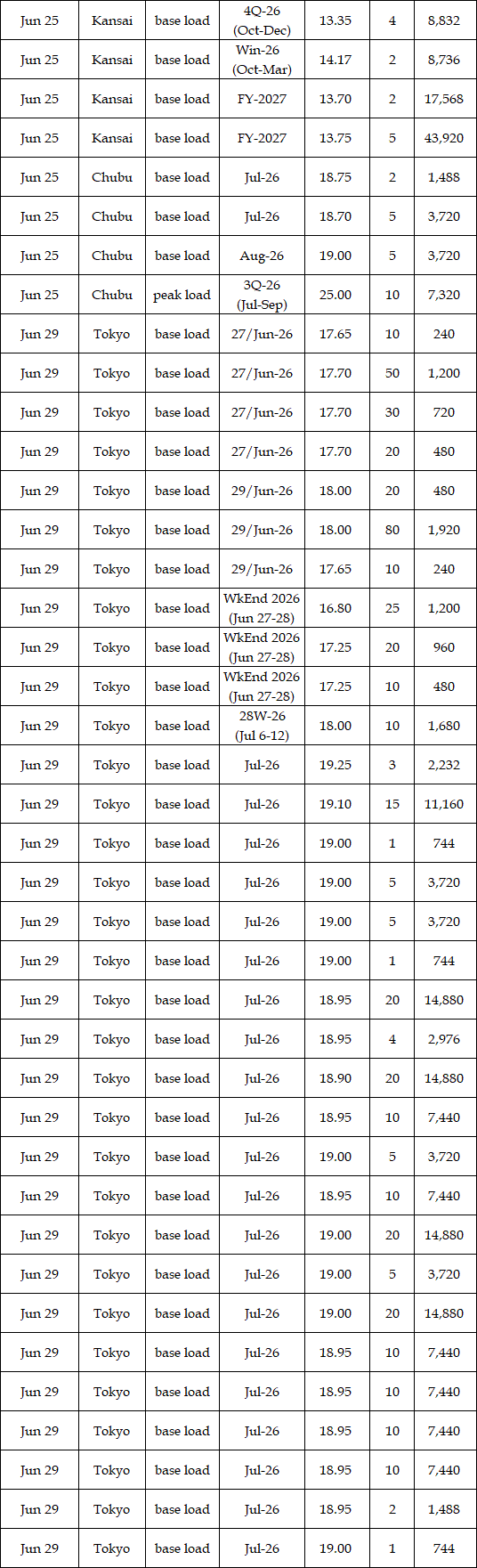
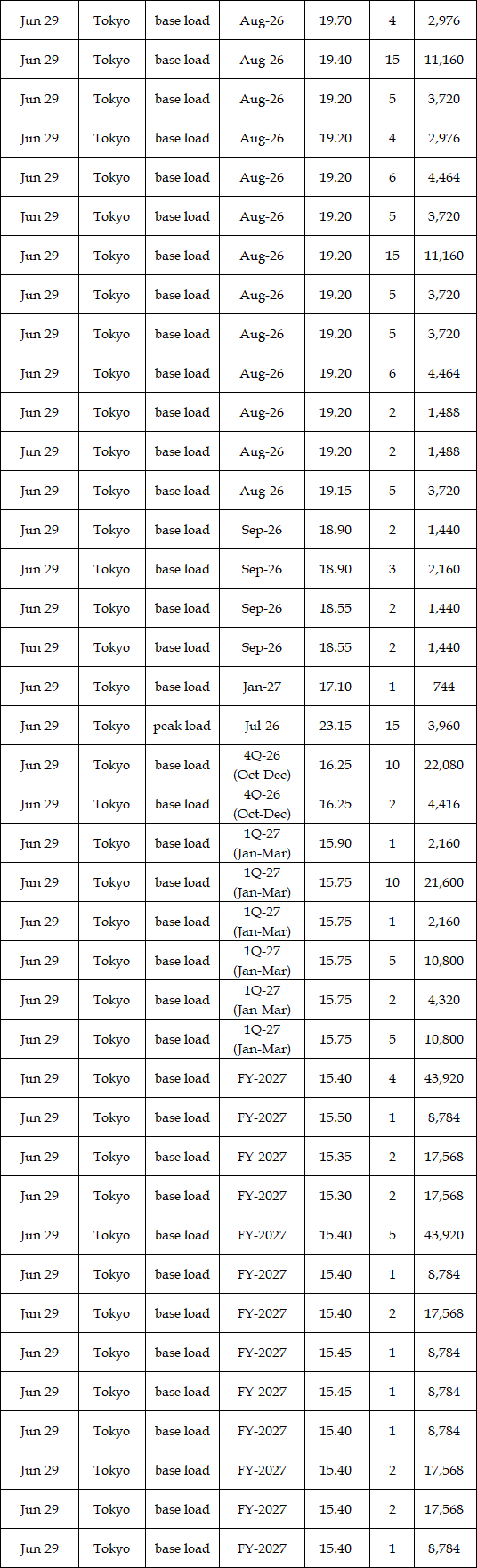
Deals reported on TOCOM (Tokyo Commodity Exchange) during Jun 22-26 were as below.
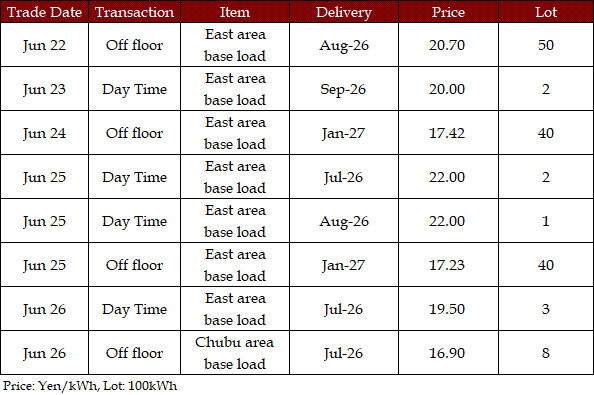
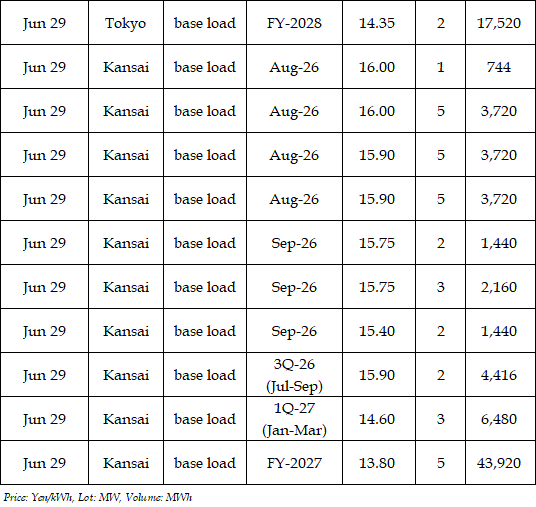
Deals reported on EEX (European Energy Exchange) during Jun 22-26 were as below.
Power spot prices for the last week of June and the first week of July are expected to hover at the level of the fourth week of June. No significant changes are forecasted in weather conditions, and while sunny weather would spread in many areas in the first half of the week, leading to certain levels of solar power generation, air conditioning demand is likely to strengthen as maximum temperatures in West Japan would exceed 30 degrees in some areas. From mid-week onwards, rainy weather is forecast nationwide, and while solar power generation is expected to be limited, the heat associated with sunshine is expected to ease. However, with many humid days, certain cooling demand is expected to remain. On the other hand, the resumption of thermal power plants that had been out of service for a certain period, such as after regular maintenance, is observed, which is likely to work as a factor to put a lid on price increases. As of the third week of June, thermal power plants were out of service, and a total of 17 units combined in East and West Japan, totaling 6,636.80 mil kW, are scheduled to return to service from the fourth week to the first week of July as of June 26. A further increase in offers is expected. Regarding price trends for the last week of June and the first week of July, a market trading manager at a power producer and supplier commented, "Prices next week are not expected to see significant changes, and Tokyo's base prices would remain around Yen 18-19, continuing to stay below Yen 20. Kansai's base prices are expected to be around Yen 13-14, likely trading below Yen 15. Therefore, the East-West spread will likely remain decoupled."
|
JEPX: System Price (Day Ahead 24 hours)
|
|
Weekday Price
|
22-Jun
|
23-Jun
|
24-Jun
|
25-Jun
|
26-Jun
|
|
24-Hour Ave
|
14.10
|
14.12
|
13.73
|
15.28
|
15.03
|
|
Volume (MWh)
|
967,775
|
985,195
|
974,422
|
994,799
|
949,811
|
|
(unit: yen per kWh) (date: delivery day)
|
|
|
|
 - Fair & Reliable -
 Post
Post Print
Print


