|
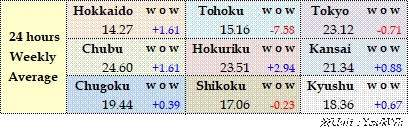
For the week covering power spot market deliveries from August 3-7, the weekly average of the 24-hour mean price continued to fall in both Eastern Japan (50 Hz) and Western Japan (60 Hz) compared to the previous week. Mild temperatures throughout the week and the impact of grid segmentation kept price gains in check for the Hokkaido and Tohoku regions; additionally, as the heat eased in Tokyo during the first half of the week, the average price for Eastern Japan as a whole frequently fell below that of Western Japan. Conversely, Western Japan experienced consecutive days of extreme heat--with temperatures exceeding 35°C--resulting in a streak of days where highest prices in the west surpassed those in the east.
Looking at the 24-hour average price differentials in the electricity spot markets between the major eastern (Tokyo) and western (Kansai) regions, Aug 3 saw prices higher in the west than in the east by 0.70 yen; subsequently, the trend shifted to higher prices in the east, with differentials of 0.33 yen on Aug 4, 0.27 yen on Aug 5, 3.12 yen on Aug 6, and 5.86 yen on Aug 7. Meanwhile, in comparison between Tokyo and Chubu, Chubu prices frequently exceeded those of Tokyo: Chubu was higher by 1.79 yen on Aug 3, 1.81 yen on Aug 4, 2.67 yen on Aug 5, and 1.23 yen on Aug 6, whereas Tokyo was higher by 0.10 yen on Aug 7.
The following summarizes fuel market trends in the first week of August.
As of August 7, the price for prompt-delivery LNG (specifically for September 2026 arrival) in the Northeast Asian market stood in the high $20-per-MMBtu range, marking a decline of approximately $0.3 from the end of the previous week (July 31). Following the U.S. decision to call off an attack on Iran, heightened concerns regarding the situation in the Middle East eased and European natural gas prices softened; consequently, LNG prices in the Northeast Asian market continued to face upward resistance. Japan's inventories of LNG for power generation stood at 2.00 million tonnes as of August 2, a decrease of 20,000 tonnes from the previous week. While this figure exceeded the 1.76 million tonnes recorded at the end of July last year, it fell short of the five-year average of 2.04 million tonnes.
FOB Newcastle Australia thermal coal prices for August 2026 loading were at the high $127 per ton as of Aug 7, decline about $6 from last Friday (Jul 31). This decrease reflected the downward trend in crude oil and gas prices.
Crude oil prices for the NYMEX WTI September 2026 contract were at the mid $78 per barrel, and ICE Brent October 2026 contract hovered at the low $84 level as of 13:00 JST on Aug 7. WTI fell by approximately $6 and Brent by about $4. from last Friday (Jul 31). As mentioned in the section on LNG, concerns regarding the supply of Middle Eastern energy eased after the U.S. halted its attacks on Iran. However, prices rebounded later in the week. Uncertainty surrounding passage through the Strait of Hormuz intensified following reports that the Iranian parliament was deliberating a measure to ban vessels from hostile nations--such as the U.S. and Israel--from using new shipping lanes in the strait.
The highest effective price throughout the week was Yen 38.00, observed in West Japan on Aug 5. Meanwhile, the lowest effective price was Yen 1.00, observed in Hokkaido on Aug 3.
The weekly average of the 24-hour spot prices by area and the weekly average volume of offers, bids, and trades are shown in the table below. The volume of sell bids for delivery on August 4 reached 2,013.57mli kWh, marking the first time sell bids for a weekday have hit the 2,000mil kWh mark. The all-time high remains the 2,013.81mil kWh recorded for delivery on Sunday, August 2.

Power demand in nine areas of Japan during Aug 3-7 was 13,858.50 mil kWh, up 0.1% from 13,846.93 mil kWh during Jun 27-31. The figure was down 5.1% from the corresponding period a year earlier, which was 14,600.26 mil kWh during Aug 4-8, 2025, after day-of-week adjustment.
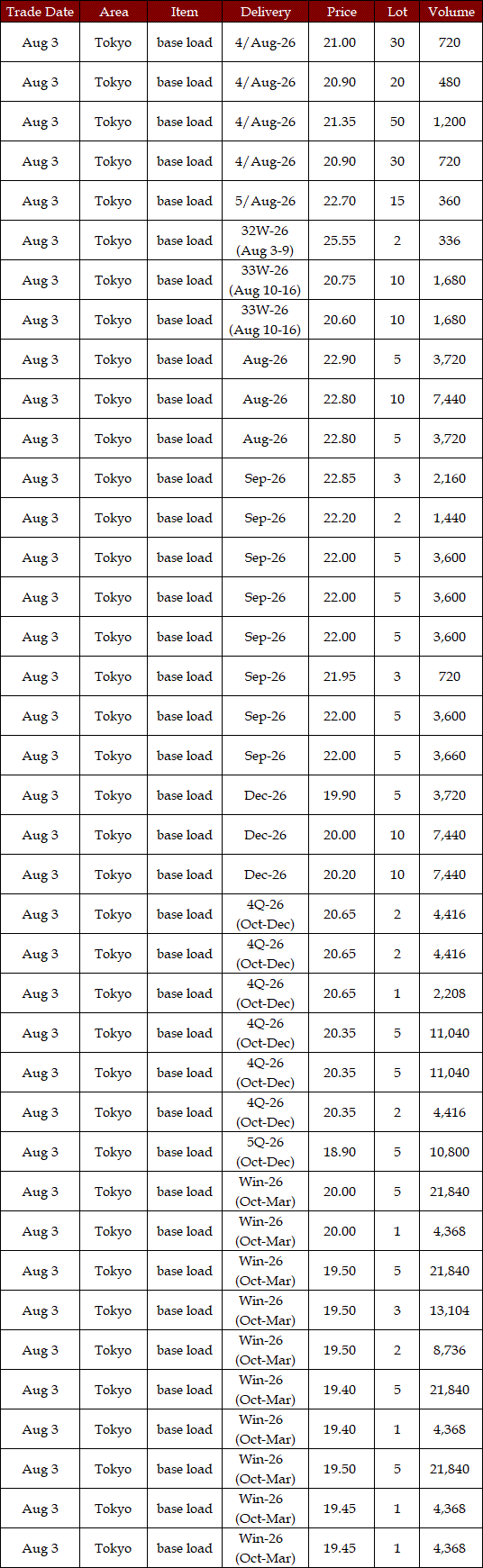
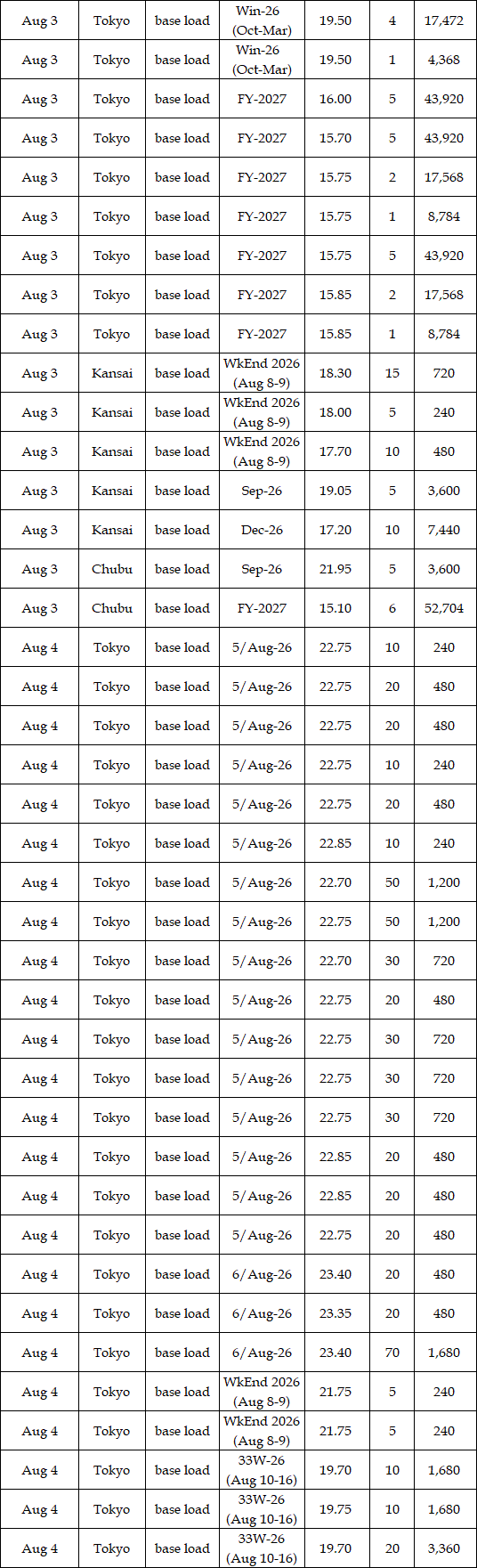
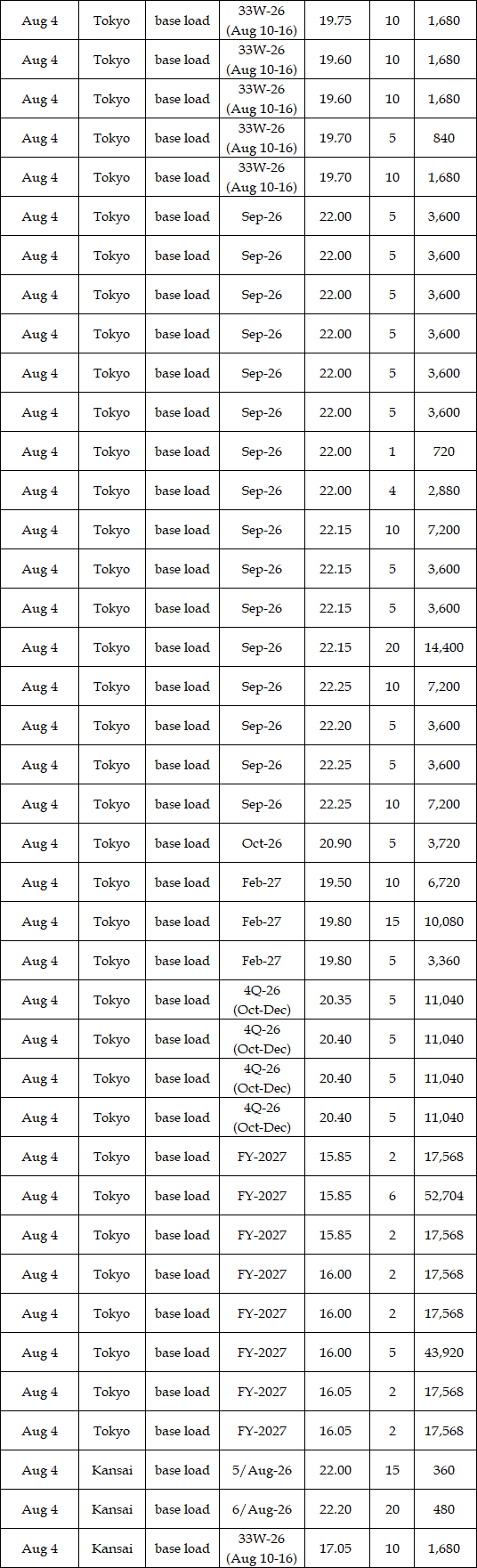
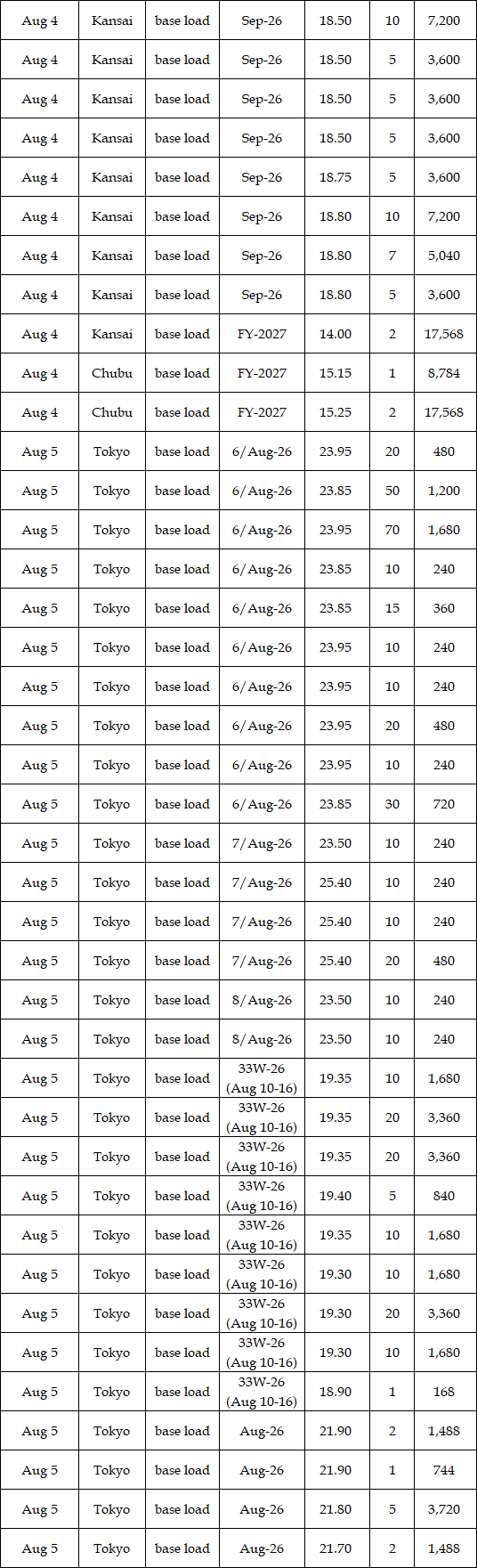
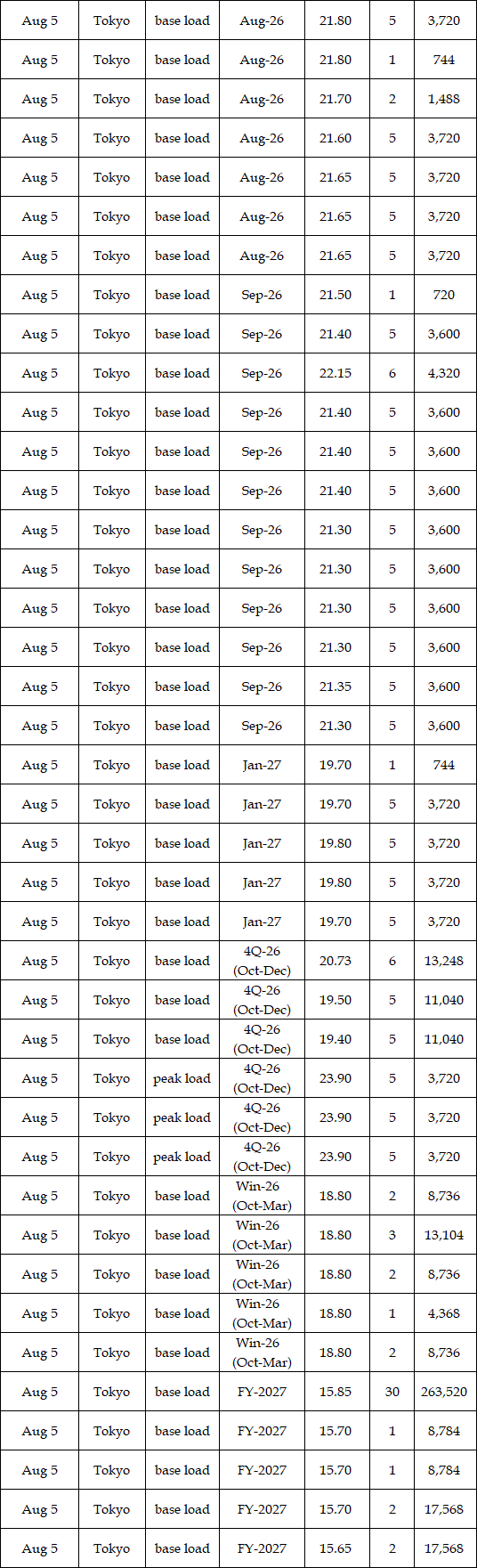
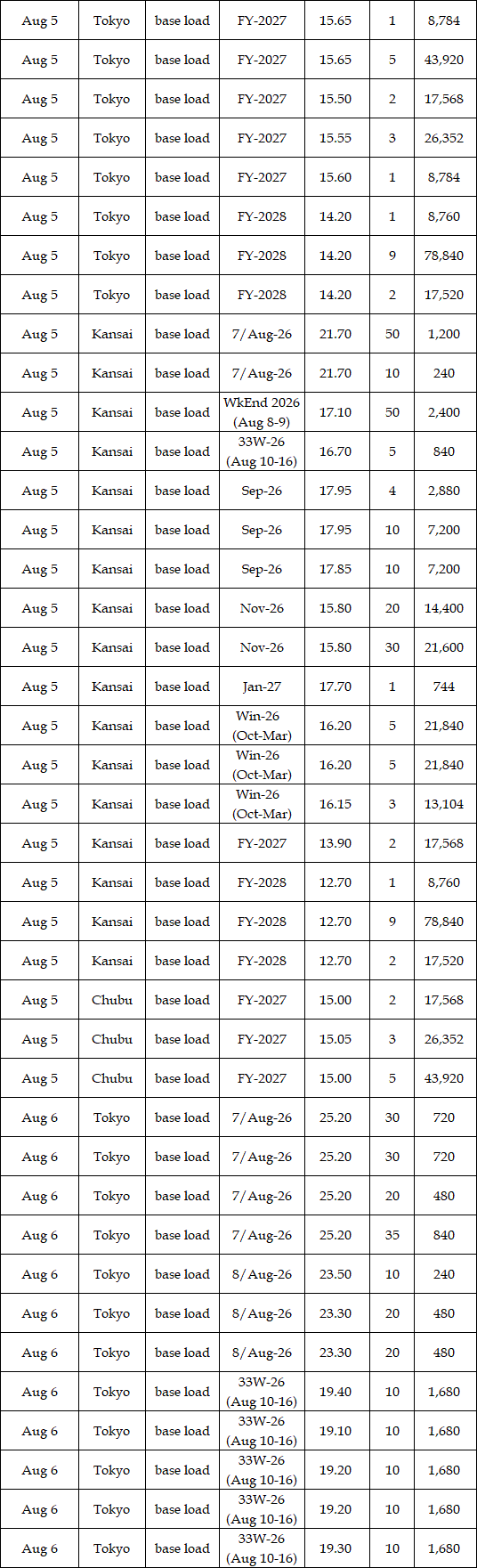
Deals reported on TOCOM (Tokyo Commodity Exchange) during Aug 3-7 were as below.
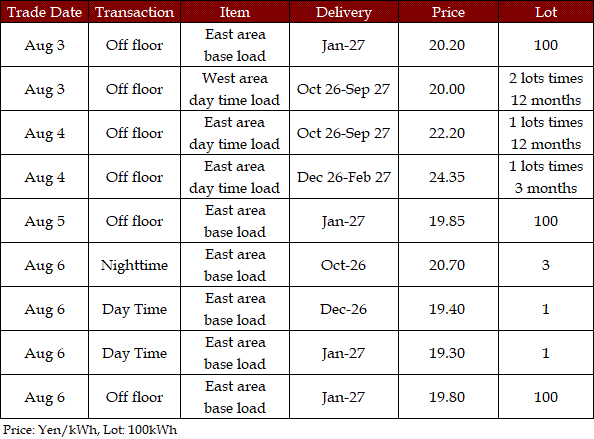
Deals reported on EEX (European Energy Exchange) during Aug 3-7 were as below.
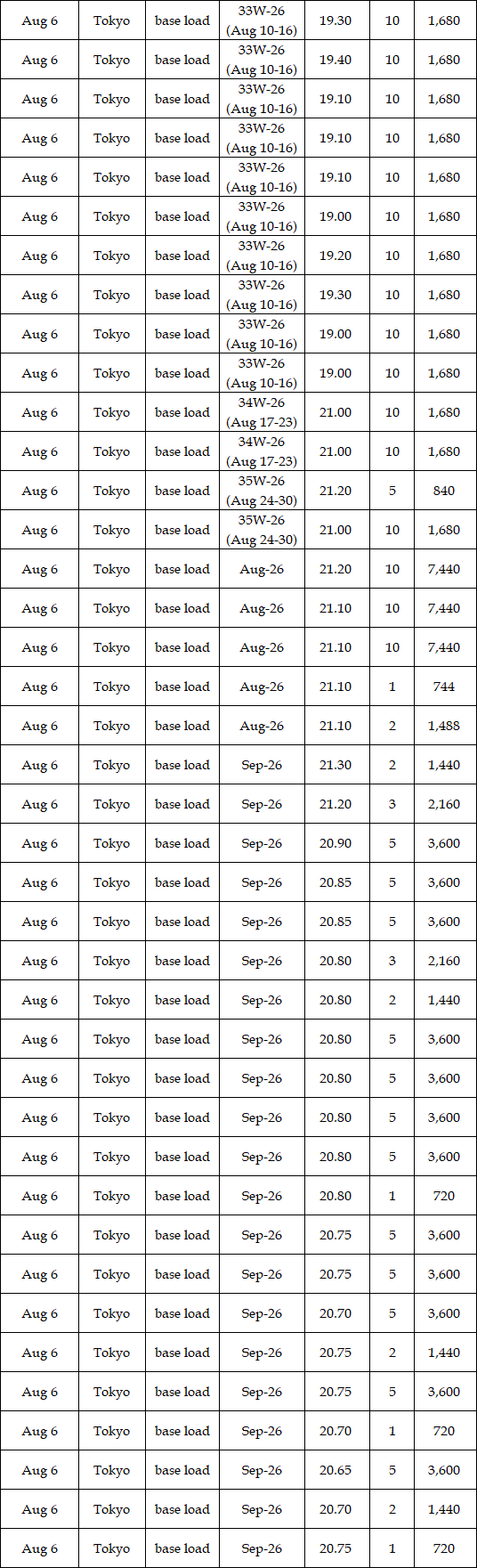
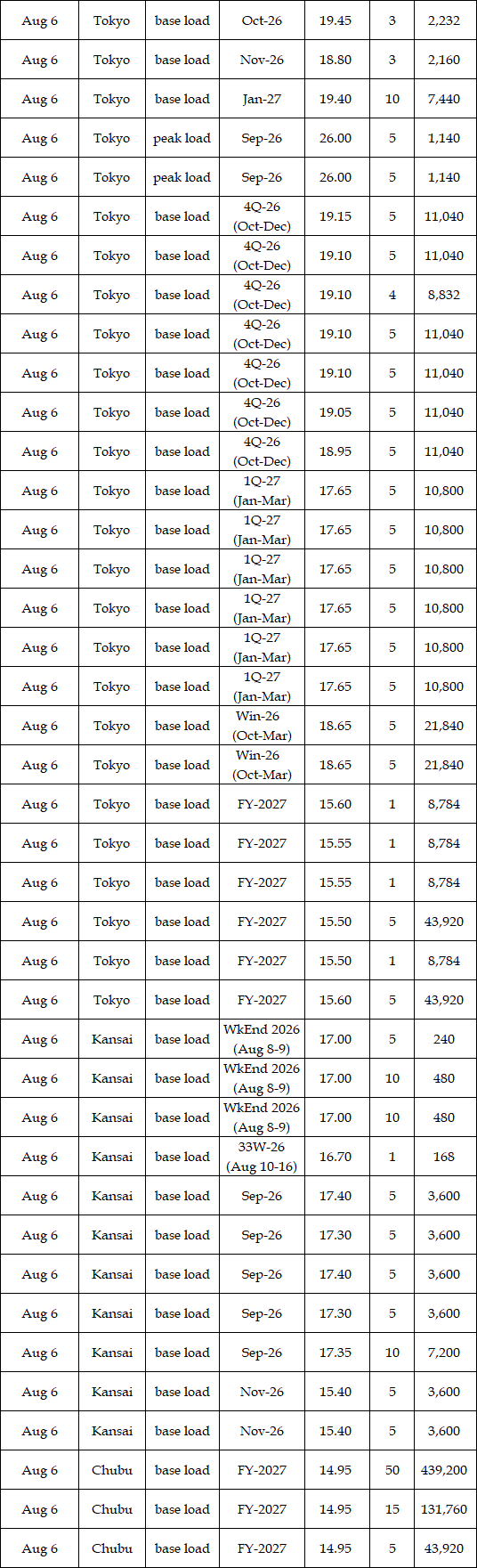
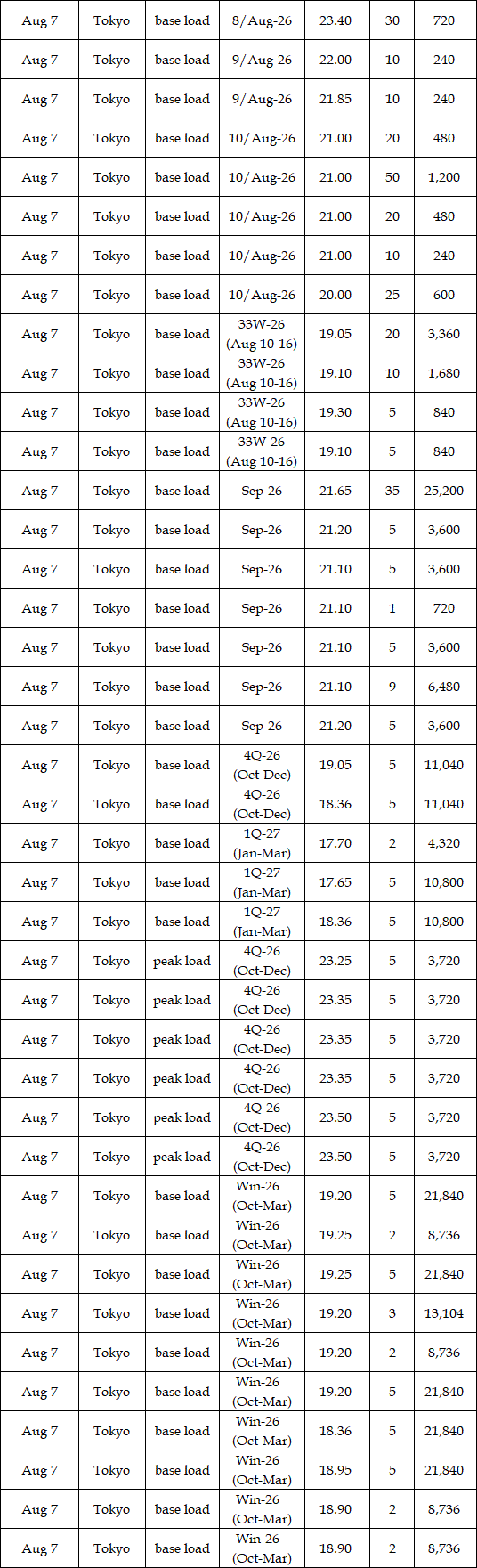
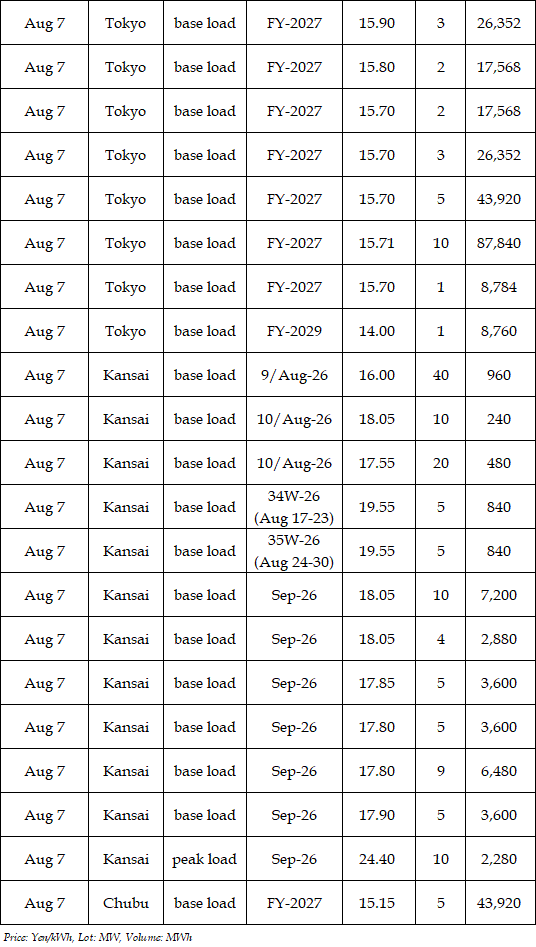
Regarding the spot electricity market for the second week of August, appear likely to face upward resistance. With the onset of the Obon holiday period, demand from major automotive plants and similar facilities is expected to decline, a trend likely to impact prices. In eastern Japan, maximum temperatures in the Kanto region are forecast to hover around 30°C throughout the week, which is expected to keep air-conditioning demand in check. Conversely, western Japan is bracing for intense heat with highs around 35°C across a wide area, suggesting high demand for air conditioning. However, given the aforementioned Obon holidays, demand in western Japan is still expected to drop compared to the first week; consequently, the prevailing view is that the heat will not trigger an excessive spike in prices. Regarding price trends for the second week of August, a market trader at a PPS commented, "We anticipate base prices of around 20 yen for Tokyo and 16-17 yen for Kansai. Since more thermal power plants will be curtailing operations, we expect the downside potential for prices to be limited."
|
JEPX: System Price (Day Ahead 24 hours)
|
|
Weekday Price
|
3-Aug
|
4-Aug
|
5-Aug
|
6-Aug
|
7-Aug
|
|
24-Hour Ave
|
19.78
|
19.38
|
19.78
|
23.44
|
23.08
|
|
Volume (MWh)
|
1,298,120
|
1,322,581
|
1,320,938
|
1,388,539
|
1,383,906
|
|
(unit: yen per kWh) (date: delivery day)
|
|
|

|
 - Fair & Reliable -
 Post
Post Print
Print


