|
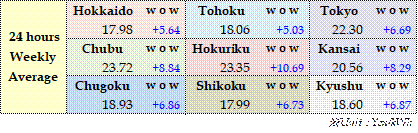
For the week covering power spot deliveries from Aug 17 to 21, the weekly average of the 24-hour spot price rose sharply in both Eastern Japan (50 Hz) and Western Japan (60 Hz) compared to the previous week. With the conclusion of the Obon holiday period, demand from businesses and factories returned to normal levels, exerting upward pressure on prices. Notably, due to a temperature differential between the regions, Tokyo's prices remained lower than Chubu's throughout the week. Base prices hovered in the 21-23 yen range for Tokyo, the 22-24 yen range for Chubu, and the 19-21 yen range for Kansai.
Looking at the 24-hour average price differentials in the electricity spot markets between the major eastern (Tokyo) and western (Kansai) regions, prices trended higher in the east than in the west, with gaps of 1.89 yen on Aug 17, 0.25 yen on Aug 18, 2.47 yen on Aug 19, 2.22 yen on Aug 20, and 1.91 yen on Aug 21.
The following summarizes fuel market trends in the third week of August.
In the Northeast Asian LNG spot market, the price for October delivery reached the high $20s per mmBtu on Aug 21, marking a rise of nearly $2 from the end of the previous week (August 14). With no end in sight to the conflict involving the U.S. and Iran, and factors such as declining gas inventories in Europe creating a market environment driven entirely by bullish signals, prices climbed further. Japan's LNG inventories for power generation stood at 2.26 million tonnes as of August 16, an increase of 230,000 tonnes from the previous week; this figure exceeded both the 2.01 million tonnes recorded at the end of August last year and the five-year average of 2.12 million tonnes.
The price of thermal coal for loading at Newcastle, Australia--specifically for August 2026 shipment--reached the mid-$131-per-ton range on August 21, marking an increase of more than $2 from the level at the end of the previous week (August 14). This rise reflected the upward trend in crude oil and gas prices.
On August 21, crude oil prices saw WTI futures for October 2026 delivery trading in the high $80-per-barrel range, while Brent futures for October 2026 delivery traded in the high $90 range. These figures represented increases of just over $5 for WTI and just under $5.50 for Brent compared to the previous week's close (August 14). Crude oil futures climbed further as the market anticipated a prolonged conflict; negotiations regarding a memorandum of understanding between the U.S. and Iran had reached their deadline without a breakthrough, leading to a suspension of talks and a lack of any clear path to resolution.
The actual high for the week was 36.53 yen, recorded in the Chubu and Hokuriku regions on Aug 20. Meanwhile, the actual low was 4.51 yen, recorded in Shikoku on Aug 19.
The weekly average of the 24-hour spot prices by area and the weekly average volume of offers, bids, and trades are shown in the table below.

Power demand in nine areas of Japan during Aug 17-21 was 13,479.62 mil kWh, up 26.3% from 10,673.13 mil kWh during Aug 10-14. The figure was down 7.3% from the corresponding period a year earlier, which was 14,528.15 kWh during Aug 18-22, 2025, after day-of-week adjustment.
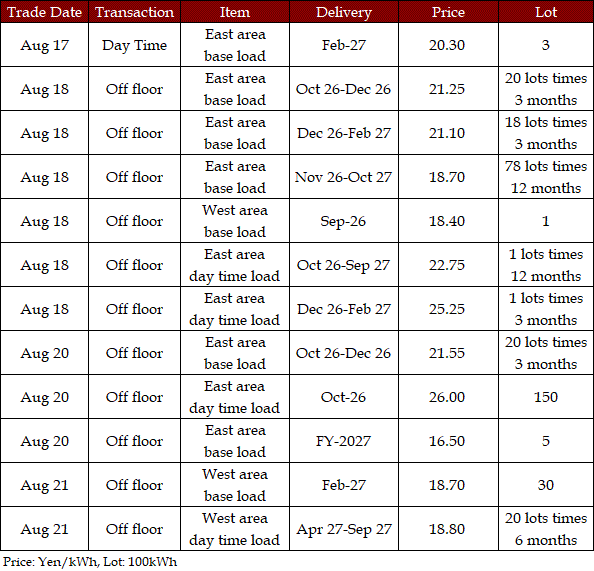
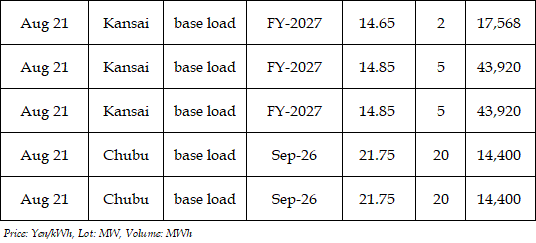
Deals reported on TOCOM (Tokyo Commodity Exchange) during Aug 17-21 were as below.
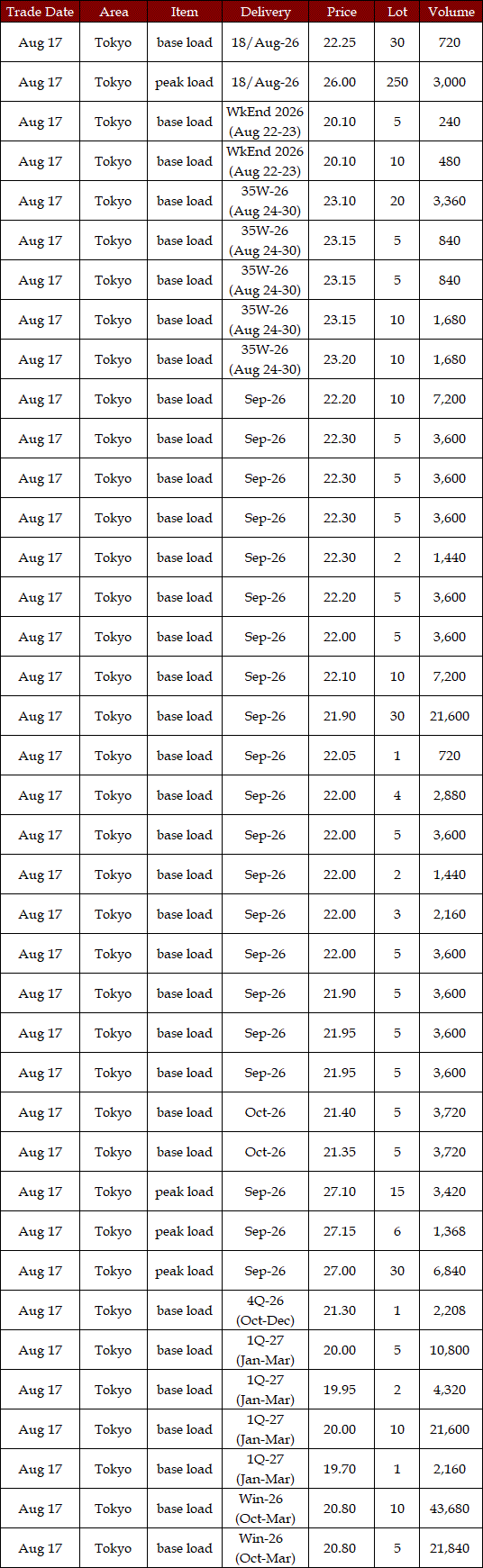
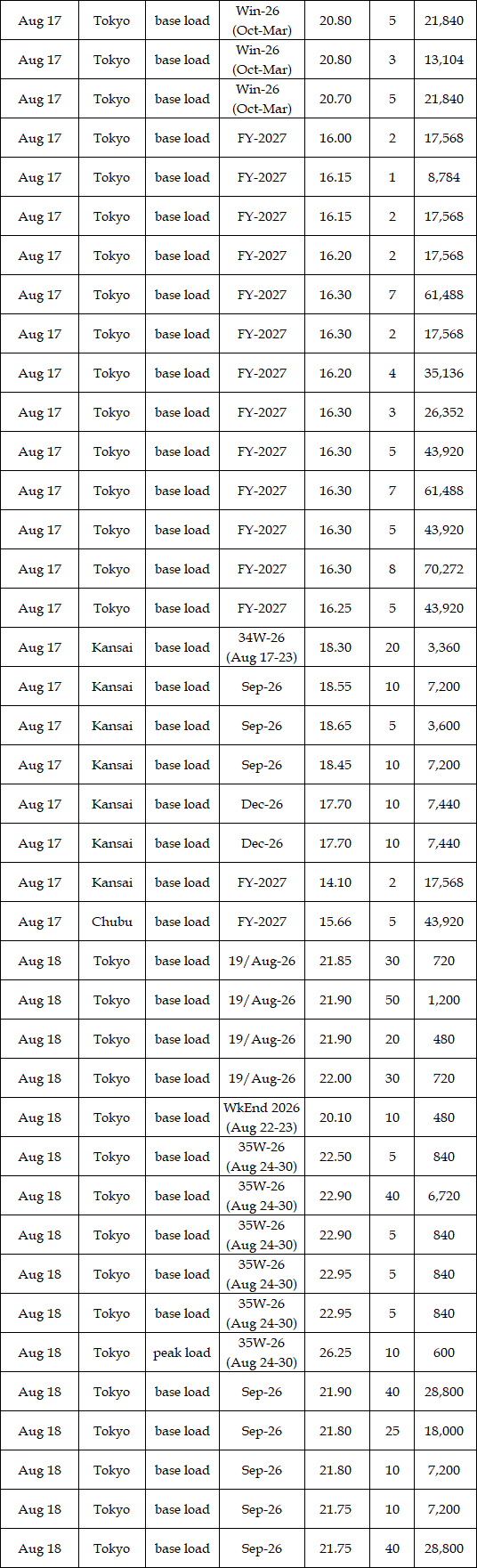
Deals reported on EEX (European Energy Exchange) during Aug 17-21 were as below.
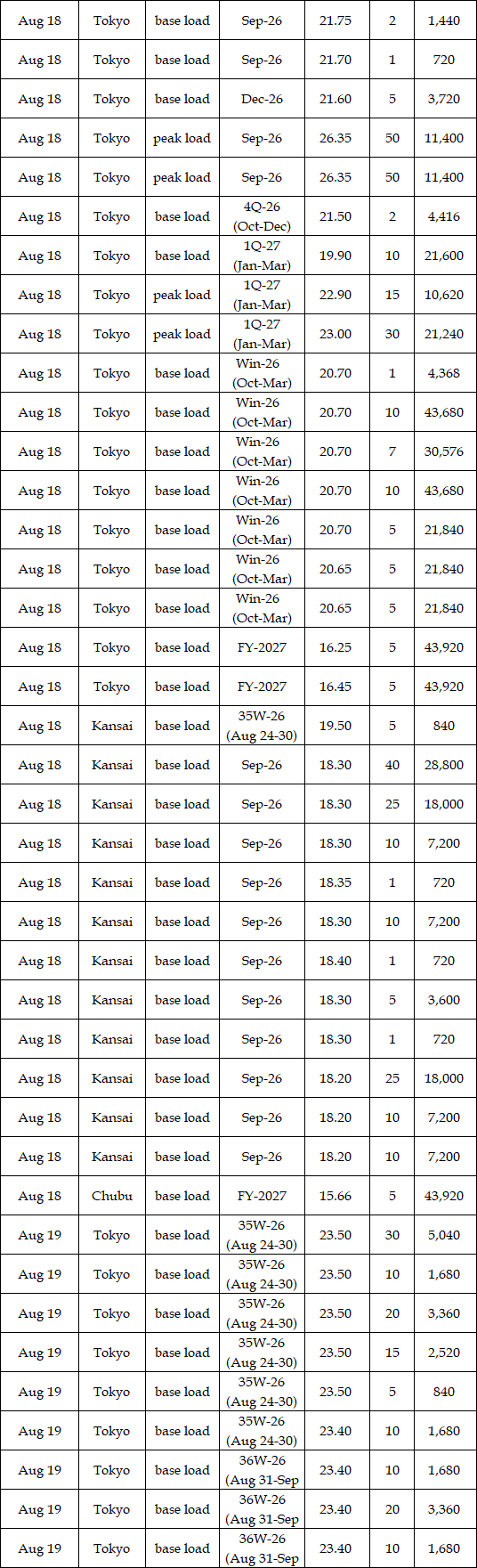
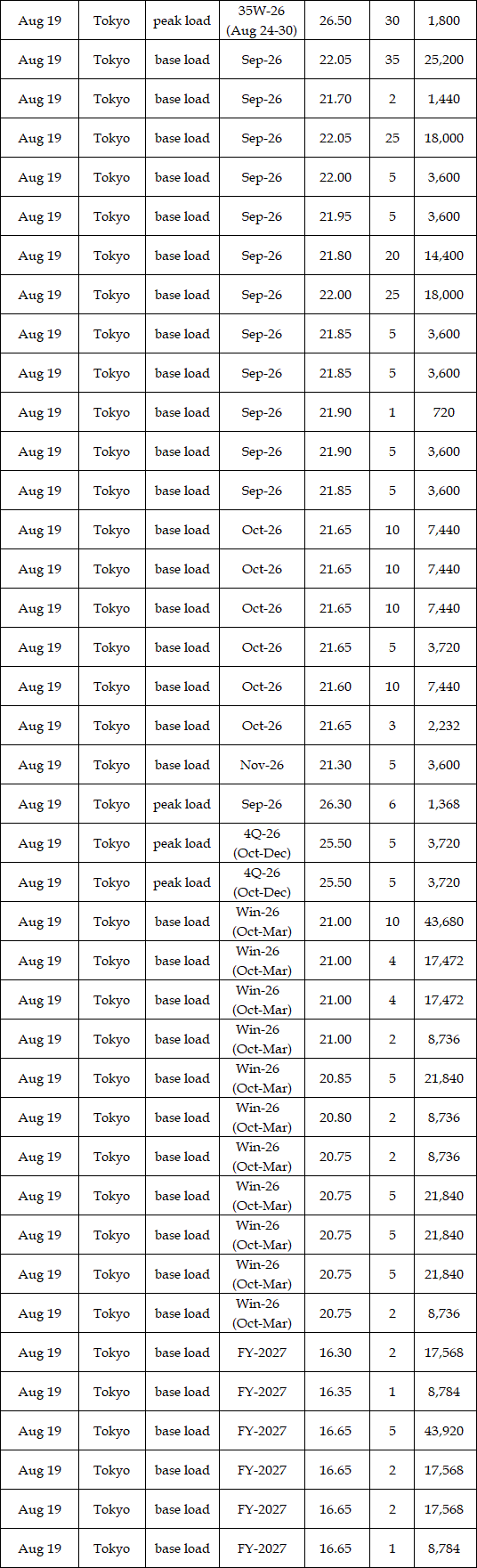
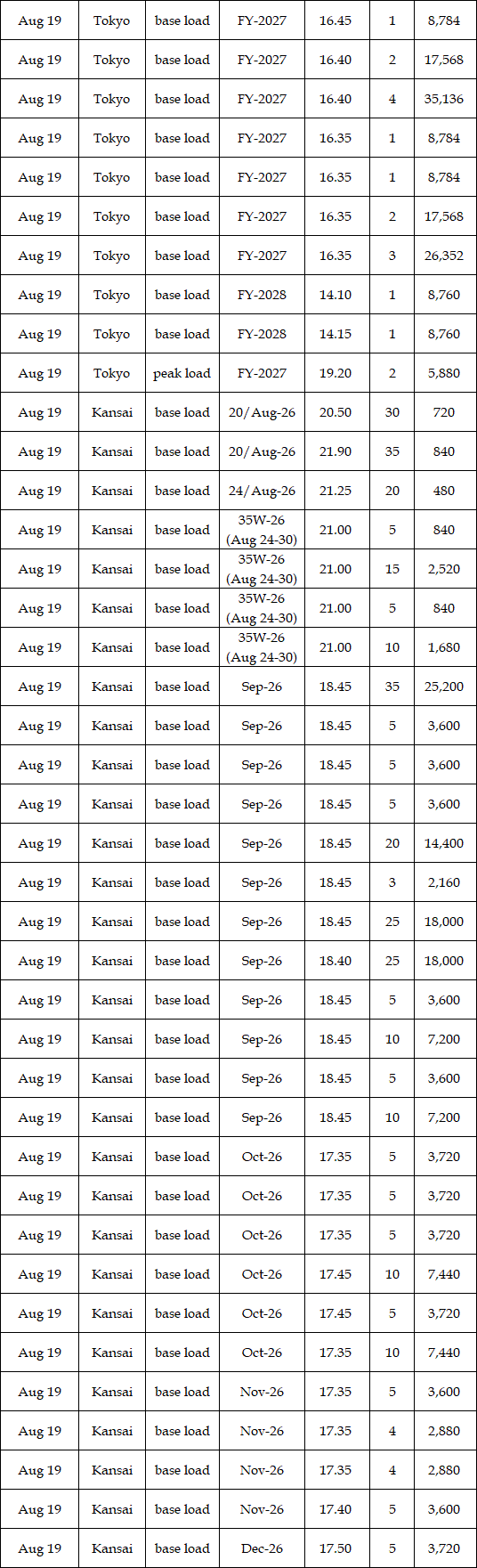
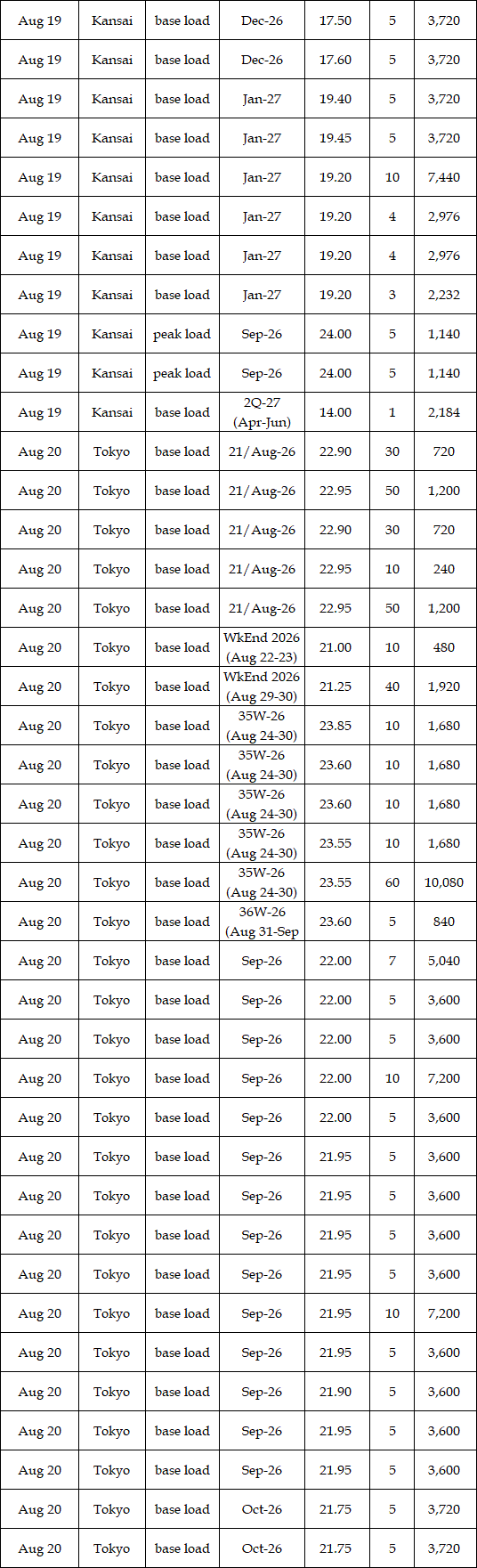
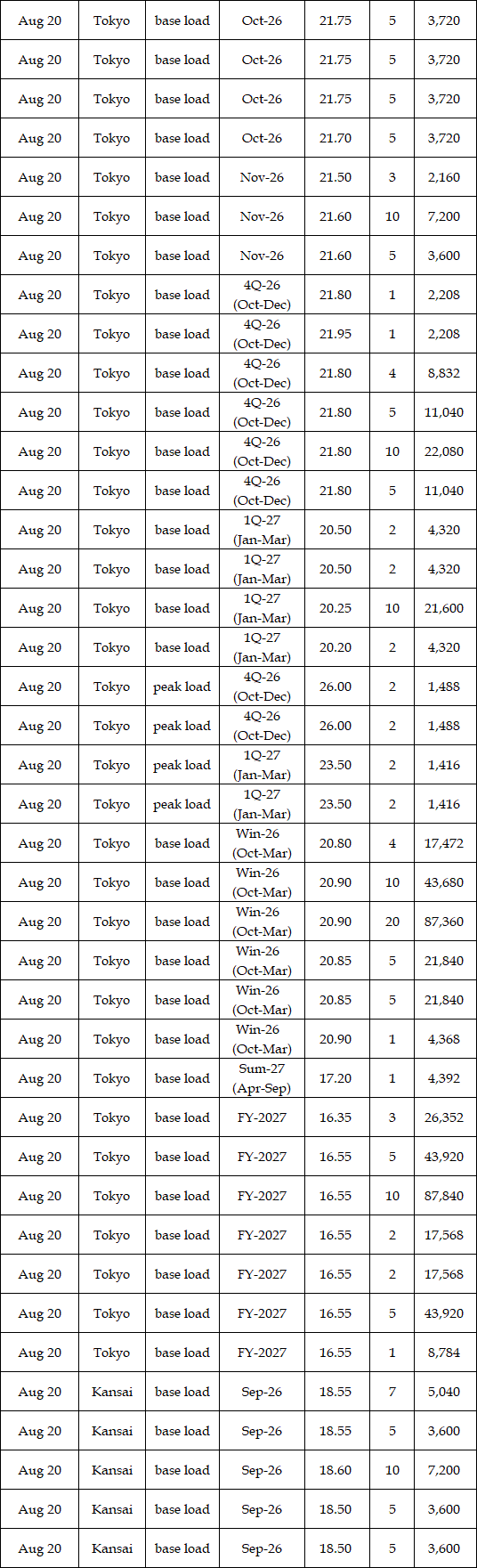
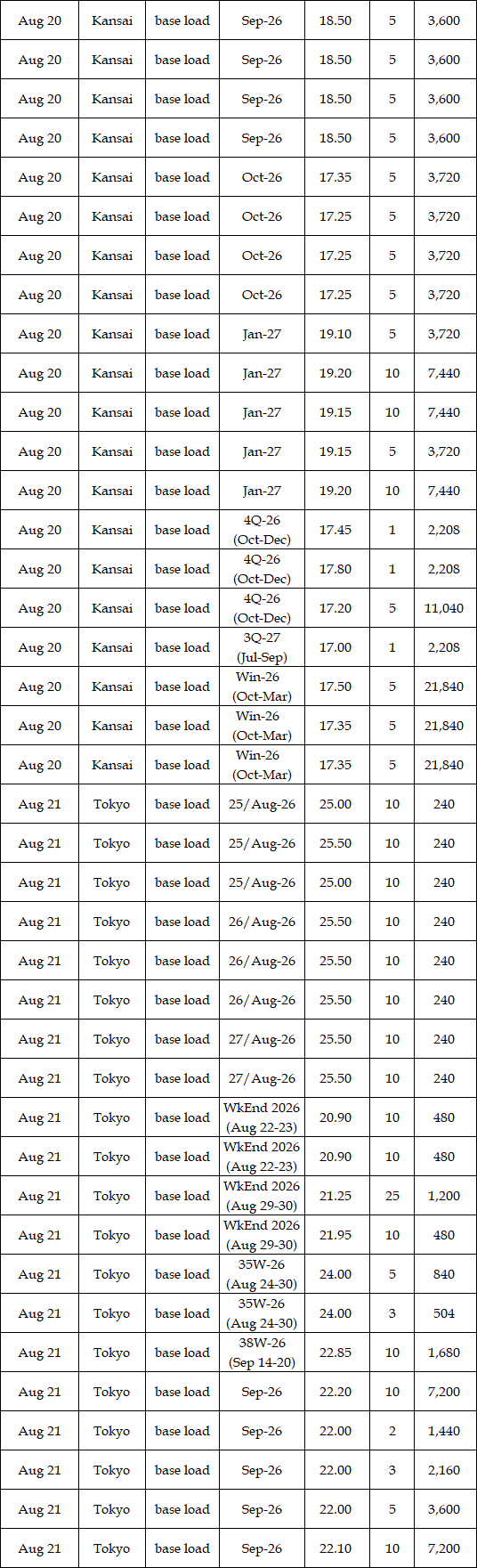
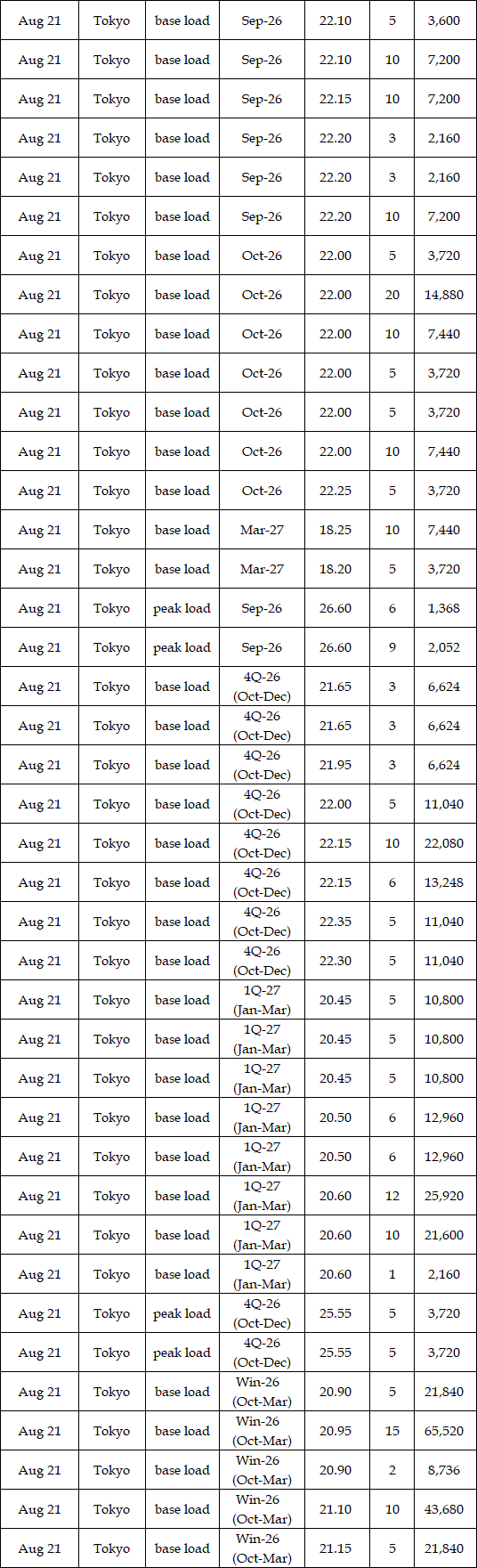
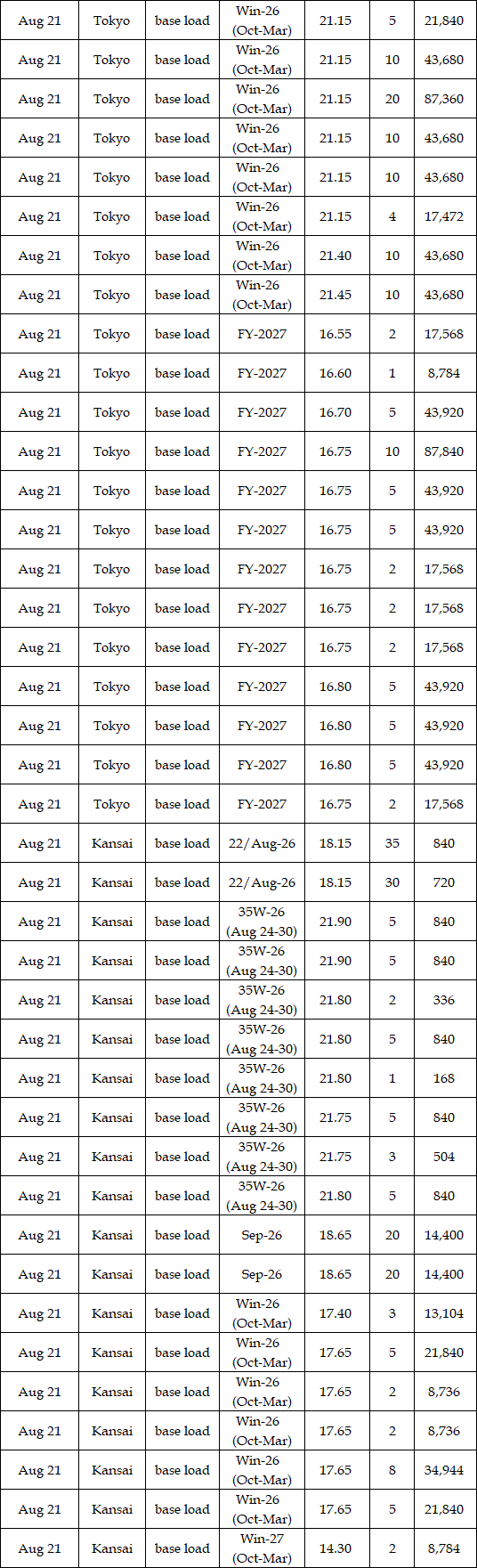
Power spot prices for the fourth week of August are expected to exceed the levels seen in the third week. Temperatures are forecast to rise further nationwide, with the Kanto region likely to experience multiple days of extreme heat (temperatures reaching or exceeding 35°C). Forecasts for western Japan indicate scattered instances of extreme heat days, including in the Tokai region. Additionally, current fuel market prices--particularly for gas--remain high, a factor cited as potentially influencing future electricity spot prices. Regarding price trends for the fourth week of August, some market participants--such as a representative handling market trading for a new power provider--project base prices of around 24-25 yen for Tokyo and 22-23 yen for Kansai. The outlook for Kansai is particularly sensitive to temperature fluctuations, as both the Mihama Nuclear Power Station Unit 3 (PWR, 826 MW, Mihama Town, Fukui Prefecture) and the Oi Nuclear Power Station Unit 3 (PWR, 1,180 MW, Oi Town, Fukui Prefecture) remain offline. Meanwhile, there is a prevailing view that prices in the Chubu region will continue to exceed those in Tokyo.
|
JEPX: System Price (Day Ahead 24 hours)
|
|
Weekday Price
|
17-Aug
|
18-Aug
|
19-Aug
|
20-Aug
|
21-Aug
|
|
24-Hour Ave
|
19.63
|
20.92
|
21.61
|
22.22
|
23.44
|
|
Volume (MWh)
|
1,251,624
|
1,274,866
|
1,305,627
|
1,327,199
|
1,327,933
|
|
(unit: yen per kWh) (date: delivery day)
|
|
|

|
 - Fair & Reliable -
 Post
Post Print
Print


