|
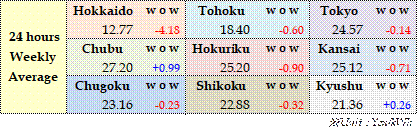
Regarding the weekly average of the 24-hour spot power price for delivery from August 31 to September 4, prices in Eastern Japan (50Hz) fell compared to the previous week, while those in Western Japan (60Hz) remained flat. In Eastern Japan, mild weather conditions persisted, keeping a lid on price increases. In Western Japan, severe heat continued across a wide area during the first half of the week, acting as a bullish factor for prices. Although the weather turned milder from midweek onwards--causing prices to soften--persistent cloudy skies reduced solar power generation, which pushed up daytime prices. Furthermore, immediately after the start of September, a reduction in supply margins--such as large-scale LNG thermal power plants in the Chubu area entering periodic maintenance--served as another bullish factor in Western Japan. Consequently, while price movements varied by region within Western Japan, the overall average for the region remained comparable to the previous week.
As temperatures in Western Japan continued to exceed those in Eastern Japan, the trend of higher prices in the west compared to the east persisted. Base prices ranged from the 22-27 yen level in Tokyo, the 25-28 yen level in Chubu, and the 21-26 yen level in Kansai.
Kansai Electric Power's Mihama Nuclear Power Station Unit 3 (rated output: 826,000 kW; PWR type; Mihama Town, Fukui Prefecture) will begin adjustment operations on September 15. The unit had been shut down after a steam leak from the high-pressure turbine was detected on May 3; it subsequently entered scheduled periodic inspections on June 16 without resuming operation. Commercial operation is scheduled to restart on October 9.
In Western Japan, imbalance charges exceeded 100 yen on some days, and supply-demand conditions remained tight, particularly in the Kansai region. Kansai received power transfers from regions such as Tokyo and Chubu on Aug 25 and Aug 27.
Looking at the 24-hour average price differentials in the electricity spot markets between the major eastern (Tokyo) and western (Kansai) regions, prices were higher in the west than in the east on Aug 31 (2.70 yen), on Sep 1 (2.49 yen), on Sep 2 (1.32 yen), whereas they were higher in the east than in the west on Sep 3 (2.21 yen), on Sep 4 (1.46 yen). The shift to higher prices in the east on the 3rd was driven by a spike in prices during certain time slots in the Tokyo area, caused by interconnection line maintenance work at the Sakuma Frequency Converter (FC) station, which links the Tokyo and Chubu regions.
The following summarizes fuel market trends in the first week of September.
In the Northeast Asian LNG spot market, the price for October delivery stood in the low $25 per mmBtu range on September 4, marking an increase of approximately $1.50 from the end of the previous week (August 28). Renewed geopolitical risks in the Middle East--including a flare-up in hostilities between the United States and Iran--triggered a sharp rise in European natural gas prices, which in turn drove up LNG prices in the Northeast Asian market. As of August 30, Japan's LNG inventories for power generation stood at 2.42 million tonnes, an increase of 50,000 tonnes from the previous week. This figure significantly exceeded both the 2.01 million tonnes recorded at the end of August last year and the five-year average of 2.12 million tonnes.
The price of thermal coal for loading at Newcastle, Australia--specifically for September 2026 delivery--stood at $148.65 per tonne on September 4, marking an increase of $8.90 from the $139.75 recorded at the end of the previous week (August 28). This rise reflected higher crude oil and gas prices.
On September 4, crude oil prices stood at $91.48 per barrel for the WTI contract for October 2026 delivery and $96.28 for the Brent contract for November 2026 delivery. These figures represented increases of $8.08 for WTI and $8.18 for Brent compared to the levels at the end of the previous week (August 28). Buying dominated the market as the outbreak of hostilities between the United States and Iran fueled concerns that the resumption of shipping through the Strait of Hormuz would be delayed.
The prevailing high price for the week was 53.20 yen, recorded in six regions of western Japan on September 1. Meanwhile, the prevailing low price was 2.00 yen, recorded in Shikoku on September 1 and in Hokkaido on September 4.
The weekly average of the 24-hour spot prices by area and the weekly average volume of offers, bids, and trades are shown in the table below.

Power demand in nine areas of Japan during Aug 31-Sep 4 was 12,927.42 mil kWh, down 9.4% from 14,273.00 mil kWh during Aug 24-28. The figure was down 8.7% from the corresponding period a year earlier, which was 14,164.20 kWh during Sep 1-5, 2025, after day-of-week adjustment.
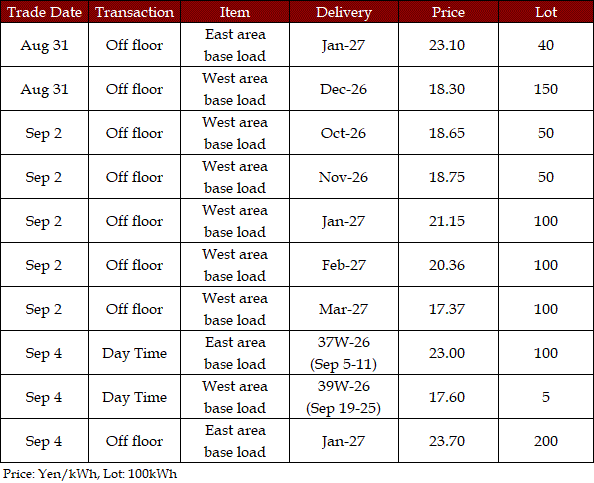
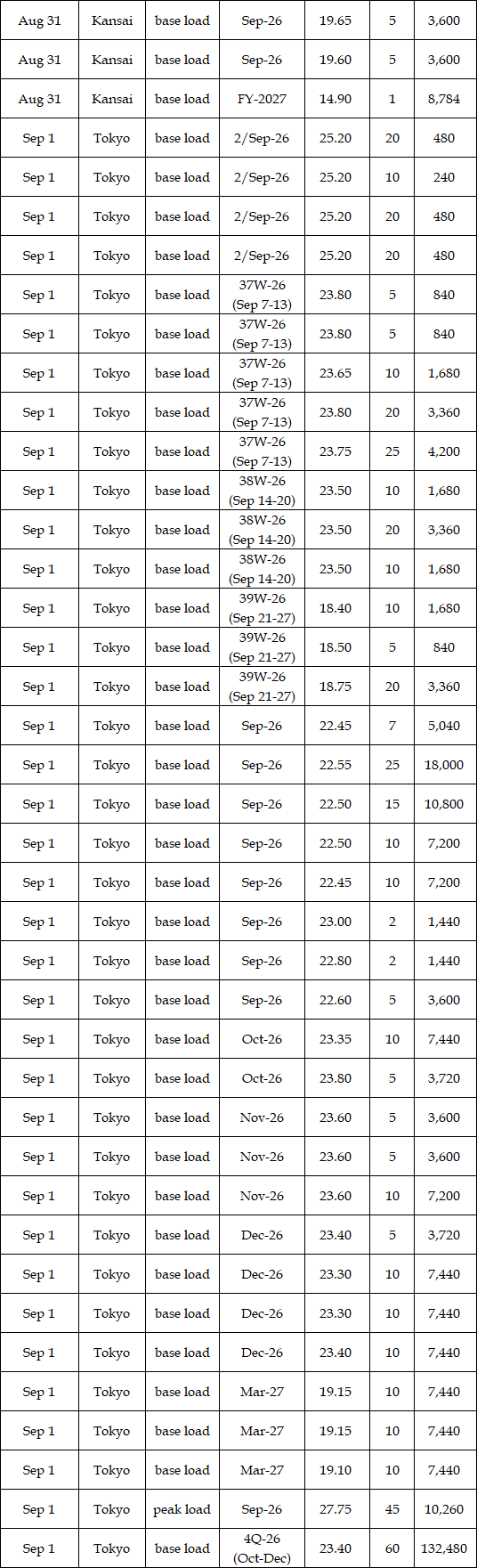
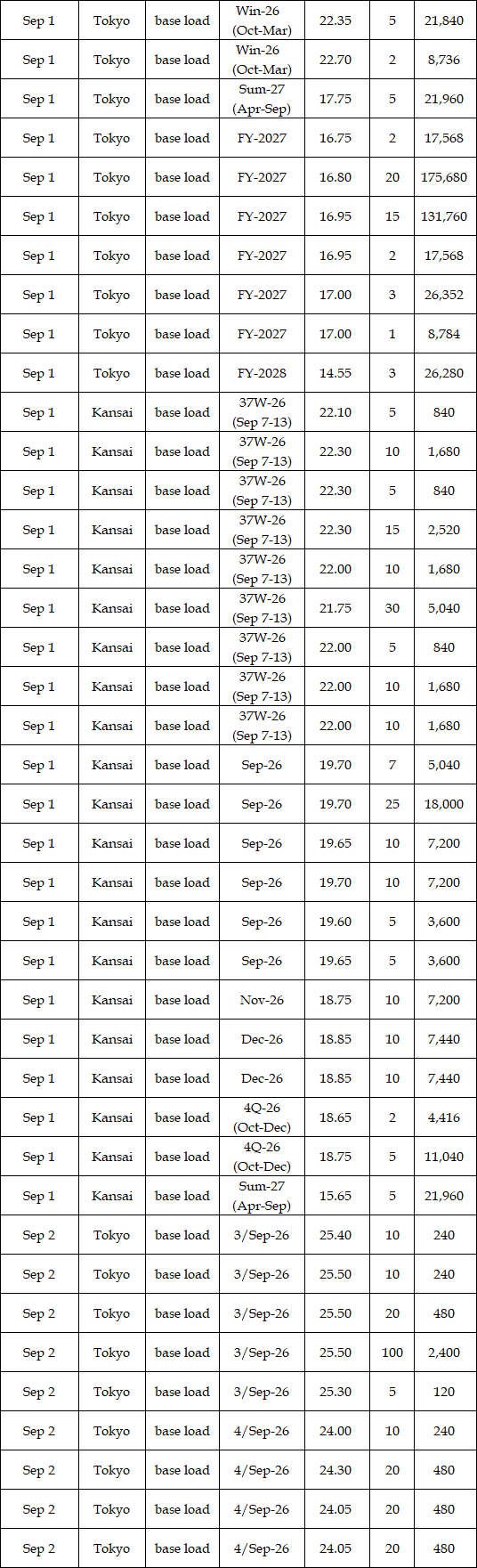
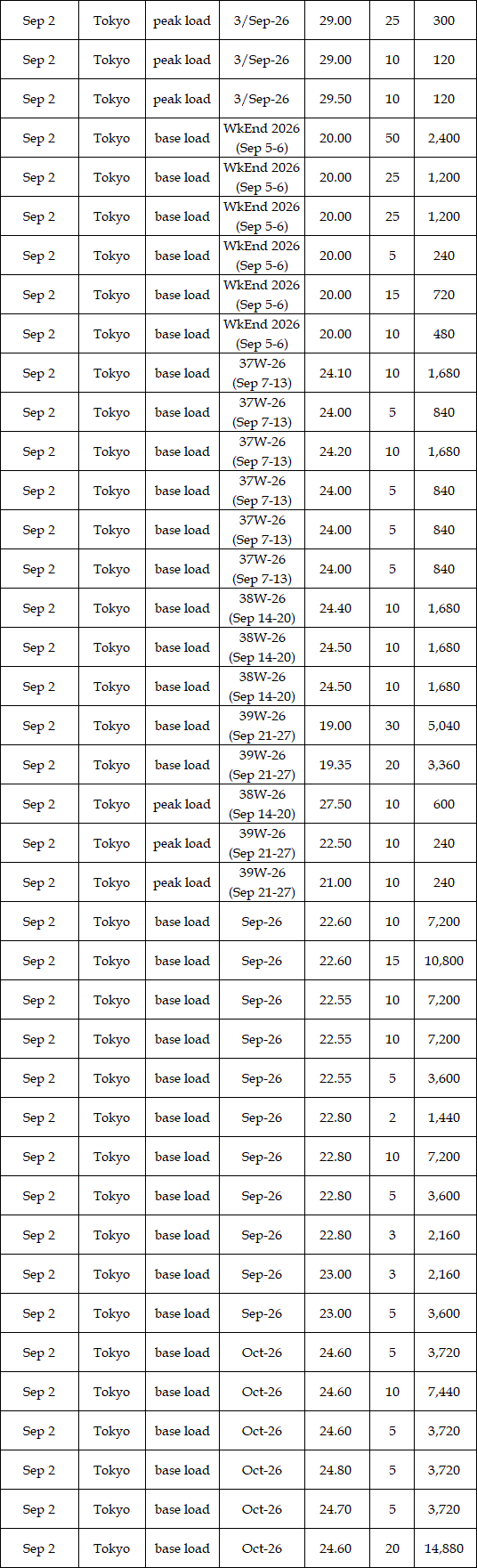
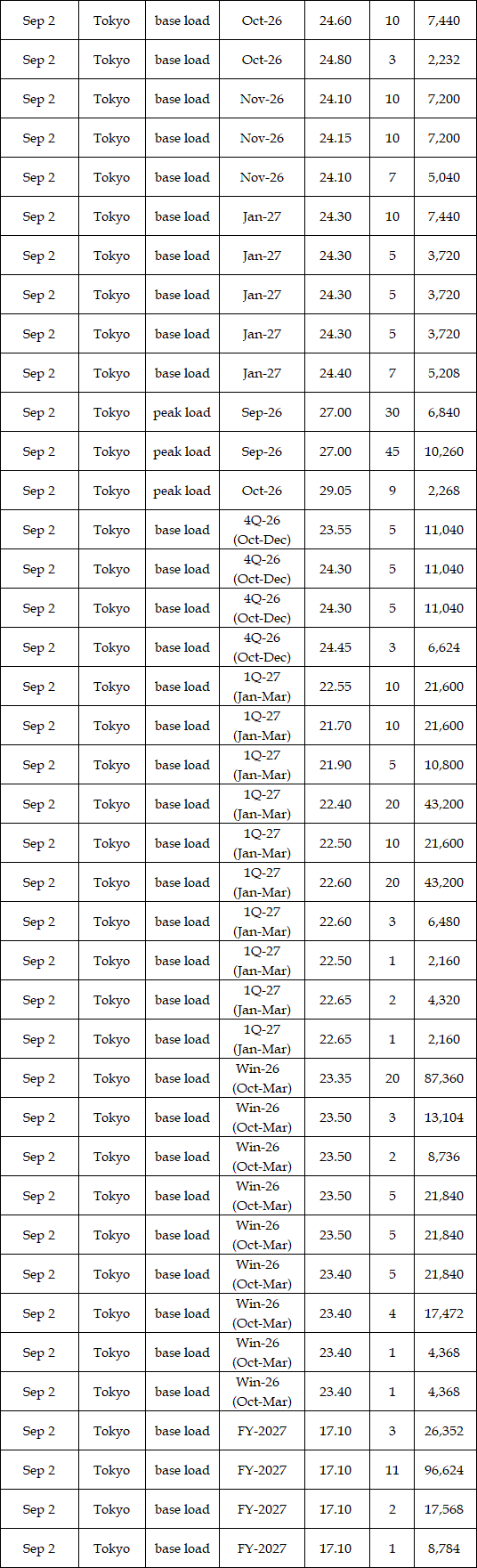
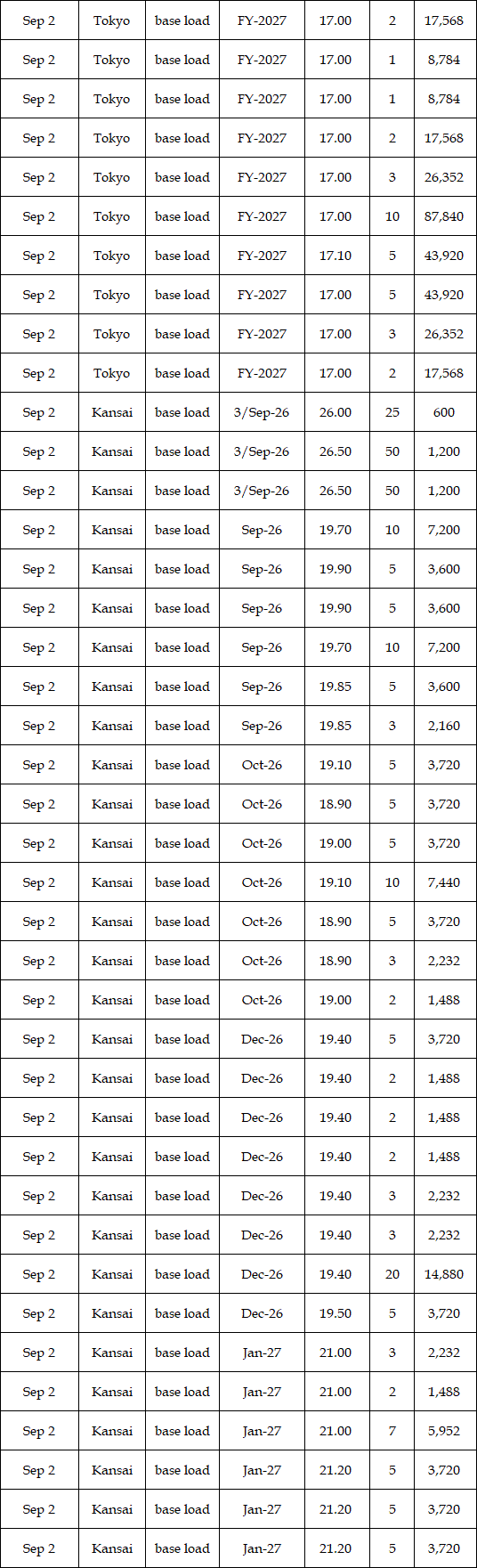
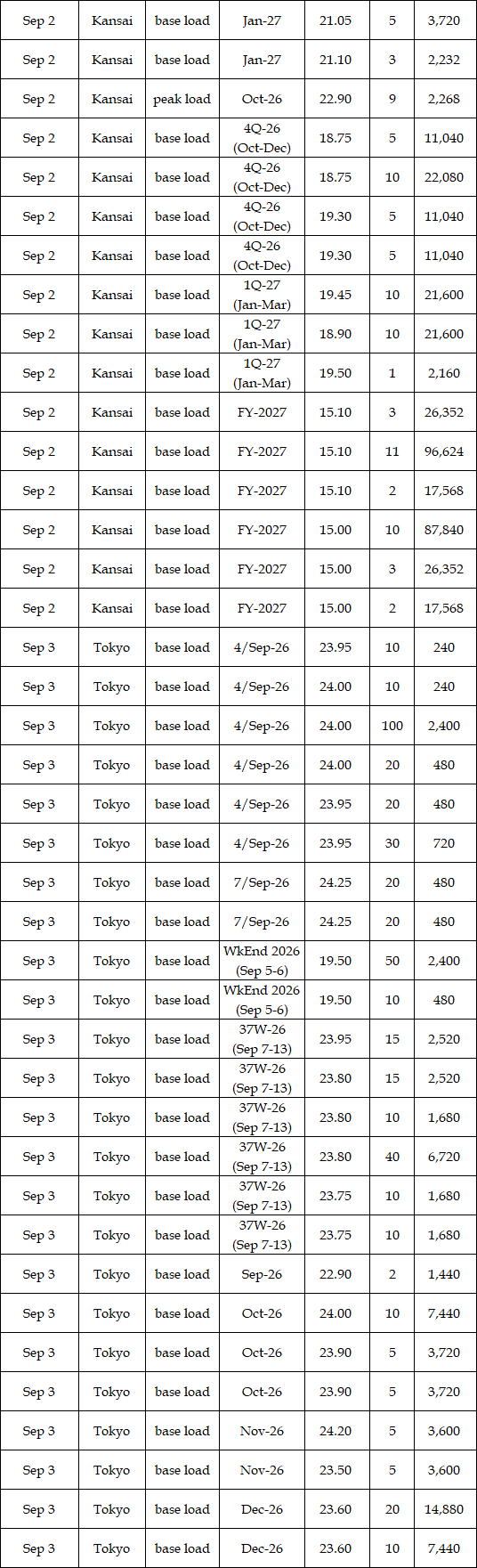
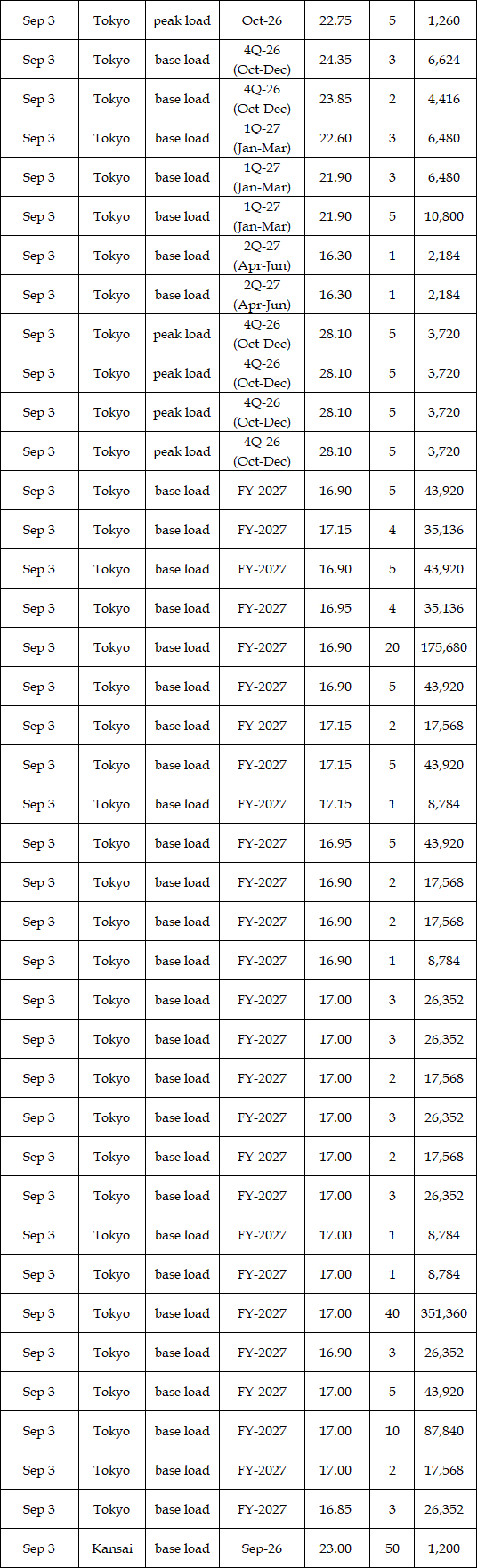
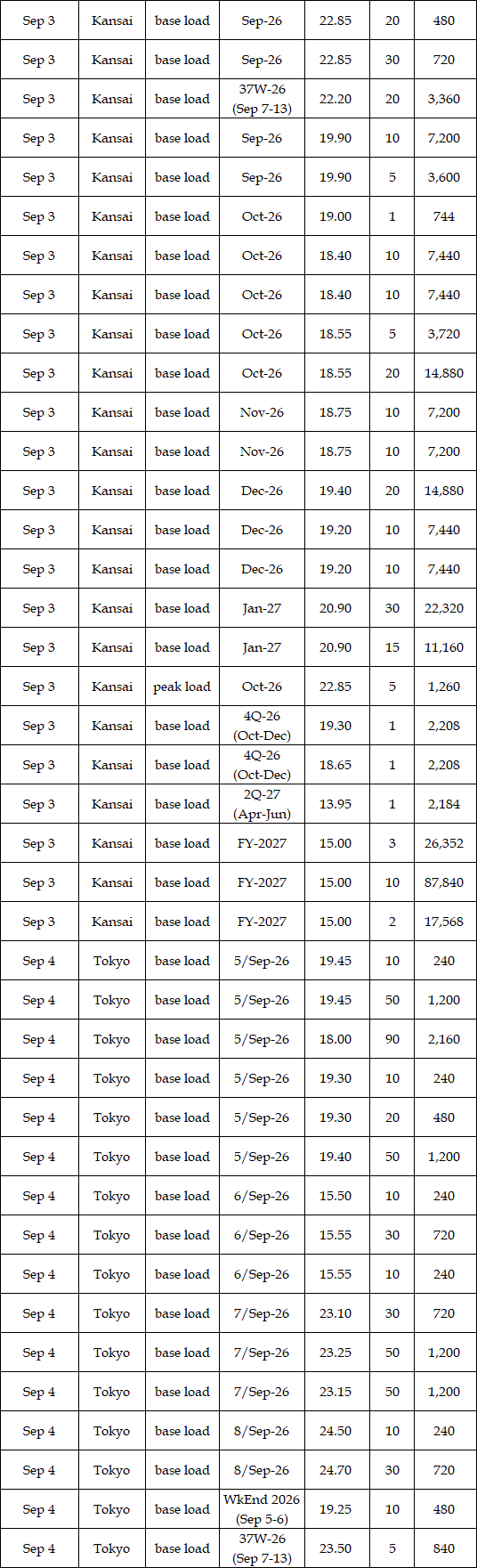
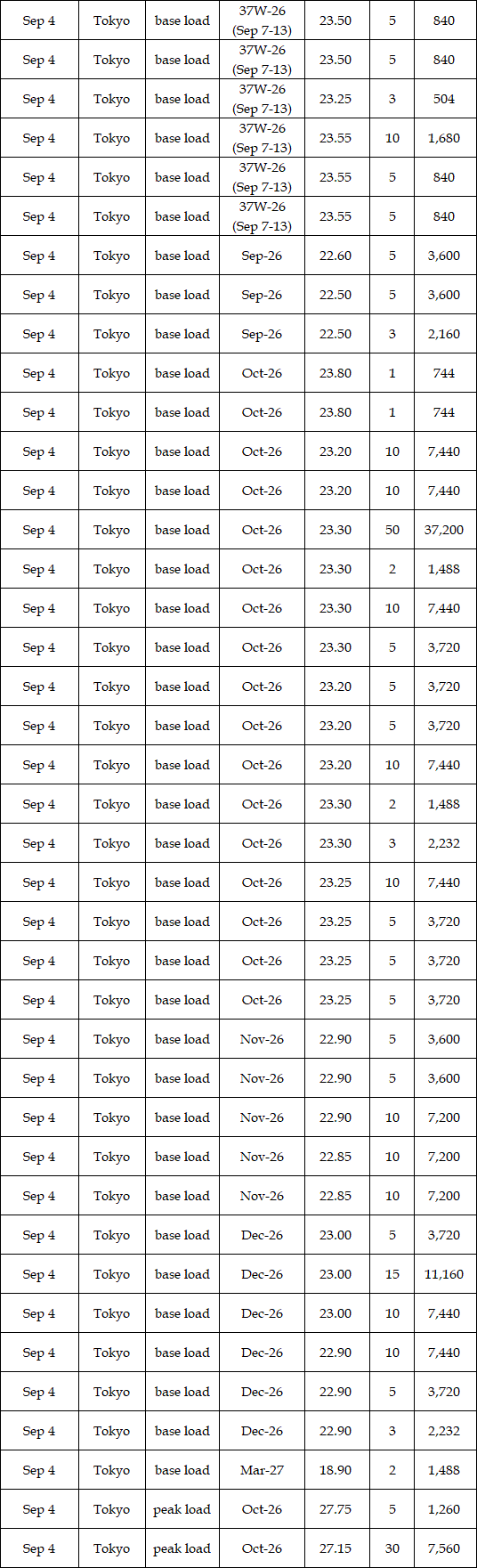
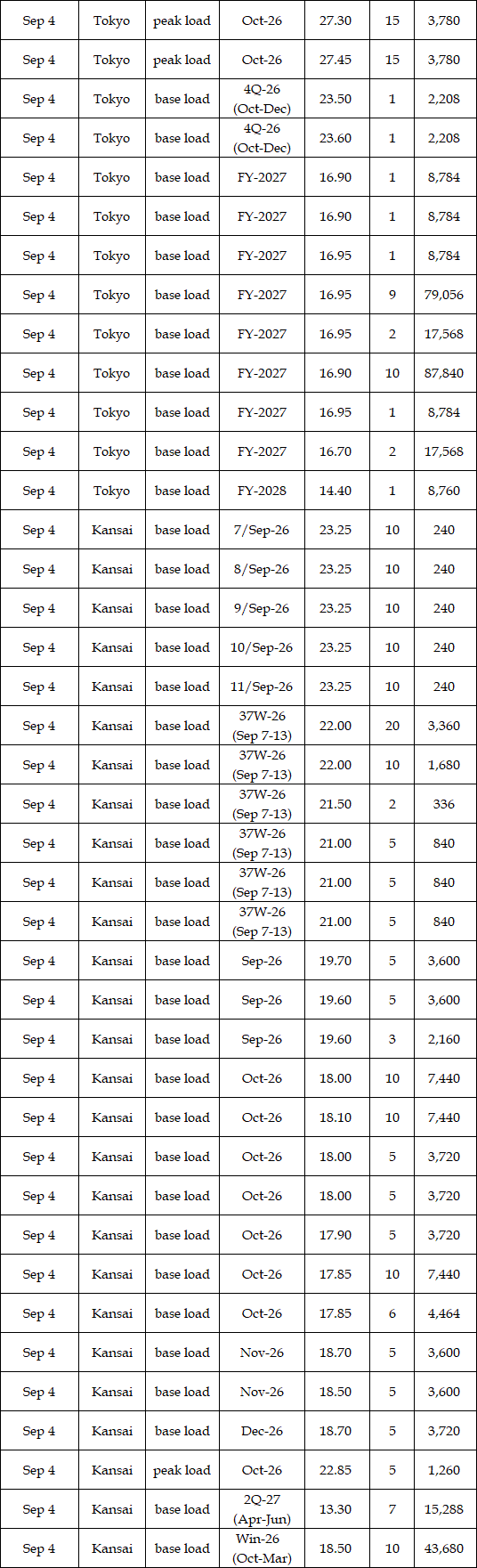
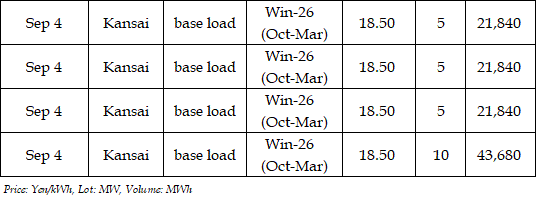
Deals reported on TOCOM (Tokyo Commodity Exchange) during Aug 24-28 were as below.
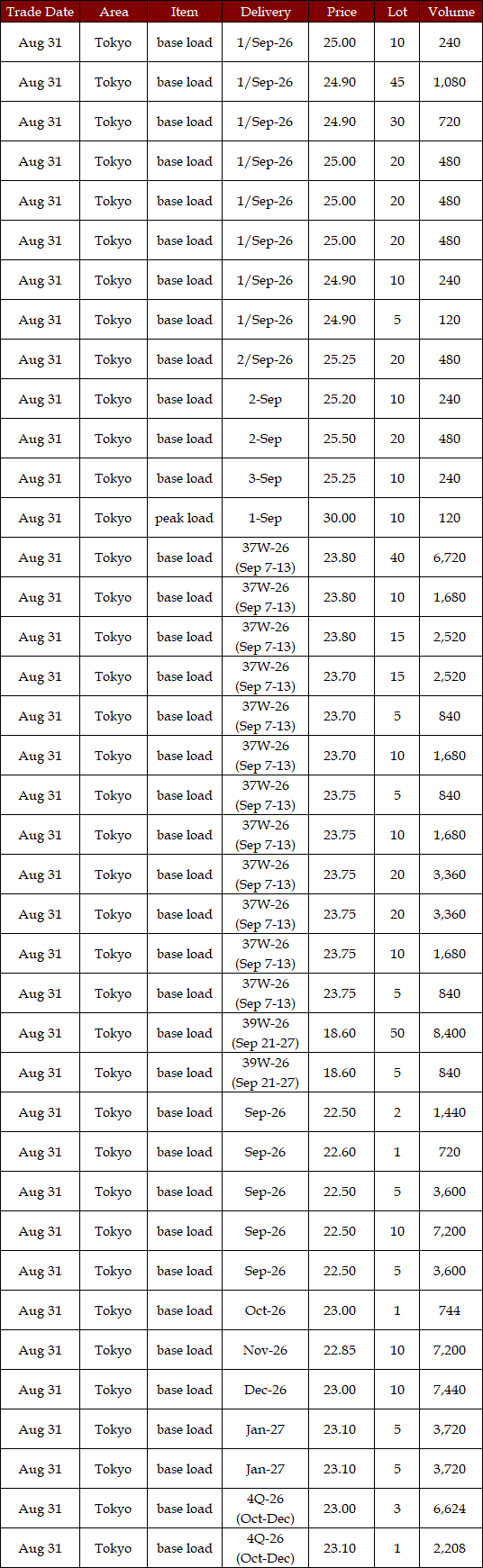
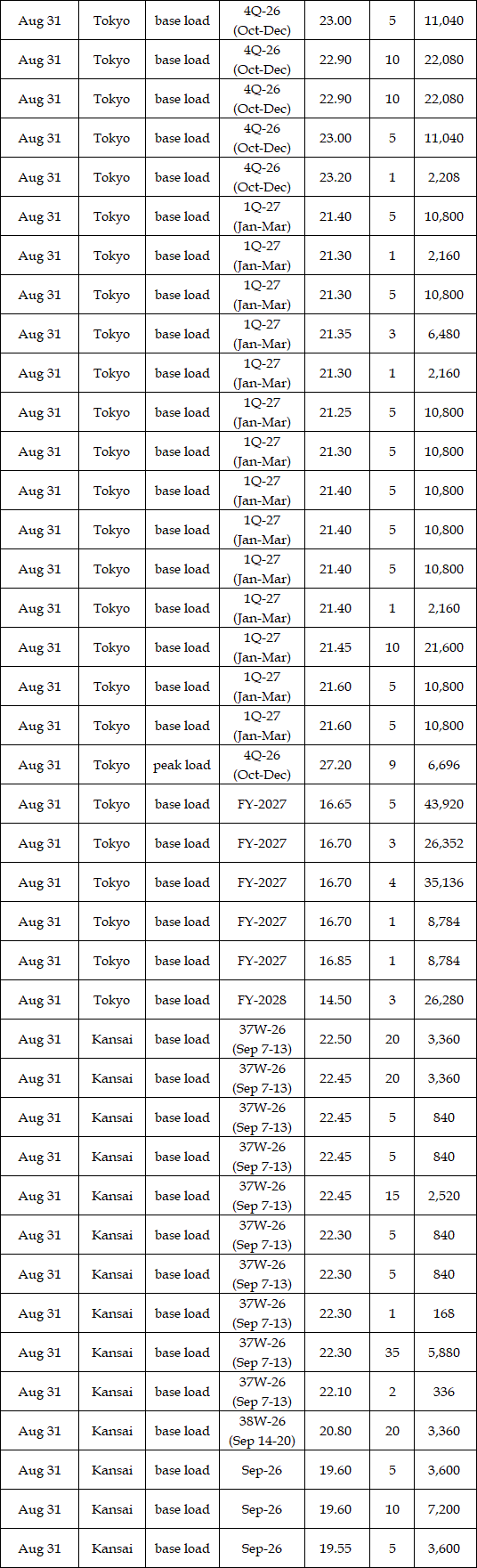
Deals reported on EEX (European Energy Exchange) during Aug 24-28 were as below.
Power spot prices for the second week of September are expected to trend lower than those of the first week. Temperatures across both eastern and western regions are forecast to be lower than in the previous week; notably, western Japan--which had seen many days of extreme heat--is expected to see temperatures hover between 30°C and 33°C. In the Kanto region, temperatures are expected to remain around 30°C, offering relatively more comfortable conditions compared to western Japan. Frequent cloudy weather, which mitigates heat from direct sunlight, is also likely to act as a factor curbing demand growth. However, as solar power generation is expected to be limited, daytime prices are likely to track fuel-related cost levels, with many areas seeing prices range from the high 20-yen to low 30-yen range per kilowatt-hour.
Regarding price trends for the second week of September, some market participants--such as a market trading representative from a new power company--expressed the view that "base prices in both eastern and western regions will likely hover around 22-24 yen. Although the heat is subsiding, factors such as limited solar power output and high fuel costs--led by gas prices--are expected to provide a floor for prices." Additionally, prices in the Chubu region are highly likely to remain higher than those in Tokyo.
|
JEPX: System Price (Day Ahead 24 hours)
|
|
Weekday Price
|
31-Aug
|
1-Sep
|
2-Sep
|
3-Sep
|
4-Sep
|
|
24-Hour Ave
|
22.10
|
25.07
|
25.15
|
26.37
|
21.36
|
|
Volume (MWh)
|
1,256,349
|
1,278,188
|
1,294,885
|
1,253,744
|
1,159,101
|
|
(unit: yen per kWh) (date: delivery day)
|
|
|

|
 - Fair & Reliable -
 Post
Post Print
Print


