|
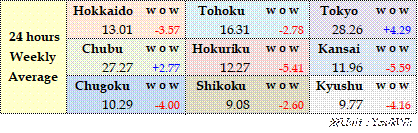
The weekly average of 24-hour spot power prices for delivery on September 21-25 rebounded from the previous week in eastern Japan (50Hz), while prices in western Japan (60Hz) extended their decline. Although demand decreased during the Silver Week holiday period, supply availability tightened in eastern Japan, particularly in the Tokyo area, due to outages and output reductions at LNG-fired power plants. This led to tighter supply-demand conditions, especially during evening hours when solar power generation declined. In western Japan, meanwhile, lower holiday demand combined with increased solar power generation under sunny weather boosted supply availability. As a result, market separation between eastern and western Japan intensified. Prices in Tokyo rose above 50 yen/kWh even on holidays, while a number of western areas recorded prices of 0.01 yen/kWh, mainly during daytime hours.
Looking at the spread in 24-hour average spot power prices between Tokyo and Kansai, the key markets in eastern and western Japan, Tokyo traded at a substantial premium throughout the week. The spread stood at 15.85 yen/kWh on Sep 21, 20.36 yen on Sep 22, 16.61 yen on Sep 23, 15.93 yen on Sep 24, and 12.75 yen on Sep 25.
The following summarizes fuel market trends in the fourth week of September.
In the Northeast Asian LNG spot market, cargoes for delivery in Nov 2026 were assessed in the mid-$26s/mmBtu on Sep 25, down around $0.8 from the previous weekend (Sep 18). Geopolitical risk associated with tensions in the Middle East had supported prices through the previous week, but expectations for progress in negotiations between the United States and Iran reduced the geopolitical risk premium. Relatively ample inventories in Northeast Asia and weaker spot procurement demand as the market entered the shoulder season were also seen weighing on prices.
Australian Newcastle thermal coal prices edged higher. Sep 2026-loading cargoes were assessed at $143.75/mt on Sep 25, up $0.50 from $143.25/mt on Sep 18.
In the crude oil market, Nov 2026 WTI settled at $92.41/bbl on Sep 25, while Nov 2026 Brent settled at $104.32/bbl. Compared with Sep 18, WTI fell $3.67, while Brent rose $0.45. Crude prices were volatile amid developments in the Middle East. Supply concerns intensified at times following Houthi attacks on Saudi Arabia, while expectations for ceasefire talks between the United States and Iran capped gains.
The week's actual high was 50.01 yen/kWh, recorded in Tokyo on Sep 22 and 24. The actual low was 0.01 yen/kWh, recorded in Kyushu on Sep 21; Hokkaido, Tohoku, Kansai, Chugoku, Shikoku and Kyushu on Sep 22; Hokkaido, Chugoku, Shikoku and Kyushu on Sep 23; Shikoku on Sep 24; and Tohoku on Sep 25.
The weekly average of the 24-hour spot prices by area and the weekly average volume of offers, bids, and trades are shown in the table below.

Power demand across Japan's nine regions totaled 10,705.328 GWh during Sep 21-25, down 8.7% from 11,730.319 GWh in the previous week of Sep 14-18. Compared with 11,281.348 GWh during the corresponding weekday period of Sep 22-26 last year, demand fell 5.1%.
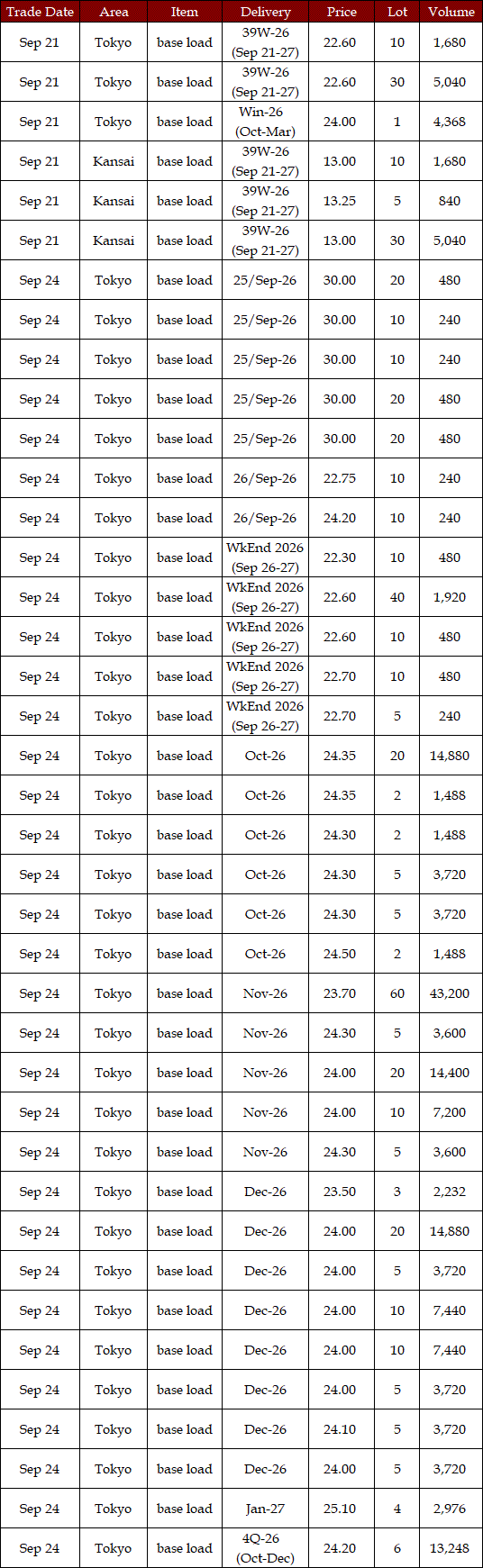
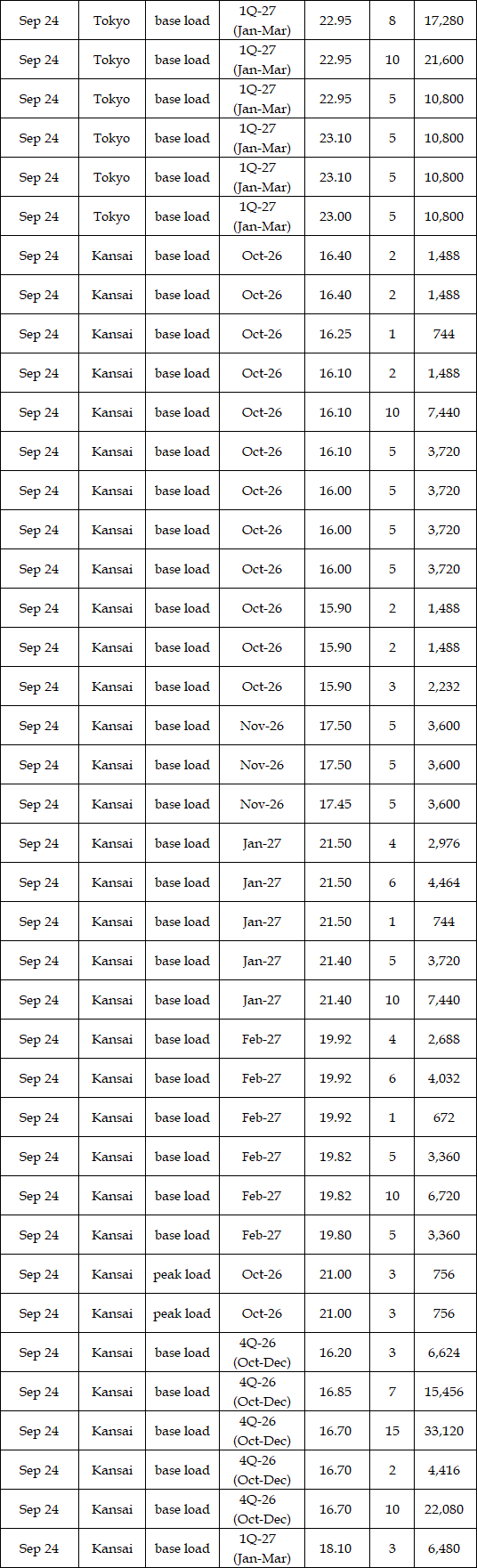
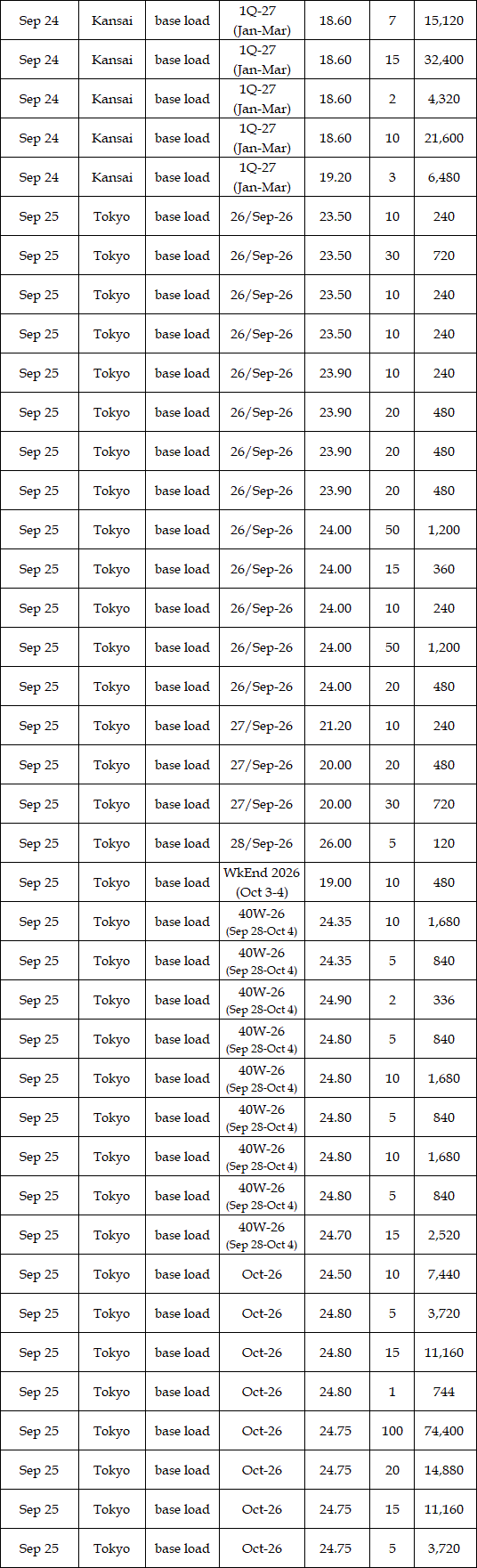
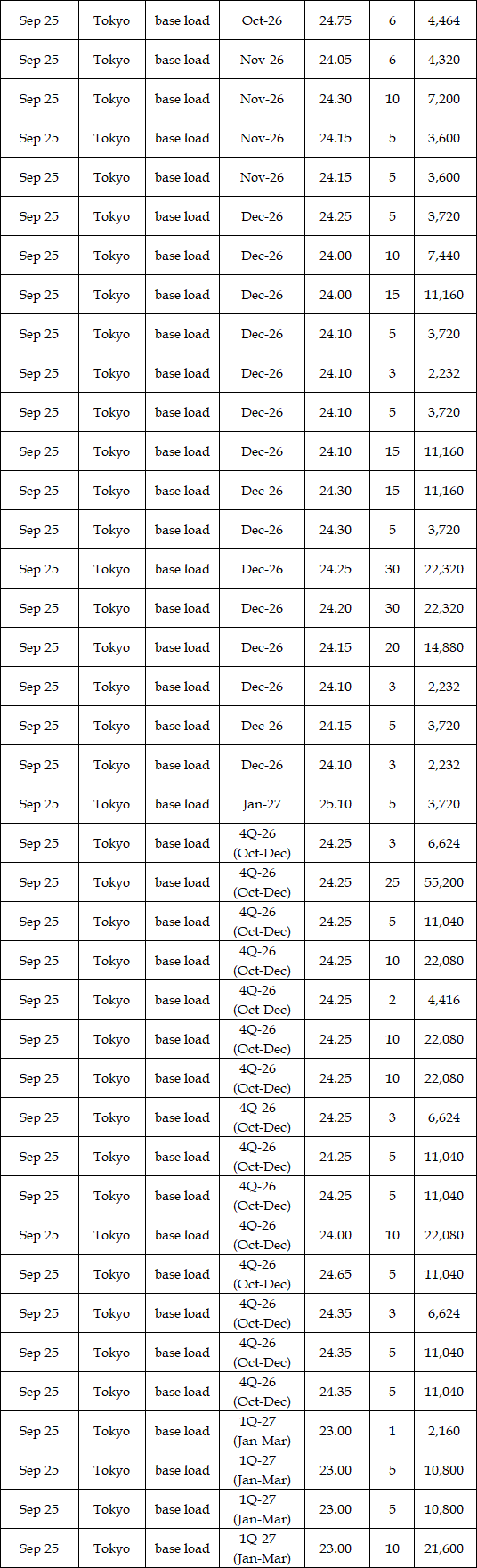
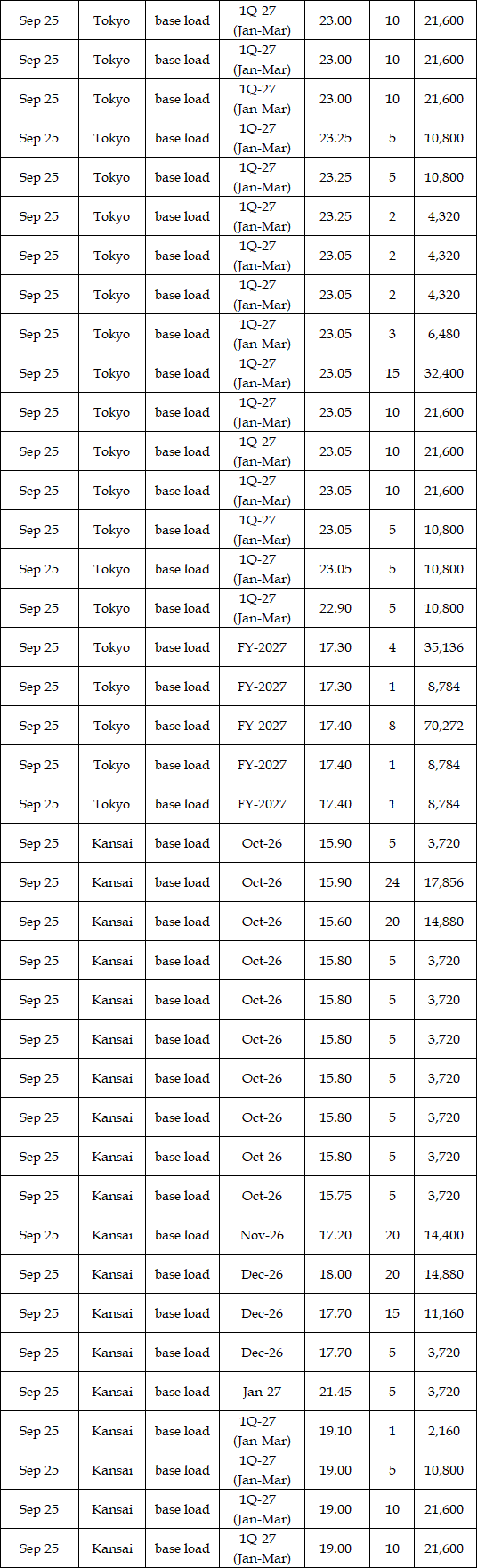
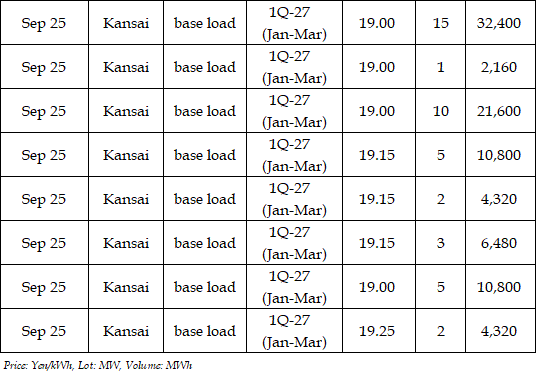
Deals reported on TOCOM (Tokyo Commodity Exchange) during Sep 21-25 were as below.

Deals reported on EEX (European Energy Exchange) during Sep 21-25 were as below.
Spot power prices in the final week of September and the first week of October are expected to remain high, particularly in Tokyo and Chubu. Demand is likely to remain relatively weak on many days due to moderate temperatures. However, rainy weather is forecast throughout much of the week, limiting solar power generation. In addition, an increasing number of thermal power plants are scheduled to go offline, which is expected to tighten supply and provide upward pressure on prices.
Commenting on the price outlook for the final week of September and the first week of October, a market participant said, "We expect prices at 25-28 yen/kWh in Tokyo, 24-28 yen/kWh in Chubu, and 15-18 yen/kWh in Kansai. Limited solar power generation is likely to remain a major factor, with daytime prices in Tokyo and Chubu potentially staying around 26-27 yen/kWh. Prices could also rise above 40 yen/kWh during evening hours on some days," said a market trader at a power retailer.
|
JEPX: System Price (Day Ahead 24 hours)
|
|
Weekday Price
|
21-Sep
|
22-Sep
|
23-Sep
|
24-Sep
|
25-Sep
|
|
24-Hour Ave
|
17.92
|
16.32
|
17.98
|
22.09
|
19.10
|
|
Volume (MWh)
|
934,003
|
975,732
|
1,007,013
|
1,098,255
|
1,043,316
|
|
(unit: yen per kWh) (date: delivery day)
|
|
|

|
 - Fair & Reliable -
 Post
Post Print
Print


