|
The power spot market in Japan saw a slight decline in eastern Japan (50Hz) and a slight rebound in western Japan (60Hz) during October 5-9 compared with the previous week. Daytime prices fell in both regions, while nighttime prices rose. Amid a series of outages at large-scale thermal power plants, supply-demand conditions tightened in the evening as solar power generation declined, providing support for prices.
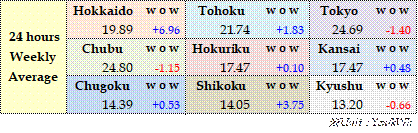
By area, prices in Tokyo and Chubu remained at elevated levels. Reduced supply capacity due to outages at large-scale thermal power plants was a bullish factor, with prices rising particularly during the evening hours. Meanwhile, prices in Kansai remained relatively subdued compared with Tokyo and Chubu. In Hokkaido, prices climbed to around Yen 50/kWh during certain time slots, reflecting outages at thermal power plants and other supply-side constraints. Localized price spikes were particularly notable.
The differences in 24-hour average electricity spot prices between Tokyo and Kansai, the major areas in eastern and western Japan, stood at Yen 5.74/kWh on Oct 5, Yen 8.94/kWh on Oct 6, Yen 5.86/kWh on Oct 7, Yen 9.86/kWh on Oct 8, and Yen 6.70/kWh on Oct 9. Tokyo prices remained higher than Kansai prices throughout the week.
Fuel market developments in the second week of October were as follows.
Spot LNG prices in the Northeast Asian market for November 2026 delivery stood in the low $26s/mmBtu on October 9, up approximately $1 from the previous weekend (October 2). Although buying interest among Northeast Asian end-users remained limited, winter procurement demand in Europe and deteriorating arbitrage economics for US LNG shipments to Asia appeared to provide support for prices. Japan's LNG inventories for power generation stood at 2.58 million tons as of October 4, up 170,000 tons from the previous week. Inventories reached their highest level so far in 2026, suggesting that Japan's domestic LNG supply-demand balance remained stable.
The price of thermal coal loaded at Newcastle, Australia, for the October 2026 contract stood at $148.85/ton on October 9, down slightly by $0.10 from $148.95/ton on October 2. Prices rose early in the week, reaching $152.20/ton on October 6, before trending downward thereafter. While elevated spot LNG prices highlighted coal's price competitiveness as a power generation fuel, profit-taking and other selling pressure may have weighed on the market in the latter half of the week.
In the crude oil market, November 2026 WTI futures stood at $91.85/barrel and December 2026 Brent futures at $104.72/barrel on October 9. WTI rose by $0.74 and Brent by $2.47 from the previous weekend (October 2). Selling prevailed early in the week amid expectations of easing tensions in the Middle East and speculation about a recovery in crude oil supplies. However, prices rebounded in the latter half of the week, supported by additional US sanctions against Iran, renewed concerns over supply disruptions in the Middle East, and fears of crude oil production shutdowns in the US Gulf of Mexico.
The highest spot price during the week was Yen 50.01/kWh, recorded in Hokkaido on Oct 9. Meanwhile, the lowest spot price was Yen 0.01/kWh, recorded in Chugoku through Kyushu on Oct 6, Hokkaido and Tohoku on Oct 7, Hokkaido, Tohoku, and Chugoku through Kyushu on Oct 8, and Tohoku on Oct 9.
The highest spot price during the week was Yen 50.01/kWh, recorded in Hokkaido on October 9. Meanwhile, the lowest spot price was Yen 0.01/kWh, recorded in Chugoku through Kyushu on October 6, Hokkaido and Tohoku on October 7, Hokkaido, Tohoku, and Chugoku through Kyushu on October 8, and Tohoku on October 9.
The weekly averages of 24-hour spot prices, traded volumes, and buy and sell bid volumes by area were as follows.

Power demand across Japan's nine areas totaled 10,515.886 GWh during Oct 5-9, down 2.9% from 10,826.077 GWh in the previous week (Sep 28-Oct 2). Compared with 11,149.089 GWh recorded during the corresponding period of the previous year (Oct 6-10), adjusted to match the days of the week, demand fell 5.7%.
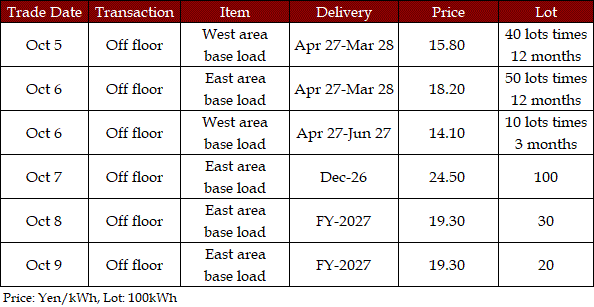
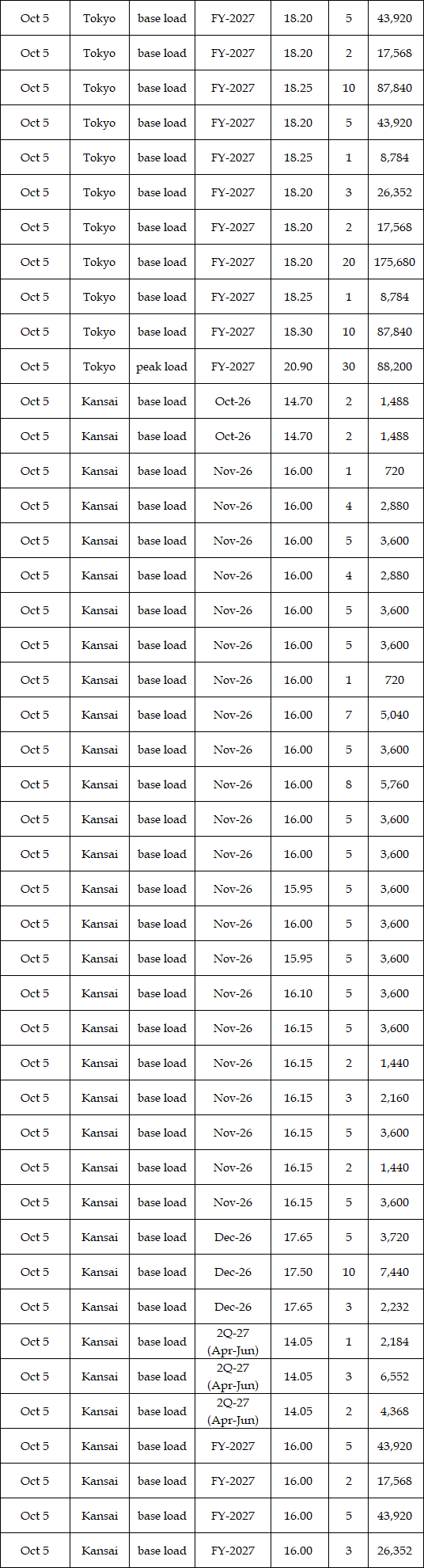
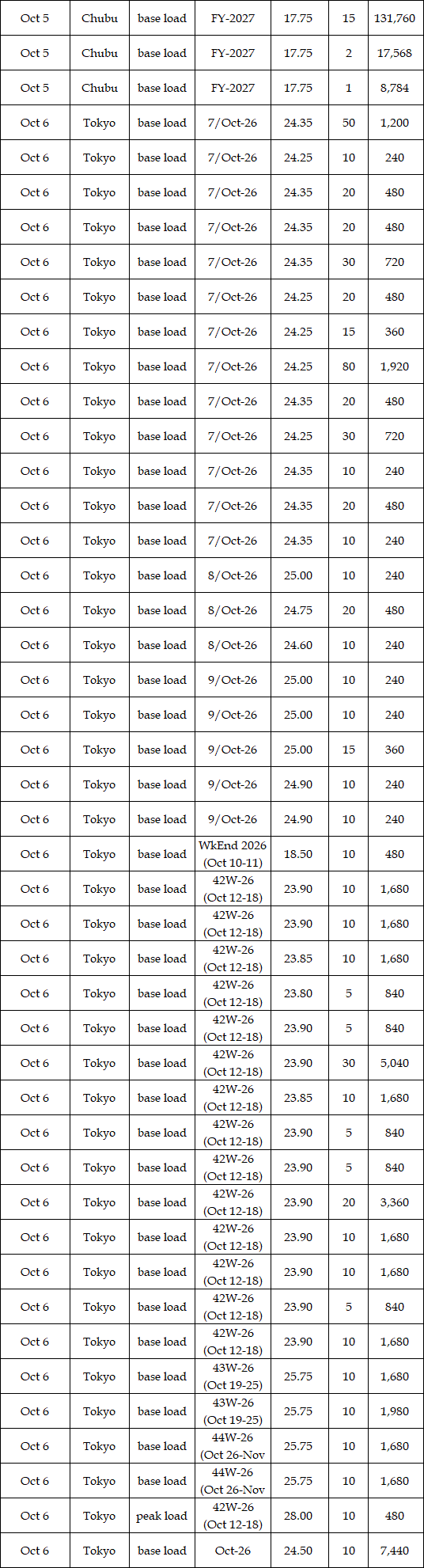
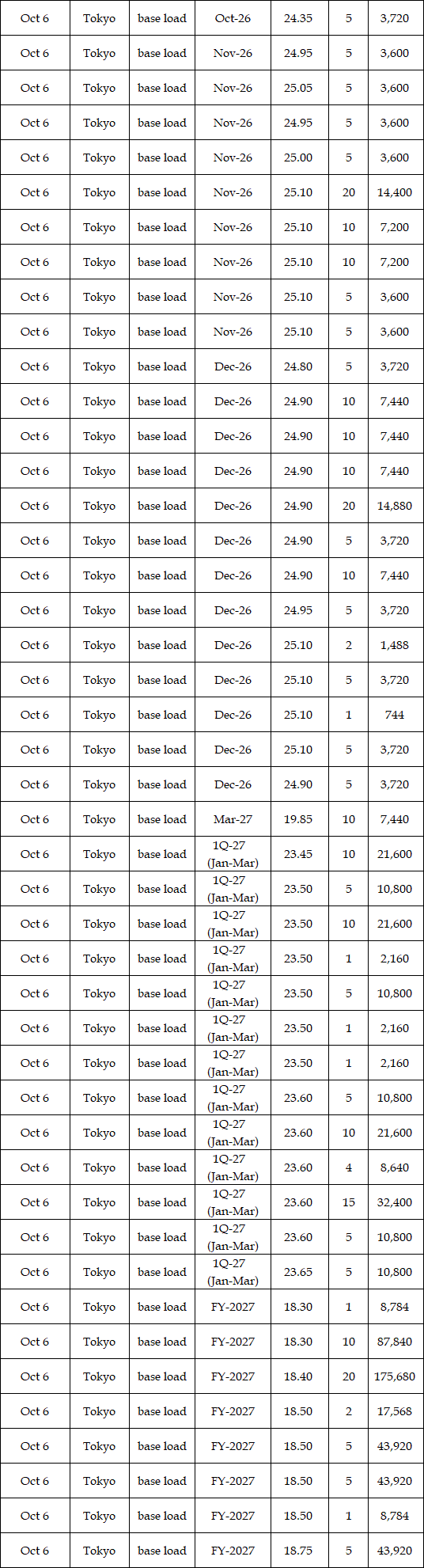
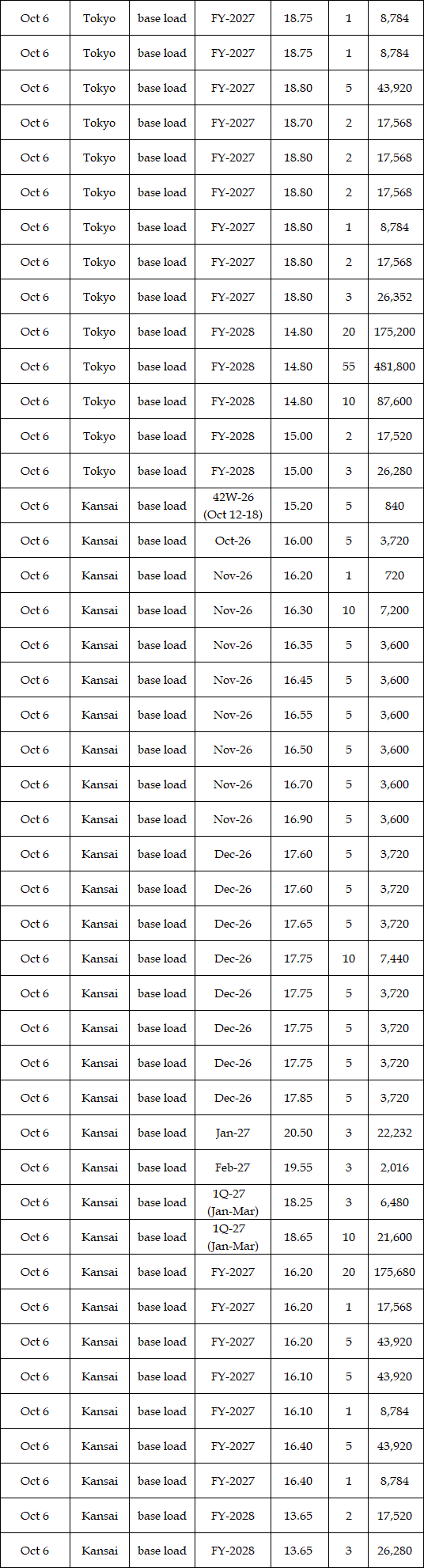
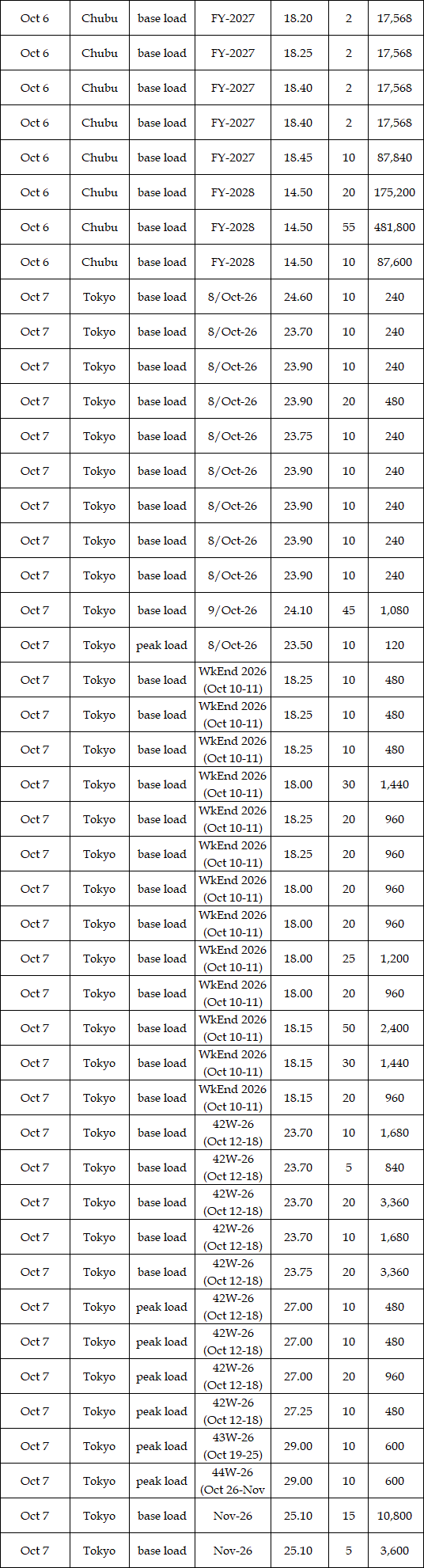
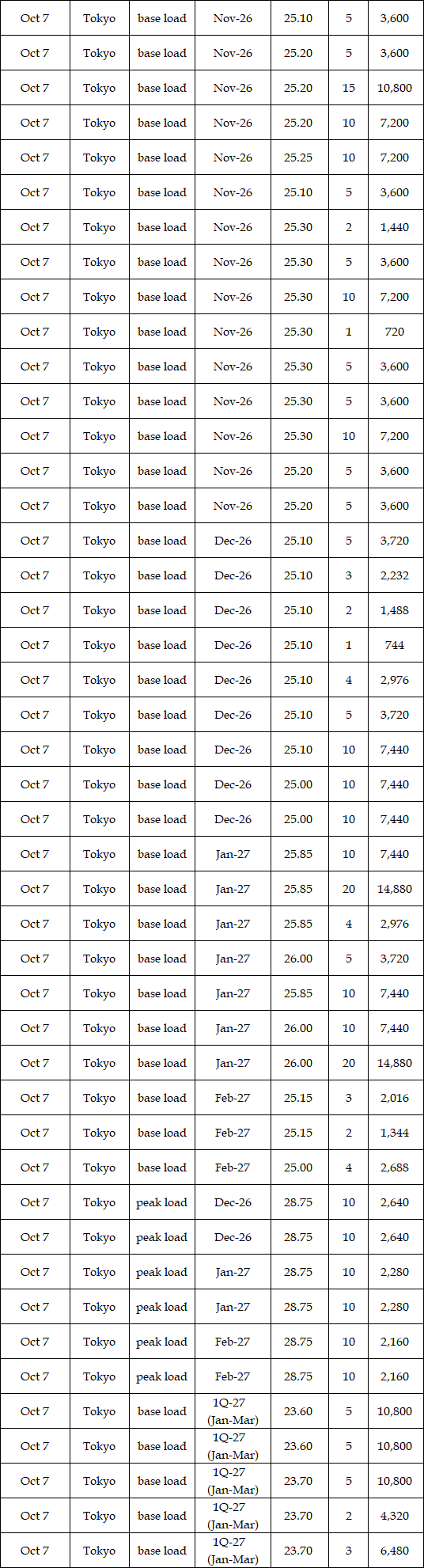
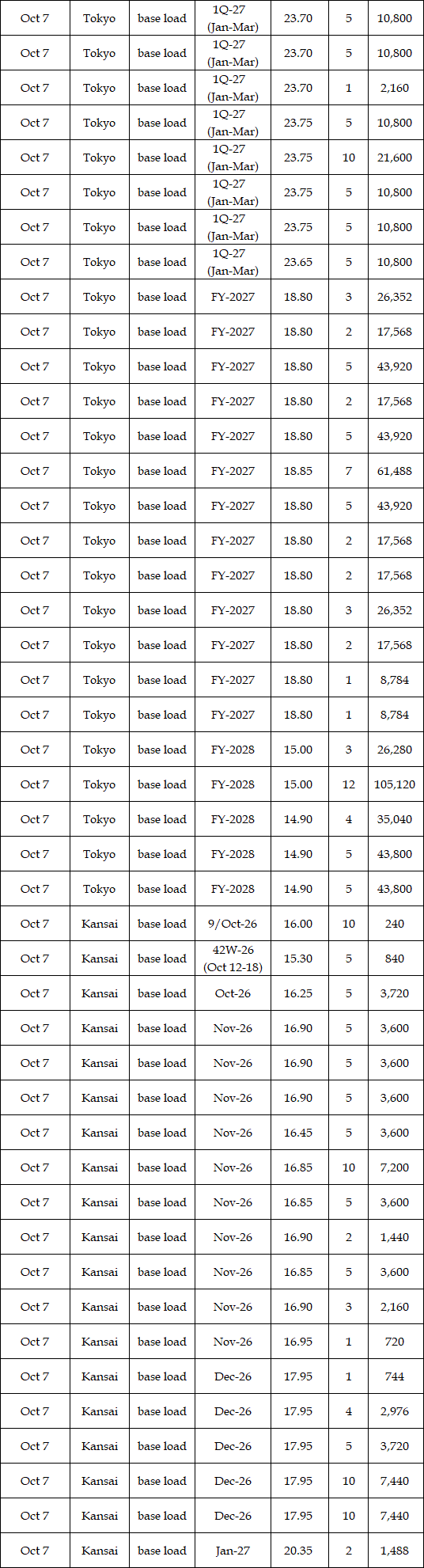
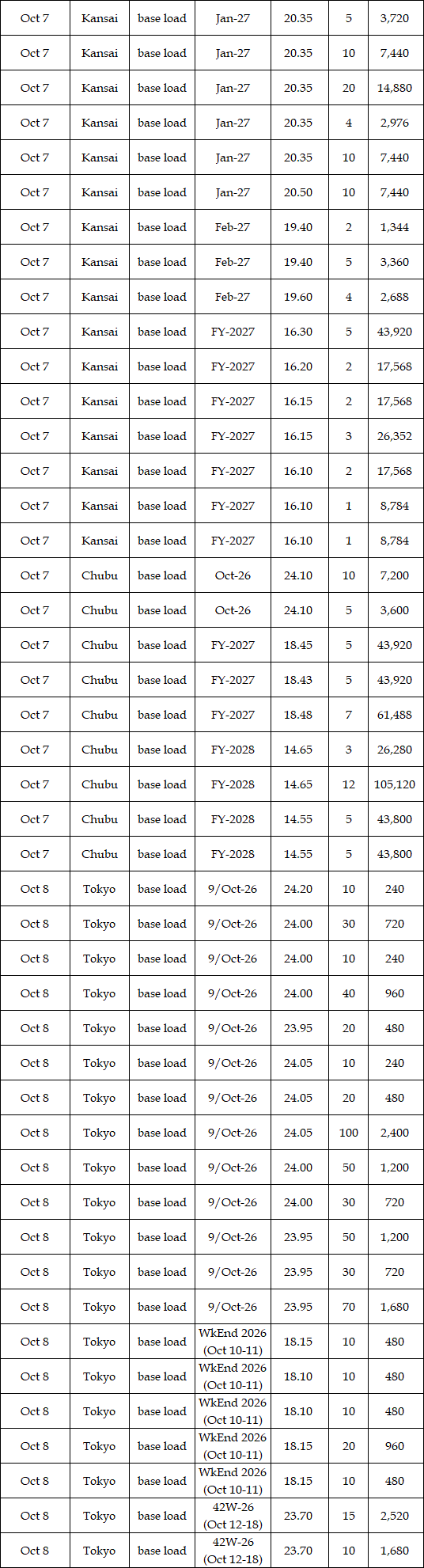
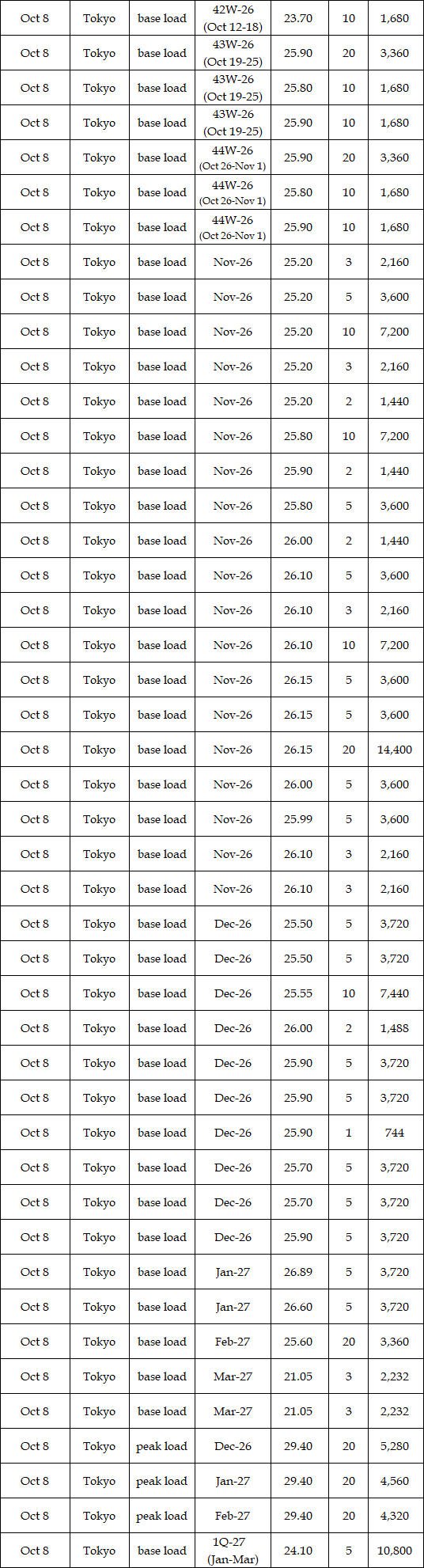
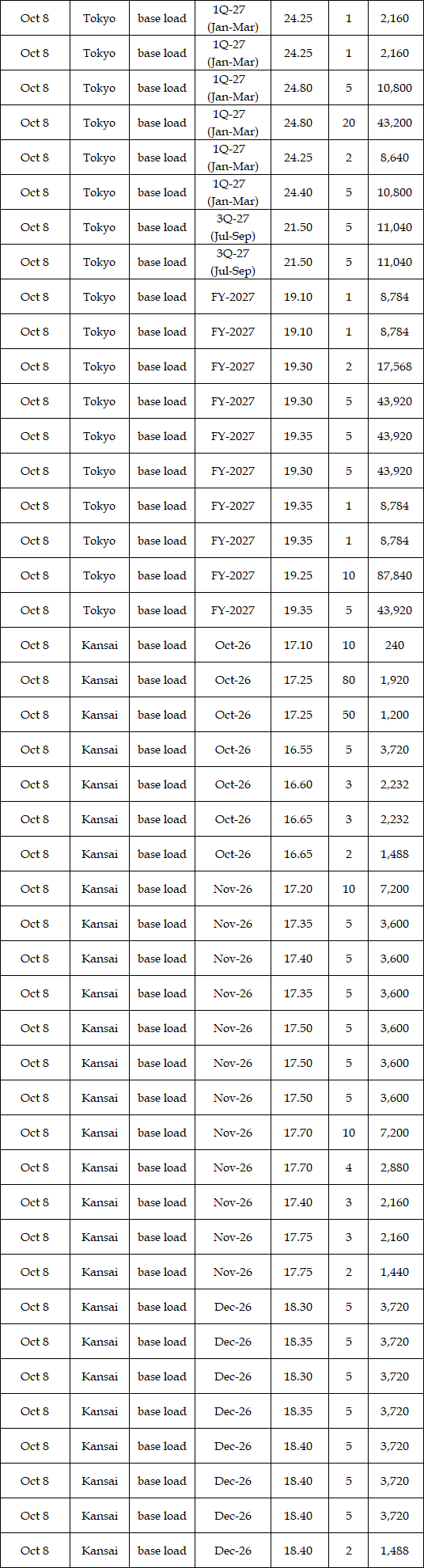
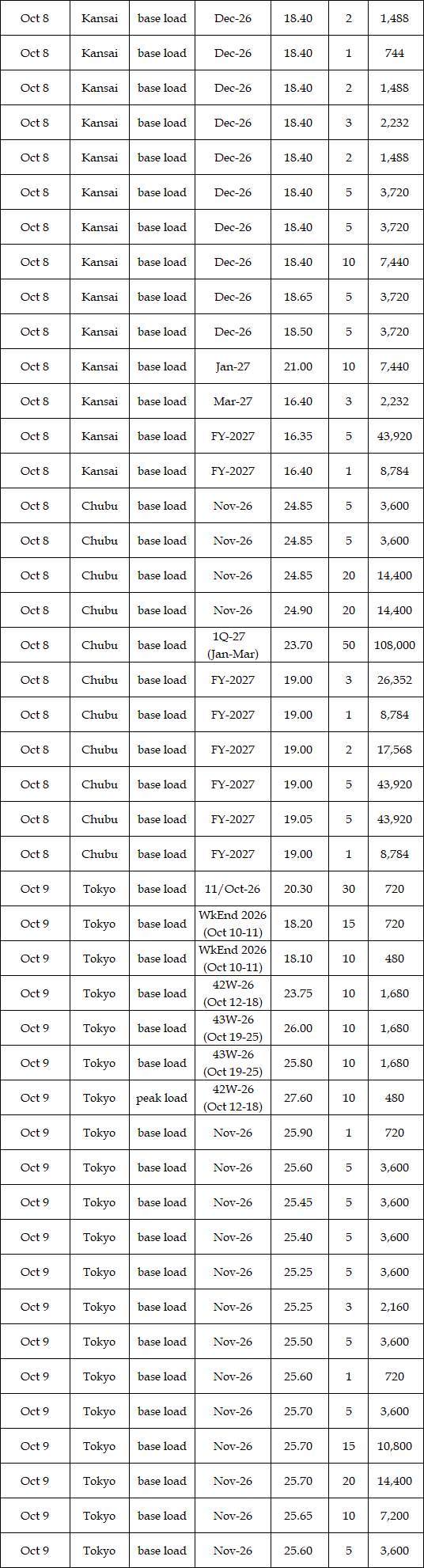
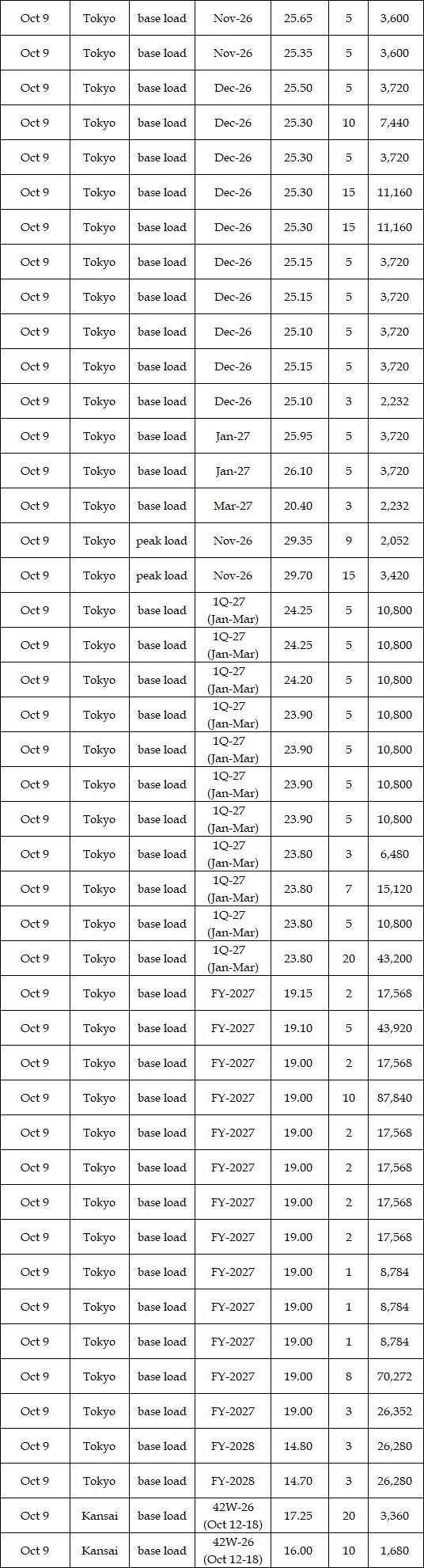
Deals reported on TOCOM (Tokyo Commodity Exchange) during Oct 5-9 were as below.
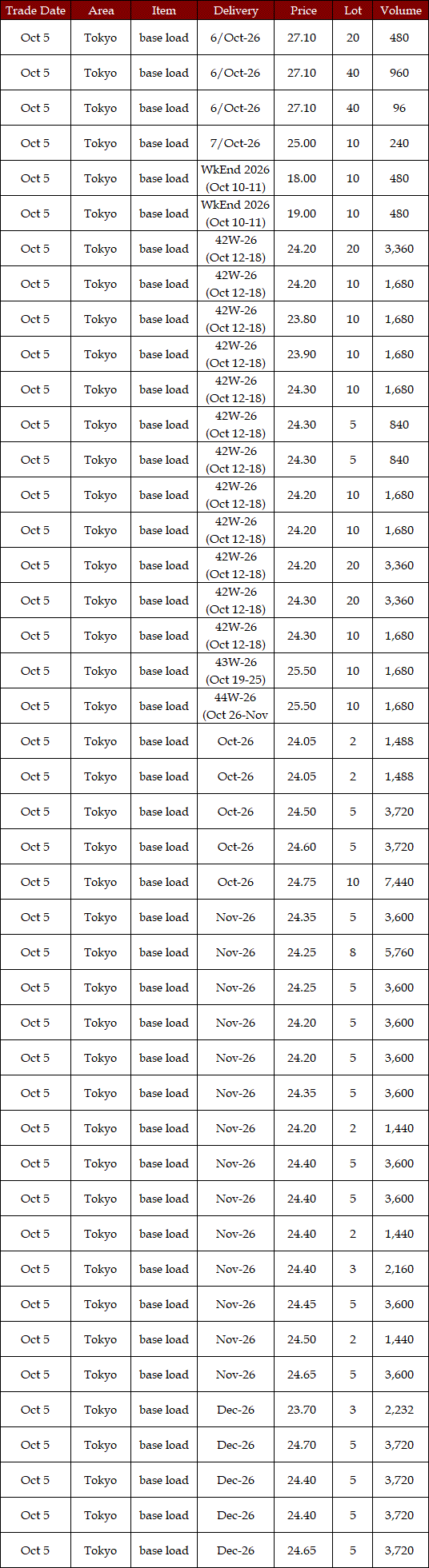
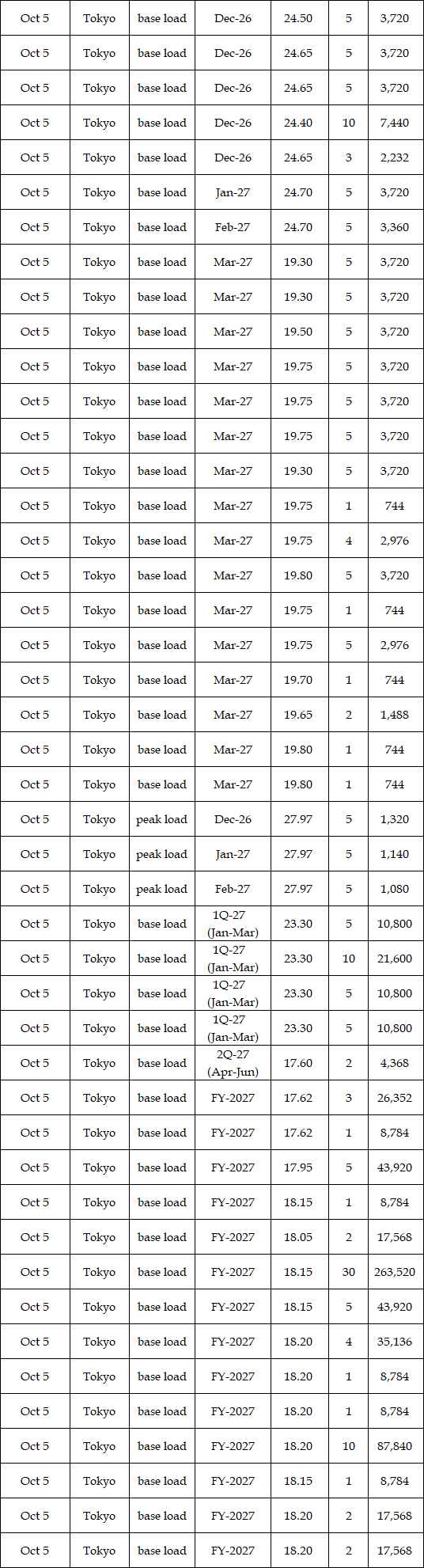
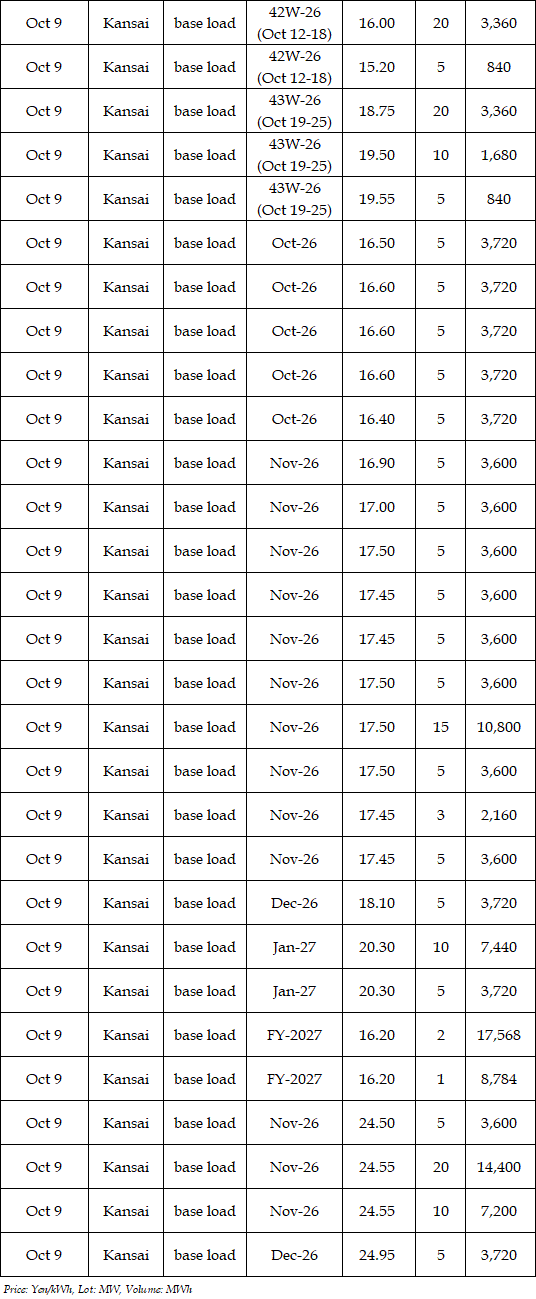
Deals reported on EEX (European Energy Exchange) during Oct 5-9 were as below.
Power spot prices in Japan are expected to remain elevated in the third week of Oct, particularly in Tokyo and Chubu. Although demand for heating and cooling is likely to remain subdued amid relatively mild temperatures, a series of outages at large-scale thermal power plants is expected to reduce supply capacity and support prices. In particular, residual demand is expected to increase in the evening as solar power generation declines, potentially pushing prices in Tokyo and Chubu into the Yen 30s/kWh, or to around Yen 40/kWh depending on supply-demand conditions.
In Tokyo, outages are continuing at several large-scale thermal power plants, including Hitachinaka coal-fired Unit 1, Sodegaura LNG-fired Unit 2, and Goi LNG-fired Units 1 and 3. Additional outages are expected at Sodegaura LNG-fired Unit 3 and multiple units of the Futtsu LNG-fired Unit 1 series. In Chubu, a scheduled outage at Chita Daini LNG-fired Unit 1 is expected to add to ongoing outages at Nishi-Nagoya LNG-fired Unit 7-1, Taketoyo coal-fired Unit 5, and Hekinan coal-fired Unit 4. With supply capacity remaining constrained in both areas, prices are likely to remain susceptible to upward pressure during periods of higher demand or on days when solar power generation is limited.
Meanwhile, electricity spot prices in Kansai are expected to remain relatively subdued compared with Tokyo and Chubu. Prices may ease during sunny daytime hours as solar power generation increases, while cloudy conditions or higher residual demand in the evening could create room for price increases.
In Hokkaido, attention will focus on the operating status of thermal power plants and the operation of interconnection facilities with Honshu. For Oct 10 delivery, prices surged to Yen 100/kWh during certain time slots amid tightening supply-demand conditions. Similar price spikes could occur during the third week of October if supply margins become limited.
Oct 12 is a national holiday in Japan (Sports Day), and electricity demand, particularly from commercial and business users, may decline compared with normal weekdays. Demand is expected to recover from Oct 13 onward, while weather conditions and thermal power plant operations could lead to greater price volatility.
Regarding price movements in the third week of Oct, a power trading official at a new power supplier said, "We expect baseload prices to be around Yen 25/kWh in Tokyo and Chubu, and in the Yen 17-18/kWh range in Kansai." Although unsettled weather is expected in many areas around the middle of the week, generally sunny conditions are forecast for much of the period. Many market participants therefore expect the price gap between daytime and evening or nighttime hours to continue widening.
|
JEPX: System Price (Day Ahead 24 hours)
|
|
Weekday Price
|
5-Oct
|
6-Oct
|
7-Oct
|
8-Oct
|
9-Oct
|
|
24-Hour Ave
|
23.53
|
21.66
|
18.80
|
18.14
|
19.88
|
|
Volume (MWh)
|
960,684
|
1,022,164
|
1,012,657
|
992,740
|
982,104
|
|
(unit: yen per kWh) (date: delivery day)
|
|
|

|
 - Fair & Reliable -
 Post
Post Print
Print


